Category Archives: Uncategorized

Copyright isn’t right

Image: ‘meteora monastery, greece
meteora monastery, greece

Here’s another example of how copyright law just isn’t logical. In the article, US Library of Congress: copyright is destroying historic audio, the author refers to a 181-page in-depth study, which concludes

that apart from technical difficulties, US copyright law makes it virtually impossible for anyone to perform any form of audio preservation.

Not good, not good at all. Isn’t it time copyright laws were reviewed and made relevant to today’s world?  No wonder, according to the same article, it’s not only “pirates” and “freeloaders” who “rail against copyright laws”.

So let’s get off our high horses and stop thinking that we’re just doing the right thing when we follow the letter of the law and frown upon those who don’t.

“Were copyright law followed to the letter, little audio preservation would be undertaken. Were the law strictly enforced, it would brand virtually all audio preservation as illegal,” the study concludes.

And were you aware that

Sound recording preservation institutions are having problems finding the necessary funding for their expensive work because they are not allowed to grant access to the material they’re trying to preserve. Access has become such an important demand that organisations unable to provide such access will simply not even bother to preserve the audio in the first place. In addition, private collectors are unwilling to hand over their collections to institutions out of fear that their collections will not be made available to the public. As one participant in the study said, “The preservation of music is meaningless if this music is not accessible.

When laws are not only overly restrictive but illogical, people tend not to take them seriously. Here’s a good point:

In the perception of the public, copyright law has a reputation for being overly restrictive,” the study notes, “This perception fosters a dismissive attitude toward the law in communities that can hardly be characterized as rogue elements of society.

I think it’s time I bit the bullet and informed myself of Australian vs US copyright law and find out how these laws apply to us in Australia. Any good resource recommendations are welcome.

What do you think about copyright laws?

A link to a previous post about copyright here.

Picture books no longer a staple for children – NYTimes

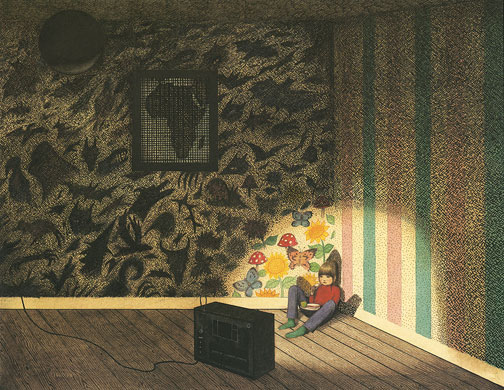
Picture by Anthony Browne

The New York Times article Picture books no longer a staple for children (7 Oct 2010) claims that

Picture books are so unpopular these days at the Children’s Book Shop in Brookline, Mass., that employees there are used to placing new copies on the shelves, watching them languish and then returning them to the publisher.

Apparently,

publishers have scaled back the number of titles they have released in the last several years, and booksellers across the country say sales have been suffering.

Now here’s the disturbing part:

Parents have begun pressing their kindergartners and first graders to leave the picture book behind and move on to more text-heavy chapter books. Publishers cite pressures from parents who are mindful of increasingly rigorous standardized testing in schools.

Okay, I’m not at all qualified to comment about the situation in New York, but the pressure on children to move ahead to ‘serious reading’ so that they make a head start on the journey towards the results-heavy secondary school education certainly rings a bell – an alarm bell.

Firstly, I am aware of the pressure on parents of very young children to start securing their future at a very early age. Even in preschool and child minding centres there is an educational program which is taken very seriously. Even when my boys were very young, I couldn’t help feeling nervous when we were missing out on a program which might retard their development in this or that area. Oh no, should they also take tennis lessons, but what about judo? And in primary school – should I be taking them to Kumon maths? Is one instrument enough?

By secondary school this view of the educational journey is even more entrenched, especially with the dreaded year 12 result looming at the end.

It’s a terrible pressure parents are feeling — that somehow, I shouldn’t let my child have this picture book because she won’t get into Harvard.”

Big mistake!

Focusing on test results, stanines, scores and the such devalue a real focus on learning and the joy of learning. Naturally parents want their children to find successful careers, and so doing well in school is usually a matter of doing your  homework, learning content and fulfilling prescriptive guidelines.

Picture books have traditionally been associated with very young children. Parents read picture books to their children before they start school, and teachers read them to children in the early primary years – or even throughout primary school – but once a child starts ‘chapter books’, everyone feels very proud. It’s a milestone. I remember in grade 3 we had to stop reading aloud and read silently because this was part of our ‘growing up’. Pictures then fall away, as if they somehow hold children back.

But this is faulty thinking.

Literacy experts are quick to say that picture books are not for dummies. Publishers praise the picture book for the particular way it can develop a child’s critical thinking skills.

“To some degree, picture books force an analog way of thinking,” said Karen Lotz, the publisher of Candlewick Press in Somerville, Mass. “From picture to picture, as the reader interacts with the book, their imagination is filling in the missing themes.”

Many parents overlook the fact that chapter books, even though they have more text, full paragraphs and fewer pictures, are not necessarily more complex.

I absolutely agree. With limited text on each page, the words in picture books are very carefully chosen, often lyrical, or employing alliteration, assonance or onomatopeia. In a good picture book, the sequence of pictures in developing the story is tight. And finally, there is much more to read on the page than just the words – children learn to read visual clues and make inferences. Overall, there is a special skill in reading a good picture book.
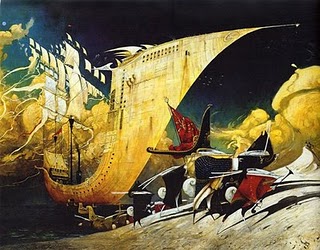
In today’s media-rich world, students are less text-centric. They have YouTube at their fingertips, and spend a lot of time watching videos. Animated series such as The Simpsons, American Dad and South Park are not aimed at young children although young children do watch them.

Comics have become acceptable and popular reading material whereas they used to be regarded as B-grade literature. Graphic novels have evolved, confusing those who are unable to see how they are different to comics. Are they different to comics?

Shaun Tan is one example of a picture book author who has pushed the boundaries of the genre. His picture books are so sophistocated that they could easily  be studied in senior years. More importantly, there are so many layers of interpretation to uncover, and that is the beauty of images. There is so much to observe and discuss. Visual literacy, making sense of picture clues, critical thinking are all important skills these days.

I’m actually surprised by the New York Times article. My observation is that picture books are still valued. In any case, secondary school teacher librarians in Australia take them very seriously on the whole. Teachers use them with older students. I don’t know anything about book shop sales, but I do know that the picture book areas are attractive and popular with parents and children. In my school, a boys’ secondary college, the graphic novel section is the most popular reading area during recess and lunchtimes.

Picture books are an important genre and I hope they are here to stay.

New technologies initiatives: questions to ask (Chris Lehmann)

Image: ‘Army Guard Father, Son Fly Together‘ on Flickr here


Moving forward with new technologies in education is a main focus of all schools now. Or it should be. As with everything, leaping in blindly is not the best way to go. It’s always prudent to keep thinking and then think some more throughout this process to avoid disasters which will result in the opposite of what you intended – people being put off and the absence of positive results.

I came across a few practical questions suggested by Chris Lehmann. I think these are very helpful and would like to hear from you on this topic. These questions form the third point (Foresight) in Chris’ Top 3 leadership skills post.

The most important question you can ask of new technology initiatives is “What is the worst consequence of your best idea?” The answer shouldn’t keep you from moving forward, but it should allow you to plan for the problems that inevitably arise. There are some other important questions that should help you plan:
■ What is the end goal and how does this use of technology move us closer to it?
■ Is this an additive change or a transformative change? (In other words, does this allow us to do things we’ve always done slightly differently, or does this fundamentally change the way we have done something?)
■ Is this sustainable? (Is this a currently free tool that may not stay free? Do we own what we create? Does this have a fee?)

In the end, a smart, thoughtful approach to technological innovation will help students become ready for the world they will inherit.

So, what do you think? I think it’s important to consistently evaluate our initiatives so that we’re clear about what is and isn’t working, and so that we have prepared flexible options when things inevitably veer off the straight path, or to check that we our use of technology is firmly fixed to educational objectives.

Chris Lehmann is the founding principal of the Science Leadership Academy in Philadelphia. He will be the keynote speaker at Tech Forum Texas, November 5, 2010.

Chris will be one of the speakers on the panel in a two-hour live and interactive look at “Elevating the Education Reform Dialog” coming up this Tuesday morning at 8 am (for Melbourne people). Read about this in Steve Hargadon’s post. I hope to be able to tune in to this very important discussion. Yes, it’s about education in the US but I think it’s repercussions will affect us too.

Fantastic Voyage

This has been cross-posted from Fiction is like a box of chocolates.

[youtube=http://www.youtube.com/watch?v=3o8vsU0Dw-4]

Fantastic Voyage is a 1966 science fiction film written by Harry Kleiner based on a story by Otto Klement and Jerome Bixby. Isaac Asimov was approached by Bantam Books to write a novel based on the screenplay. It’s often incorrectly assumed, because the book came out 6 months before the film, that Asimov’s book inspired the film, when it was in fact the other way around.

TV series followed the film, and the Spanish surrealist artist, Salvador Dali, was inspired to create a painting.

If you’ve seen Fantastic Voyage, which is about a crew of biologists who were shrunk down to fit into a microbe-size submarine and projected into the human bloodstream, facing ongoing dangers inside the human body, did you ever dream about being able to experience that journey yourself? Well, you’re not the first. In fact, in the 1920, way before the film, Fritz Kahn, a German scientist, gynecologist and author,  developed this idea and had an artist create a poster depicting the metaphor of man as machine in 1926. He called his creation “Man as Industrial Palace.” This was not a joke to Kahn.

[youtube=http://www.youtube.com/watch?v=__OGncEPgrE]

And here is an animated interactive installation based on the Fritz Kahn poster. You can read about this project here and here.

Edit or post now?

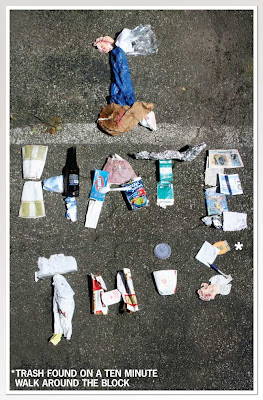
Chris Beesley is a graphic designer/illustrator living in Fairfield, Conneticut. His post, Seeking balance in a self-imposed spotlight,  raises a question relevant to bloggers, although he writes specifically as a graphic designer.

Here’s my big question; do I post more raw materials that haven’t been fully vetted yet, accepting that some may be real garbage and I may get judged as such? Or do I hold back most of the untried pieces until I’ve had an opportunity to really think about them, accepting the fact that some of the good stuff may never see daylight?

Chris posted this photograph to make a point about the rubbish he’d picked up around his neighbourhood while on a walk.

Looking back I’m glad I posted it, and I still believe that the poster was a good idea but there are definitely some things I might have changed had I waited.

Obviously, Chris is talking about his reputation based on the quality of his work, but his questions reminded me of the dilemma facing bloggers in general – with so much flying in from social media, do you go with your desire to get something out there while it’s current, and while your ideas are fresh, or do you wait until you’ve carefully edited your post?

Are blog readers more forgiving, not expecting the same quality of writing and thinking as they would from newspapers, magazines and journals?

It’s obvious that my posts would fail if assessed as coherent, well planned and properly researched writing, but aren’t blogs intrinsically more informal?

I really like Chris’ photo – mainly for its concept; it’s clever. I like the fact that he threw it together on the spot following his idea. There’s something to be said for this kind of spontaneous post.

Don’t you think?

Copyright kills creativity and culture

Can people ever be original again?

And what kind of future do we have if we can copy and paste, download and remix almost everything but we get into trouble for it?

I came across a very interesting documentary in a blog post on Brain Pickings. It’s 24 minutes long but well worth watching.

a new documentary from Yale Law & Technology, offering 24 densely compelling minutes of insight into various facets of intellectual property in the age of remix. From appropriation to sampling to creative influence to reuse, the film is an anthology of conversations with some of today’s most notable remix artists and media theorists, exposing the central paradox of contemporary copyright law: How can something originally intended to incentivize people to create serve to hinder new forms of creativity?

[vodpod id=Video.3661499&w=425&h=350&fv=]

more about “Walking on Eggshells: Borrowing Cultu…“, posted with vodpod

I’ve pulled out some of the ideas in the video which resounded with me –

  • You’re only aware of a portion of your influences at a time. Things work through you; you’re not always in control, and when you create something, it’s in the world and others can use it.
  • everything is cannibalising itself, eating itself (interesting way of putting it)
  • postmodernism is the end of everythingL meaning collapses under the weight of too many perspectives. With the internet, everything happens faster and faster. You’re not living in a real way, you’re experiencing references.
  • music is every tune you’ve ever heard pulled out and mixed together.
  • Remixing is like using the remote control, flipping through stuff. Remixing is like flipping through culture.
  • Look at all the references in Bugs Bunny; we always knew there were references even if we didn’t fully get them.
  • If copyright was applied to Bach, Beethoven, etc. they’d all be in trouble.
  • Now, in the recording age, music is not to be made – it’s to be consumed.

Here’s an interesting discussion of the emerging remix culture with Lawrence Lessig, founder of Creative Commons, acclaimed street artist Shepard Fairey, whose iconic Obama “HOPE” poster was recently acquired by the National Portrait Gallery, and cultural historian Steven Johnson, whose new book, “The Invention of Air,” argues that remix culture has deep roots in the Enlightenment and among the American founding fathers.

[youtube=http://www.youtube.com/watch?v=jybMQQblE-8&feature=player_embedded]

We have so much rethinking to do. It often seems that our thinking got stuck in the nineteenth century. Social media has enabled access, sharing and remixing of so much, surely we need to think of possibilities and not restrictions.

We can’t invent new colours, but we can work with a varied palette to create our own vision.


Week 1: take a photo that represents you

I’ve given a snapshot of Week 1 of the Flickr project, Through global lenses. This has been cross-posted from the blog Through global lenses.

Post by post I intend to give an overview of what was posted: students’ contributions to the project  – photos, descriptive writing, comments and conversation – one week at a time.

The first week’s assignment was:

Take a photo that represents you as a person, and write about yourself.

I’ve selected a few examples of students’ contributions as examples. For a first assigment it was deceptively difficult; not only were they to find a photo which captured who they were, but they also had to think about representation and unpack the concept. I think they did very well, and the examples here show what all the students have in common, as well as their diversity.

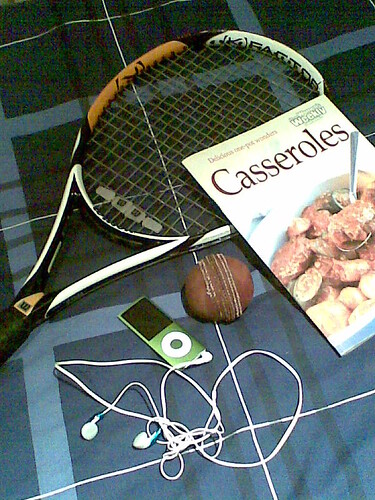
My football boots are a strong representation of who i  am as a person. I have  been playing Australian  rules football since I was  5 years old and it has  become a big part of my  life. Australian rules  football has taught me  many valuable life skills  such as: respect,  teamwork, courage, bravery and to aspire for greater things in life. I will carry these memories and skills throughout the rest of my life. I think of football as so much more than just a sport, it has helped me develop so much as a person physically and mentally. I do not see football as a stressful or time consuming chore, football for me, is in many ways my release time.

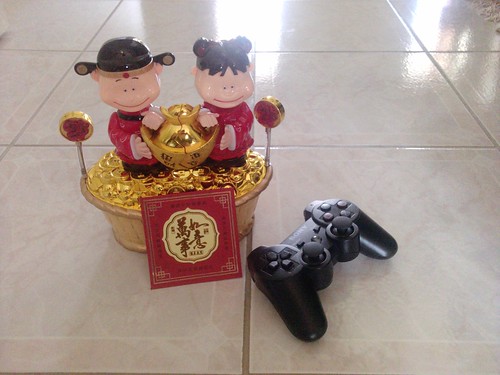
In this picture, the figurine or “toy” represents Chinese New Year, I chose this because Chinese New Year plays an important role in our Tradition of a new “beginning”.

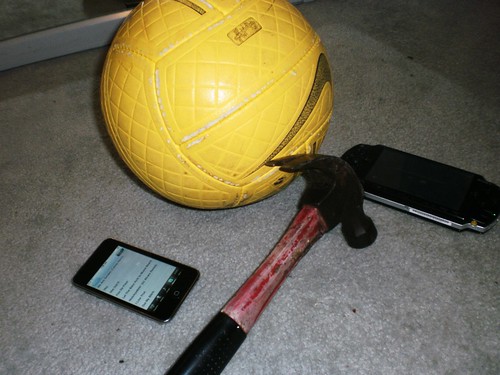
Most of you may be thinking why is there a hammer in my picture, it is there because it symbolises my interest in fixing thing or construct something. Also it reminds me to stay strong in myself.

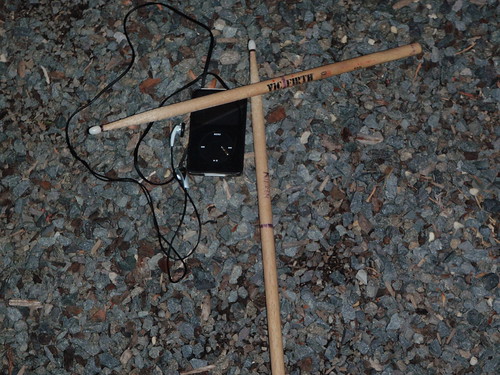
The drum sticks represent my musical talent. I have played the drums for a while. It’s always been fun and gives me a feeling that all is free when I play. The set up of the iPod and the drum sticks is messy and the background of rocks shows not everything is clean and smooth but bumpy and sometimes you might need to clean up some mess before moving on.

Comment:

I really like your metaphor on the rocks and everything is not clean and that before moving on you need to clean up your own mess. I thought that was very interesting!

In my picture I have included a cook book. I have an Italian background so I love to eat and I love to cook as well. I can cook many things and I like to help out in the kitchen. I can cook things like risottos and casseroles and things like that.

Comment:

I find it interesting that you included a cook book to represent you. What’s your favorite meal? What’s the one thing you enjoy preparing the most?

The Australian flag represents my country which I have never left and don’t plan on leaving. The tennis ball is for my love of tennis, it is a great sport which I am always happy to play. The shoes depict my enjoyment of all sports. The scarf is for my footy team, North Melbourne/Kangaroos. I have put these items on my bed to say how I love to sleep.

Comment:

I’m honestly not sure on what footy team means but it must be something good ! :)

Although the students are from different parts of the world, a love of music, sport and family seem to be common ground. I’m surprised that the boys (aged 16 on average), expressed themselves so openly. The assignment provided the opportunity for them to evaluate who they were and how their passions represented them. I like the way they looked at their own identity before getting to know others in the group.

ACEC2010 My slant

How is it that a conference about technology, namely the ACEC 2010, the national biennial conference of the Australian Council for Computers in Education, wasn’t chiefly about technology?

That’s a good thing in case you’re wondering.

So, for me, at least, the conference was about the opportunities to meet new people, share ideas and make connections. Some of these people I hadn’t previously met, others I knew online and was happy to finally meet face to face. And the program wasn’t too bad either.

I attended one day in body and the other days virtually. Either way, I was there thanks to the gracious collaboration of participants on Twitter #acec2010 and other great places to be when you’re not there.

The theme of the conference expresses the essence of the program:

Digital Diversity conference explores interactive and creative approaches to ICT in education. Addressing diversity in styles of learning and thinking offers us new pathways for building the right knowledge and skills to adapt to constant change.

Yes, the theme of the conference is ICT, but the words ‘interactive’, ‘creative’, ‘diversity’, thinking’, ‘building’ and ‘adapt to change’ express the real focus.

The sharing has been amazing. For example, @ackygirl tweeted a link to the Twitter transcript.

Here are ACEC2010 Delicious links.

Alan November‘s plenary and workshop sessions were a highlight for me on the Wednesday.

Amongst other things, Alan spoke about authentic learning projects based in the real world, for example,  the teacher and students who built their own Wikipedia page. Listen to these students describe themselves as historians in the most serious way.

A huge thankyou to organisers of this very successful conference. Hope to see everyone again next year.