All posts by Tania Sheko

My name is Tania Sheko, and I am a teacher librarian at Melbourne High School, a selective secondary boys’ school 9-12 in Melbourne, Australia. ‘Teacher librarian’ usually requires a bit of an explanation. I think it’s a ‘School Librarian’ or ‘Library Media Specialist’ in the US and Canada. Often people are not sure what my role is, and it’s not easy to define. I like to think of it as the focus on ‘skills’ and ‘passion’ which exists in the spaces between the teaching of curriculum which is the domain of subject teachers. Some of my areas of focus include all sorts of literacies (information, digital, critical, network, etc.), collaboration with teachers as a kind of third hand (curating resources, differentiating learning, experimenting with blogs), and connecting people to ideas and an understanding of self and others through reading, discussion and debate. Most of our students go on to university, and we are always thinking about how we can best prepare them for the world of university and work. I’m interested in the educational environment, behaviours and directions of tertiary institutions, particularly as they move from traditional to innovative practices with connective courses. Connected learning makes sense to me, and I’m concerned that schools are often still envisioning learning as a passive consumption of content delivered by individual classroom teachers. With so much research-based evidence about student-centred, interest-driven and collaborative learning, and with the findings from the NMC Horizon Project, identifying and describing emerging technologies likely to have an impact on learning, teaching, and creative inquiry in education, I really think it’s time we woke up to ourselves about the anachronistic nature of our educational practices and took action. I learn from my colleagues, but also from my online network, reading their blogs, interacting with them on Twitter, exploring the wealth of their shared expertise online. This is what excites me about learning – connecting with people globally for a shared purpose.

Powerful Learning Day

Today was the second face-to-face get-together of the Australian teams involved in Powerful Learning Practice. We had so much fun listening to Will Richardson, connecting with Sheryl Nussbaum-Beach, skyping Dean Shareski, having powerful conversations, problem-solving, making connections, deepening friendships.

Thanks so much to Will for being there, leading and inspiring us, and to Jenny for creating this opportunity, then organising everything. We are starting to make a difference.

You’ll find a few more photos here.

Will Richardson speaks in Melbourne

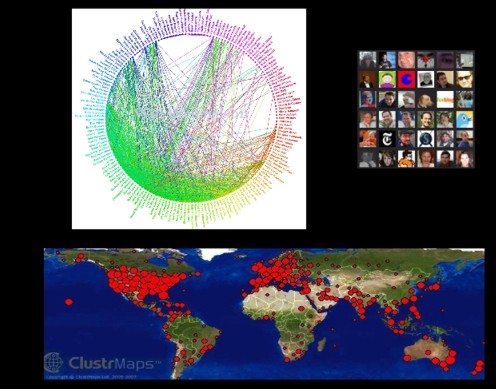
willnetwork

 Will  Richardson’s networks

I’m guessing there will be several blog posts about the SLAV conference, Perspectives on learning V2 today. I have considered whether to leave it to others, but a post always deconstructs my own thinking, and creates an archive for later reference.

Will Richardson was the keynote speaker, and he spoke about Network literacy: leveraging the potential of a hyperconnected world. There were concurrent sessions by Jenny Luca (Now you know Web 2.0, what next?), Adrian Camm (Why create a virtual learning community), and John Pearce (Projecting passionately with Web 2.0). The Plenary session was presented by Kerry Rowett and Judith Way (Web 2.0 and resources for you), who write the SLAV blog, Bright ideas.

SLAV is to be congratulated on providing cutting edge professional development, and also on providing links to the presentations on their Bright Ideas blog.

What I’m not going to do is summarise the talks. The slide presentations will give clues, and the podcasts to follow will provide the detail. What I’m going to do is pull out of Will’s keynote speech some of the main points that resonated with me.

Firstly, anyone who has read Will’s blog or looked through his Delicious tags, will know that network literacy is a leitmotif throughout his writings. If you compare the idea of network literacy with our traditional concept of literacy (at its most basic, reading and writing), then you have an idea of how Will stretches the idea of literacy, and also where his focus is. The hyperconnected world he speaks of is a connectedness which is made  possible by technology, but which is not focused on technology itself, but on a connectedness with people and people networks. And these networks are the source of information for Will. He doesn’t Google when he needs information, he goes to his Twitter or Delicious communities. When he wants to know what ‘s going on in the world, he doesn’t just read newspapers, he prefers to go to his personally designed sources in his Google Reader (RSS feeds), or to his favourite bloggers when he wants deep conversation. He connects with people who share his passions, with experts far and wide, and he urges us to do the same.

And so we shouldn’t be surprised when Will speaks of schools as places which need to change. He quotes Clay Shirky (Here comes everybody) who says we have to get outside of our physical spaces which define our schools and learning, and connect with people and networks globally. He reminds us that our students have already made it out to networked activity through social media sites like Facebook and MySpace. He pre-empts our concerns that Facebook is trivial and uneducational by pointing out that kids are already moving beyond the superficial and using social media to form interest-based groups, where their interaction is based purely on passion and transcends physical space, time zones and cultures. We are impressed when we realise that these experiences place kids in a position of being teachers as well as learners. We really get the point when we hear that this all happens outside of school, when it hits home that self-organised learning and teaching activities driven by pure passion are taking place outside of our learning institutions. While we have the problem of increasing disengagement in our classes. The point hits home with some discomfort.

Here are some points that came out of Will’s talk:

  • learning is an ongoing process, not something that fits neatly within a measured time frame
  • blogging allows us to rethink what it means to read and write; it becomes a connection, a conversation with an authentic audience
  • literacy is malleable and will evolve further in the next few years
  • multimedia texts expand literacy to include critical thinking and analysis
  • we need to create and navigate our own personal learning network, and teach our students to do the same
  • network literacy cannot be taught as a one-off course
  • we need to help our kids create a digital footprint, so that they have positive results when googled

Listen to the podcast when it comes onto the SLAV website for the rest of the talk.

Jenny Luca’s talk was a passionate account detailing her journey from Web 2.0 to making a difference to the lives of many people with the help of individuals and communities around the world. Amongst other projects, she spoke about Working together to make a difference which she is most proud of, since it is testimony to the best of people’s collabortive efforts.

I could go on; all the talks I attended were extremely interesting and relevant to educators. It’s the kind of resource and ideas list that could keep you going for a very long time. I’m already using most of the Web 2.o tools and applications that were mentioned, but I’m trying to integrate them into relevant and creative learning and teaching. What I have learned from hearing people like Will and Jenny speak, has not centred on new tools, but shifted me into a different direction, provided me with a new perspective.

What I’d love to find out now is how the audience received these talks, how people felt, what they thought, what resolutions, if any, did they make as they walked out of that conference. Did it make a difference? Please leave your honest comments here, and perhaps we can have a conversation. Did the talks effect a shift in your perspective and teaching direction, or did it just make you shift uncomfortably in your seat?

Thinking and writing about biology

Sean Nash created a biology NING. One that even I want to join. Why is that so remarkable? Because I’m not a science person.

Sean Nash has created a NING called ‘Principles of biology: bringing life and living things into focus’. Yes, it’s about science. Yes, it contains lots of scientific facts, but it also approaches the teaching of science in a different way.

When I clicked the Forum tab at the top of the NING, I chose a discussion called ‘Synthesizing Respiration and Photosynthesis’. It doesn’t start with a long dry paragraph full of scientific facts. Instead it goes like this:

Take a good, solid read of this blog post. Read it again after thinking about it for at least five minutes. Then come back to this forum and scribble a bit creative commentary on how our study of photosynthesis and respiration allows you to really get at a deeper meaning of the post entitled: Grinding Grain by Dr. Doyle.

What is remarkable? The topic is introduced by a blog post. A blog is a discursive thing. The blog is called Science teacher: breaking out of the classroom into the world. That already tells you something. The blog begins with a poem about grinding grain by Antipator of Thessalonica, 85 B.C., and it’s descriptive in a way that makes you feel the process physically.

I love the fact that the instructions that go with the reading of the blog post recommend a second reading after a few minutes of thought. Thinking is part of the instructions! And what follows is not a summary, not a copy and paste of facts, but instructions to

scribble a bit creative commentary on how our study of photosynthesis and respiration allows you to really get at a deeper meaning of the post entitled: Grinding Grain by Dr. Doyle.

That’s ‘how’ and ‘deeper meaning’ in the same sentence. Now, brace yourselves, but here’s what follows as instruction:

A description in less than 100 words that is sufficiently creative that at least two classmates leave thoughtful, vote-like comments to… would be worth a measly few (yet potentially powerful) extra credit points to add to your pile.

What’s amazing here?

Description, not summary.

Creative. Enough said.

Requiring response of others. Interaction, whereby your description is required to initiate response in another person. Writing about your response, effecting a response in someone else.

Can this be science?

And here’s the clincher:

What do you get from this? What does it make you think of? Does it allow you to see, or understand anything in a deeper way?

Thinking, evaluating, deeper understanding.

Here is one of the students’ responses:

The knowledge we gained through learning about cellar respiration and photosynthesis really helped to understand what he was saying. As he described what it felt like to turn the wheel, “First my right arm, then my left. I can feel my biceps swell. My legs work, too, shifting my weight back and forth with each pass of the milling wheel. My breathing picks up.” I can now easily understand why he begins to breath more readily, and when he begins to describe photosynthesis, and the creation of the wheat I can really follow what he says instead of being more lost than anything else (paragraph 7). The best place I could see that the knowledge was very relevant was when he begins to show how photosynthesis works in one direction, and that cellular respiration sort of reverses the process ((paragraph 7)

I love the reflection on the learning process at the end of the lesson. There are so many things I love about this way of teaching.

Who said that science was separate from literacy?

Tinkering as a mode of knowledge production

Listen to John Seely Brown’s talk where he addresses the Carnegie Foundation for the Advancement of Teaching, Stanford, CA, 2008.

[youtube=http://www.youtube.com/watch?v=9u-MczVpkUA&feature=player_embedded]

I am what I create is how John Seely Brown defines our new identity.

I’d like to paraphrase what John says in his talk ‘Tinkering as a mode of knowledge production’, and also to offer some of my own thoughts.

Here’s the gist: Since many of the skills that we learn today have become obsolete several years ago, we must find a way to get today’s kids to embrace change, to want to constantly learn new kinds of things, to find a way to play with creating knowledge on the fly by experimenting with things. Notice how different this is to the traditional learning of finite knowledge imparted by the omniscient teacher . How do we initiate this tinkering, this creating of knowledge? John Seely Brown says we need to look for ways to foster the imagination; if there’s no imagination, there’s no creativity. And he places the tinkering learners within a new culture of sharing, in peer-based learning communities, where kids learn from each other. The challenge, he says, is to find new learning environments. We need to go back in time, so to speak, to the comprehensive classroom that had students of all ages in it, where the teacher was the organiser, the facilitator, and where students’ learning was as much from other students as from the teacher. We need to construct an environment where we are constantly learning from and teaching each other. And now for the tinkering.

What is tinkering? John Seely Brown sees it as the creation of something concrete as opposed to abstract or theoretical learning out of context.

Let me take my imagination and build something from it. Build something concrete instead of decontextualised knowledge. Once we’ ve created this concrete thing, we can see if it hasn’t worked, why doesn’t it work, and ask questions: how to build it better. We expect this thing to do something.

Why do we need this new learning environment? We live in a different type of world, one of rapid change. We need to find ways to tinker with ideas, ask good questions, and be able to take criticism. We need to learn in this architectual studio, where all work in progress is made public .

This makes so much sense to me. Currently, as part of our project for the Powerful Learning Practice program in which our school is involved, we have decided to create a NING, a whole-school online learning network, in order to bring the members of our school together, learning from each other, sharing, and making all our processes and projects transparent. In the new learning environment Brown speaks of, we are all able to witness each other’s struggle, understanding the process each of us is going through. What a powerful way of learning with and from each other. As Brown says, when the design is finished, and you overhear the master critiquing another’s design, this has tremendous meaning to us as well because we’ve been part of the process of the each other’s constructing of design. In this distributed learning environment, you learn to accept criticism. You want to be critiqued, you appreciate criticism, you learn from it. Brown sees this as one of the key platforms for lifelong learning and in embracing change.

Today’s networked technology allows us to build distributed communities of practice. Instead of us physically working shoulder to shoulder with others, our avatar is working shoulder to shoulder with others. We have infinitely more powerful tools to craft things, to mash this up. Creativity takes on new possibilties through tinkering – our tools not only allow us to create but also remix. In a short space of time, we can take what we see from others, rework it and recreate it, then give it back to the community for further reworking. How much better is this than isolated learning and creating?

The second message in John Seely Brown’s talk is something I’m very excited about. It’s a positive statement about young people today, and I urge everyone to think about it seriously, because it counters the many negative statements that are thrown out about young people in the age of technology. We are on the cusp of the creation of a new identity. In prior decades a lot of kids grew up thinking ‘I am what I wear’, or what my parents own, or how much money we have. Identity came from material possessions. I’d like to add to that by saying that identity also came from what we did for a living. Our occupation was who we were. It was the name of the occupation that was important, not the internal workings and processes of these occupations.

Here is the most exciting part of Brown’s talk for me : JUST MAYBE, he says, just maybe we are entering into a world now where our own identity gets defined by what we’ve created and what others have added to it.

This is a sense of identity constructed for myself. I passed something onto others, and they have been able to do wondrous things with this as well.

I can relate to this so well. When my children were younger and I was unable to teach full-time for several reasons, I was a ‘housewife’. I was not a teacher, I was not a thinker, I was not someone with creative talents, I was defined by my title. Now that I’m a teacher once again, I’m pushing beyond this title too. In my writing (which is really a remashing of my reading of others’ thinking with my own thinking) in my blogs and personal learning networks, I’m stretching my identity to include much more of my potential, and I’m doing this shoulder to shoulder with many others around the world. Technology is allowing me to recreate myself along with others – unlimited by my geographic location, unlimited by time zones. I’m creating my own identity within a new learning community. I’m a teacher, but what’s most satisfying and comfortable for me, I’m a learner.

As John Seely Brown says THIS IS A DIFFERENT WORLD.

The Mysterious Explorations of Jasper Morello

Love science fiction? Watch this.

[youtube=http://www.youtube.com/watch?v=vORsKyopHyM]

The Mysterious Explorations of Jasper Morello is an amazing, award-winning short animated film which has been nominated for an Oscar and a BAFTA award. The silhouette-style science fiction animation has been developed by director Anthony Lucas, and the story has been inspired by Edgar Alan Poe and Jules Verne. What a combination! 

Quiet Earth gives a synopsis:

 In the frontier city of Carpathia, Jasper Morello discovers that his former adversary Doctor Claude Belgon has returned from the grave. When Claude reveals that he knows the location of the ancient city of Alto Mea where the secrets of life have been discovered, Jasper cannot resist the temptation to bring his own dead wife Amelia back. But they are captured by Armand Forgette, leader of the radical Horizontalist anti-technology movement, who is determined to reanimate his terrorist father Vasco. As lightning energises the arcane machineries of life in the floating castle of Alto Mea, Jasper must choose between having his beloved restored or seeing the government of Gothia destroyed. Set in a world of iron dirigibles and steam powered computers, this gothic horror mystery tells the story of Jasper Morello, a disgraced aerial navigator who flees his Plague-ridden home on a desperate voyage to redeem himself.

The whole film goes for 26 minutes. A great example of steampunk. I’m impressed by how simple animation, silhouette black on white, can evoke such a strong atmosphere and setting. All those dark, heavy machines flying around reminded me of the black hawk helicopters which have been training over my house in the dark without lights. Shiver.

What is School? Look again

As educators, we all want to engage our students in learning. We also know that this can be challenging, and some of us wonder what we can do about it.

Sometimes I think we need an artist to show us what school is really like. Why do I say that? An artist often presents the familiar in a new way, allowing us to see something for the first time, as it were.


This is not a pipe – Magritte

When I think about traditional education, the type of education our children are still receiving, it seems to be artificial, contrived, divorced from life. Perhaps this is the reason young people are bored and disengaged at school, why their potential is not always realised. Am I being too negative?

Have a look at a short presentation with segments from the book  The underground history of American education by John Taylor Gatto where he talks about  education creating empty children without independent thought or individual identity. This would obviously apply to education outside of America. He suggests that we have lost the value found in earlier educational practices where people worked in the context of family work or apprenticeship.

Gatto lists the recipe for creating ’empty children’, for example, you should remove children from the business of work, grade according to age, keep them under surveillance all the time with no private space or time, fill time with collective experiences, grade children and make sure they know their rank, forbid useful knowledge, eg. how to repair a car , build a house, etc.

We could never go back to the time where practical education around family businesses prepared all young people for the world of work, but are we actually thinking about how our teaching is preparing students for the world, or even living and functioning in the world, or are we not thinking about that at all?

I would really appreciate some feedback and opinions here. Please comment.

Teacher’s guide to Twitter

Still in Twitter mode, I’d like to share the teacher’s guide to Twitter by Kate Klingensmith on her blog Once a teacher.

Kate’s post answers those who question whether Twitter is worth the effort – and perhaps all of us have been there. I was certainly there not long ago, and am still expanding my Twitterverse.

Most people start off in a rocky relationship with Twitter.  It doesn’t seem to be as easy or as useful as everyone has said, it takes awhile before you find your niche, and there is an overwhelming amount of information to deal with.  But, just hang on – it’ll be worth it!!! 

Kate links to Mark Marshall’s post ‘Twitter: what is it , and why would I use it?’  Mark explores how to get started, why you would want to share stuff with strangers, and how to get followers in order to make  Twitter a meaningful experience. After all, there’s nothing sadder than a Twitter account with only a handful of followers.

Kate also posts useful information, such as how to manage your life on Twitter, how to control all that information, and favourite Twitter-related tools, and Twitter links.

Finding people to follow is initially problematic. Kate helps out by sharing directories of educators and professionals on Twitter, or suggesting that people use the Twitter Grader keyboard search, or Twitterholic.

I found Kate’s advice about keeping up with the everflowing or even overflowing Twitterstream very helpful (since at times it’s like trying to keep up with the treadmill without falling over

You’re standing on the bank, enjoying the stream as it passes, but you can’t worry about enjoyoing every drop of water that’s there.  Don’t worry about the tweets you missed – I promise that there are always, currently, very interesting things to read.  But – it is nice to catch up sometimes by browsing old tweets on peoples’ profile pages.

Also useful are the links to shorten urls, such as tinyurl  and fun symbols you can use in your tweets. It’s all part of the Twitter grammar and vocabulary.

My favourite section of Kate’s post, however, is the one that links to her favourite Twitter-related tools. Tweetdeck is a more attractive and organised way of receiving tweets; Retweetlist tells you who’s hot on Twitter; and my favourite for today – Twistori, where you can search tweets that start with ‘I love; hate; think; believe; feel; wish.

I wish that I could twitter about something other than food today, but I’m so hungry now;

I love the way the brain cell finally gets up when the body has already begun the day

I hate chasing the clock

Okay, that’s enough reblogging. Here’s where I discovered this fantastic post – on Top 100 Edu Tweeters, which has been revised recently, I’m sure.

Thanks to @Elizabeth Koh for the Top 100 link.

Friday tie day

Well, it’s the end of the week, and it’s lucky I’m feeling so tired because I’m at the end of my tether as a result of ongoing, seemingly never-ending laptop problems, and so I’m past caring. After excruciatingly persistent and varied problems with my school notebook computer, my reading and online participation has been severely curtailed. And see, I’ve reverted to my defensive bombast, taking comfort in florid and meaningless hyperbole. At the end of the week, after doing the minimal homely duties, ie. dinner because, after all, we all have to eat, I’ve collapsed on the couch, and my brain has taken on the form of a failed blancmange (which, by the way, means white dish in French).

Eager to post to validate my existence, but unable to muster up anything of substance, I’m embedding the video, Simon’s cat. I’ve seen this before, but it still lifted the spirits. Hope you enjoy it, and I hope to rise from my ashes and make intelligent conversation some time soon.

[youtube=http://www.youtube.com/watch?v=w0ffwDYo00Q]

By the way, Friday tie day – a friend of mine used to say it, and at her work, people used to celebrate the end of the week by going around and pulling out everyone’s ties. I think she worked with men predominantly. No comment.

Networking is working for some in the classroom

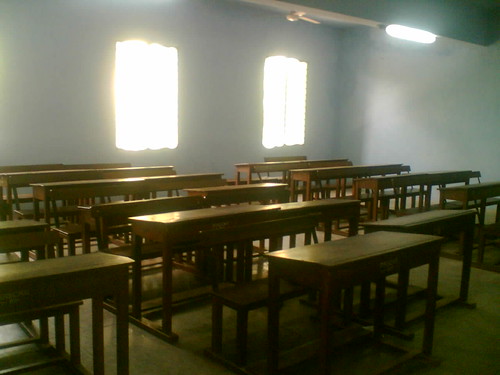
Photo by Thiyaga on Flickr

In his post The added value of networking, Will Richardson quotes Greenhow in a Harvard Graduate School of Education magazine editorial entitled “Thanks for the Add. Now Help Me with my Homework.” , who says that the kind of skills students are developing on social networking sites are the very same 21st century skills that educators have identified as important for the next generation of knowledge  —  empathy, appreciation for diversity of viewpoints, and an ability to multitask and collaborate with peers on complex projects’.

And yet skills are not the kind of thing that most people would expect to associate with Facebook or MySpace. Online socialising, maybe, wasting time, perhaps, collection of  too many ‘friends’ who couldn’t possibly be real friends, definitely, and what about inappropriate language and photos?  Isn’t this how most responsible people view social networking?

Surprisingly for many, and difficult to believe for most, is the fact that social networking has opened up a range of much more interesting possibilities for young people. Will quotes Greenhow saying that

most students use the medium to reach out to their peers for emotional support and as a way to develop self-esteem. One student created a video of his intramural soccer team to entice his friends to come to his games. Another created an online radio show to express his opinions, then used Facebook to promote a URL where friends could stream it live, and then used one of Facebook’s add-in applications to create a fan site for the show.

Recently our Head of English has decided to use Facebook to engage our year 12 boys in a discussion of their texts, as well as provide a platform for general questions about English skills. I’ve mentioned this in a previous post. What a brilliant idea! The boys are already on Facebook in their free time, so why not use the groups application in Facebook? What has ensued is an intelligent and stimulating collaborative discussion, in which the teacher comes in to stimulate discussion and answer questions only inasmuch as all this hasn’t been taken care of by the boys. There’s something to be said for this kind of discussion where everyone can comment, taking their time to think, not being interrupted or intimidated by others, or being able to re-read comments for clarification and review.

The Facebook project obviously had to go through the correct procedures before starting, eg. parent approval, and presentation and justification to the principal. This process is a good way to inform the school community, as well as clarify the teacher’s own reasons to support teaching and learning.

The relationship between the teacher and the boys would be strengthened, I imagine, following the Facebook group project. A teacher coming across to the students’ preferred way of communicating could only be seen as positive. The tone of the conversation is friendly, open, encouraging and often spiced with humour. The divide between teacher and student is diminished, as the teacher becomes more approachable. I think students would also appreciate the fact that the teacher is taking the time to interact with them after hours.

I only wish that somehow parents could see the valuable conversation that is taking place, so that they would understand the value of such a project, but I doubt that these students would enjoy their parents having access to their Facebook accounts!

What were those networking skills again? Empathy, appreciation for diversity of viewpoints, and an ability to multitask and collaborate with peers on complex projects. Students supporting and encouraging each other; learning to respect others’ viewpoints, working together to explore ideas and understandings. Not bad skills for life…