All posts by Tania Sheko

My name is Tania Sheko, and I am a teacher librarian at Melbourne High School, a selective secondary boys’ school 9-12 in Melbourne, Australia. ‘Teacher librarian’ usually requires a bit of an explanation. I think it’s a ‘School Librarian’ or ‘Library Media Specialist’ in the US and Canada. Often people are not sure what my role is, and it’s not easy to define. I like to think of it as the focus on ‘skills’ and ‘passion’ which exists in the spaces between the teaching of curriculum which is the domain of subject teachers. Some of my areas of focus include all sorts of literacies (information, digital, critical, network, etc.), collaboration with teachers as a kind of third hand (curating resources, differentiating learning, experimenting with blogs), and connecting people to ideas and an understanding of self and others through reading, discussion and debate. Most of our students go on to university, and we are always thinking about how we can best prepare them for the world of university and work. I’m interested in the educational environment, behaviours and directions of tertiary institutions, particularly as they move from traditional to innovative practices with connective courses. Connected learning makes sense to me, and I’m concerned that schools are often still envisioning learning as a passive consumption of content delivered by individual classroom teachers. With so much research-based evidence about student-centred, interest-driven and collaborative learning, and with the findings from the NMC Horizon Project, identifying and describing emerging technologies likely to have an impact on learning, teaching, and creative inquiry in education, I really think it’s time we woke up to ourselves about the anachronistic nature of our educational practices and took action. I learn from my colleagues, but also from my online network, reading their blogs, interacting with them on Twitter, exploring the wealth of their shared expertise online. This is what excites me about learning – connecting with people globally for a shared purpose.

The Great eBook Debate – launch of Isobelle Carmody’s Greylands as an ebook

Reposted from Melbourne High School Library blog.

A brilliant idea to build up to a launch of any sort is to make something happen before it. Even more brilliant is to bring all sorts of interesting people to the party and allow them to say something as creatively as they wish. Open this up to everyone else and you have The Great ebook debate on a website that was designed to self destruct within a month as an elaborate countdown to the launch of Isobelle Carmody’s much loved Greylands.

Isobelle explains:

An online launch seems to me the most divinely apt way to relaunch Greylands as an eBook. It was always one of my personal favorites among the books I have written, for reasons you will discover here, as the days pass, but it was out of print. Now books have always gone out of print and authors have always accepted they must, unless they rose into the heavens as classics. But in this brave new world of eBooks, there is no longer any need for any book to go out of print. Cyberspace is the library of the infinite.

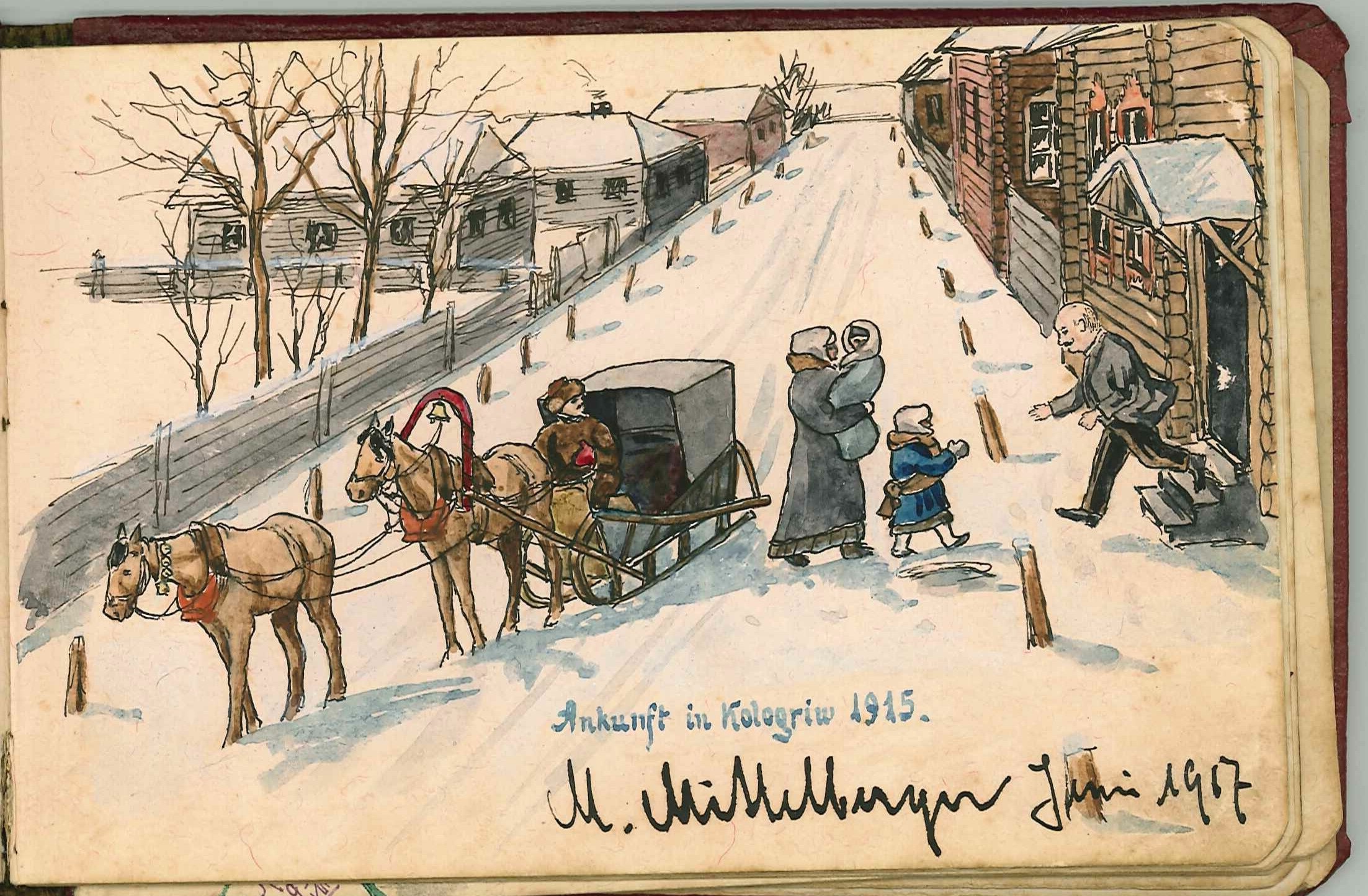
In a strange twist of fate, following Isobelle’s gracious contribution to my students’ blog, I was honoured as one of the people contributing to the ebook debate. I pulled out my grandmother’s gorgeous autograph book, falling apart but full of exquisitely drawn illustrations and original poetry in Russian and German, and mused on what we’ve lost and what we’ve gained in terms of physical and digital resources. You can read it here if you are so inclined.

What is definitely worth reading is the line-up of authors and other interesting people who have unique perspectives about ebooks versus traditional print books. Guest writers are featured each week, and the resulting discussions in the comment sections are worth reading. But why read when you can contribute your views and enter into the debate yourself.

This week’s guest blogger is Gary Crew whose post is entitled The Storymaker. Hot off the press and already attracting comments, Gary joins the list of writers which includes Judith Ridge, Virginia Lowe, Paul Collins, Richard Harland, Nick Bland, Sophie Masson – to name only a few.

The only thing I don’t like about this whole enterprise is the fact that it will disappear very soon. It’s such a shame when there’s so much good stuff which should really be published, perhaps even as hardcopy, or even as an emagazine – what do you think?

Go on, have a look before it’s too late.

Thanks Isobelle.

[vimeo http://www.vimeo.com/43377736 w=400&h=300]

Our esteemed Reading Ambassadors (in the spirit of National Year of Reading)#NYOR

h.koppdelaney’s photo on Flickr

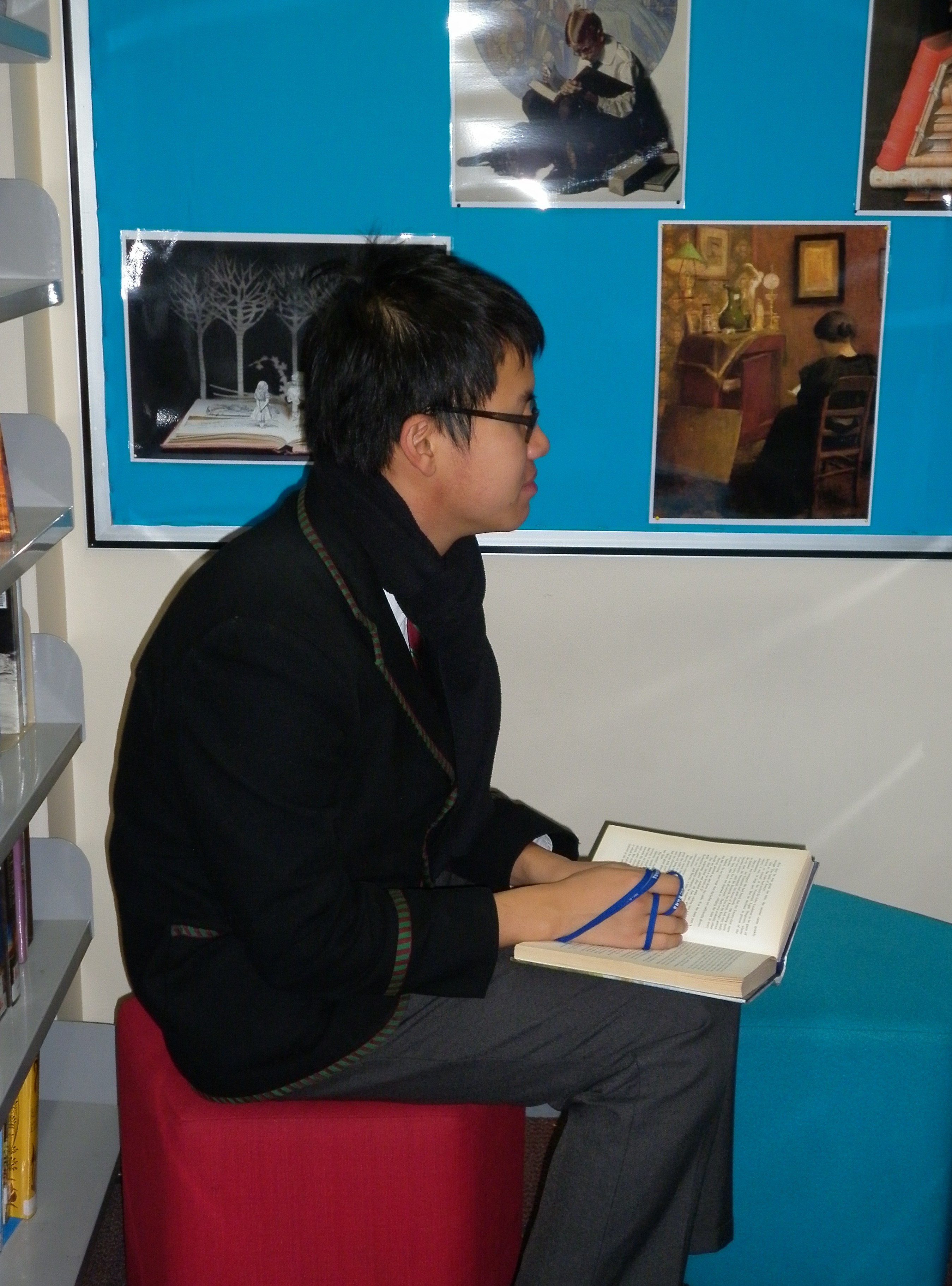
It’s always good to have an excuse for peeking into young minds in terms of what they’re reading, probing their earliest reading memories. We’ve been featuring our Reading Ambassadors in the Melbourne High School blog – except for the first who wasn’t keen on being published.

You can read the interviews with Padraig Gilligan and Alan Ng; you won’t be disappointed.  My favourite discoveries in these interviews are the idiosyncratic pieces of information such as Padraig’s comment:

I really enjoy reading on trains because even if you don’t get a seat, which is sometimes not an option, you have these nice little chronological markers – in the form of the stops & stations that you go through – so you know how long you’ve been reading & how long you have left to read.

And Alan’s brave reading of Thomas Mann’s Doctor Faustus –

Sitting in an airbus A320 at 2 o’clock in the morning on the way to Thailand for a holiday – a reunion with relatives. The book was Doctor Faustus by Thomas Mann. It was very difficult to read the words, it was really, really packed & I’ve got to admit it was really hard to read. But I finished the book – it was confusing but consuming.

You really can find out a lot about people by what they read if you ask the right questions!

Picture by Joel Robinson found on Brain Pickings

4th Melbourne TeachMeet hosted by Adrian Camm at Quantum Victoria

Thank you so much to the organisers, to the presenters, to the participants and to Adrian Camm at Quantum Victoria for the very enjoyable 4th Victorian TeachMeet Melbourne yesterday afternoon. Thanks also to Tony Richards for the live streaming which you can now watch on the wiki. Thanks also to the people who captured the ideas and links to fantastic ways of learning and teaching on Twitter #tmmelb. And thanks to whoever made the awesome and very popular jelly and lemon slice – was it you, Robyne Luketic aka @handsdown?(please share the recipe).

I’ve attended Melbourne TeachMeets before but never presented because this is something I still shy away from. If you’re like me and don’t feel comfortable with public speaking, let me tell you that the 7 minutes is a nice little amount of time, and the TeachMeet audience is not at all intimidating. I would feel much more intimidated speaking to the staff at my own school.

The variety of the snapshots shared yesterday is what makes this kind of (un)conference so satisfying. Further investigation is made possible after the event when you follow links to blogs, and links and summaries of information shared on Twitter #tmmelb. The learning after the event is ongoing.

Of course, meeting new people and catching up with Tweeps is always the most enjoyable and enriching part of these events. I enjoyed the mix of education backgrounds, including teachers from both primary and secondary students, from all faculties, elearning and ICT people, principals and assistant principals and museum educators. It’s nice to connect with different sectors and hear about what they’re doing. The breadth is really valuable.

I have to say that I enjoyed ALL the presentations, but I’m not alone in saying that Mel Cashen’s (@melcashen) moving presentation of her visit to Rwandan schools was particularly inspiring, and enlarged my perspective in terms of what’s important in education on a global scale. Mel has obviously experienced something life changing, and it will be interesting to follow her path from now on. Thanks, Mel. Here’s the link to her blog – well worth reading.

Please also take the opportunity to involve your students in Judith Way’s high-quality Readers’ Cup program which Judith and friends generously organise in their own time and without charge.

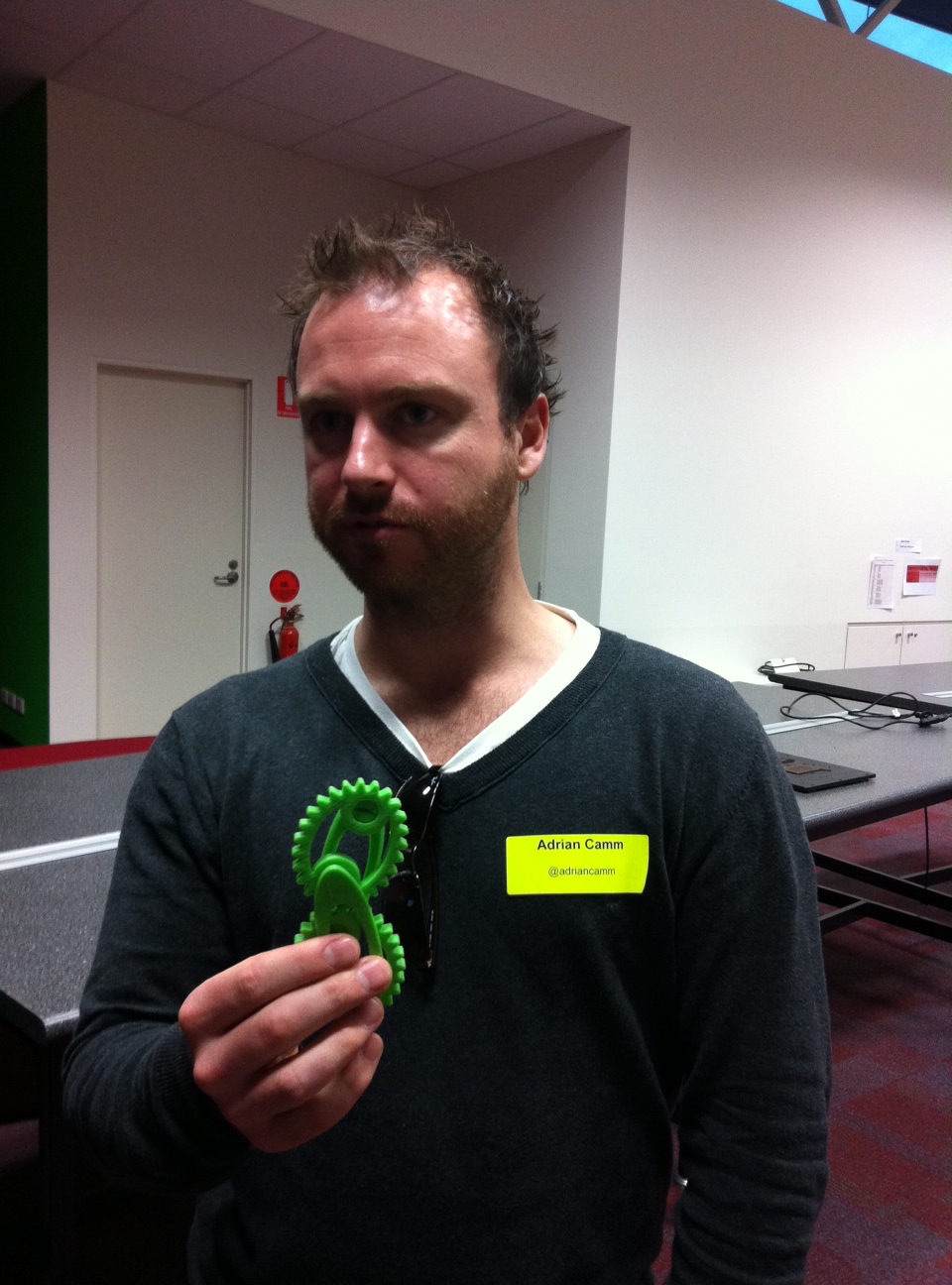
Finally, I must rave about the tour of Quantum Victoria’s facilities – very big and very impressive. The programs sound amazing; I’ll definitely share these with science/maths teachers at school. Adrian mentioned something coming up which focuses on literacy so I’m keen to find out about this and involve my own students. I’ve leave you with a couple of photos of the 3D objects which came out of the state-of-the-art printer. Lots of oohing and ahhing at this point.

Yay for collaboration! The face of professional development is changing!!

TeachMeet Melbourne at Quantum Victoria

I’m looking forward to the professional sharing and F2F catching up at tomorrow’s TeachMeet Melbourne at Quantum Victoria. It’s a fantastic (and free!) opportunity to get together and share knowledge and ideas, as well as get the collegial support everyone needs.

As always everyone is invited to give a very short presentation; topics can be viewed in the Google doc. I decided to overcome my aversion to public speaking by offering a 7 minute show-and-tell about what’s valuable and enjoyable on Facebook. You can see the screenshots in the presentation below.

Looking forward to it but not happy about getting my 3rd cold for the term!

[googleapps domain=”docs” dir=”presentation/embed” query=”id=12VC8N1pbbBkF9NewetdmgBByot0DT_KPp671cD295MY&start=false&loop=false&delayms=3000″ width=”960″ height=”749″ /]

Thinking about teaching writing in a connected world

Image found here

The eye is naturally drawn to things you’ve been thinking about. So it was for me last night when I was browsing my Twitter feed and came across Susan Carter Morgan‘s retweet of Angela Stockman‘s link to her article The questions we ask when we begin to teach writing on the WNY Young Writers’ Studio  website. Angela asks:

“Is it possible to teach writing well if your students aren’t aware of what’s possible now? If they aren’t publishing online?”

An interesting question. Although I hadn’t exactly been phrasing it as specifically as this, I’ve been wondering about the task of teaching writing at a time when our publishing options are so many and varied; wondering whether we’re doing our students a disservice if we continue to teach writing the way we were taught. I mean without recognizing the opportunities for a broader, online audience. I’ve been rabbiting on about this for quite some time.

I also wonder why we are still predominantly text-centered with regard to storytelling options when there are so many other options for storytelling, particularly with the new digital possibilities.

“Composing isn’t just about text anymore.”

And it isn’t. That’s not to say it’s any less important to teach textual writing but there are so many other things to consider. If our students are reading stories online, enjoying graphic novels, following and creating stories in virtual worlds, then shouldn’t we be exploring these new forms of narrative with our students?

There’s a mounting list of technological applications which enable and enhance storytelling. These options incorporate visual and digital literacies, amongst others, but writing is still the crux, that is, creating plot, characters, setting. The story itself, is still a matter of writing. As Angela states:

“I don’t focus on genre or the writing itself at first either. I find myself asking questions about who the writers are, what kind of difference they want to make with their words, and for who.”

“When my grandmother died, she left behind her childhood journals and a whole bunch of letters,” someone mentions to me quietly. “Seeing her handwriting helps me hear her voice. It keeps her alive.” And I appreciate this. I know that when I look at my daughter’s blog and when I skim through her Flickr stream or her Facebook updates, I experience the same feeling. For me, it isn’t about the ink. But I’m not the only audience the writers I work with will have. In fact, one thing I do know for certain is that if I’m doing my job right, they won’t be writing for me—they’ll be writing for other people, and their purposes and the tools they will use to connect with them will vary. As a teacher, what I think and what I need doesn’t matter at all. It’s all about the writer.”

I wrote about something similar in a post a long time ago when I found my grandmother’s old autograph book, remarking:

The autograph book demonstrates a lovely collection of shared sentiments, but at the same time, this generation is collaborating in newly found ways to create.
The tools are always secondary to what is being created. Angela says:

“Our first task is to connect writers to themselves, their needs, their vision for the difference they will make, and their ideas. Who do they want to move with their writing? What is the best way to accomplish this? What’s possible, given the range and access of tools that are available today?” (my emphasis)

Trying out blogging as a platform with year 9 students has shifted something seminal to successful and convincing writing. I was nodding when I read Angela’s words:

“My work involves helping writers develop and share their own. What they are writing has to matter to them. It also has to matter to someone else. Otherwise, they will not persevere as writers. It’s as simple as that. School teachers can force kids to write by threatening them with failing grades. Fortunately, we don’t have that awful luxury at Studio, and I’m grateful for this. It keeps us honest. It keeps our writing real. It helps us persevere.”

In her excellent article Remaining seated: lessons learned by writing Judith M. Jester advises teachers to write if they’re teaching writing.

“As a teacher of writing, I consider writing to
be one of the most important things I can do for
my kids. I need to put myself in their place on a
continual basis so that I more fully understand
what I am asking them to do. How can I know
what difficulties they face if I don’t face them, too?
How will I know what strategies to suggest if I
have not tried them first? How will I know the
joy they experience when they are genuinely
pleased with a draft if I have not felt the same joy?”

It’s a shame that teachers are so busy teaching, assessing and writing reports that they don’t have time to do what they teach. Judith is passionate about the teacher modelling writing:

“What they fail to understand is that they will produce better writers if they pick up a pen for something more than evaluation. If they do, they will learn far more about teaching writing than any instructor’s manual can ever tell them.”

I’m not sure that teachers have much of an opportunity to do much more than keep up with teaching their classes, correcting work and writing reports. The expectation of schools, of a curriculum which drives teachers and students towards the final assessments in senior years so that students enter tertiary institutions of their choice – does this allow much room for senior school teachers to choose between what they want to do and what they must do?

The article gives food for thought. Judith writes about the power of process, the power of feedback, the power of audience, the power of modeling, the power of thinking. Definitely worth reading and thinking about.

Wouldn’t it be nice if teachers’ lives were balanced to allow time for themselves – to think, to try things out, to model what they teach, to alleviate the relentless pressure and give them some space just to be. Teachers should be nurtured as learners too, not just have their last juices squeezed out of them.

Image found here.


The joy of student group dynamics

When I started at Melbourne High School several weeks into third term last year, I inherited the co-curricular group, Competition Writing. Co-curricular participation is a big thing here. Yes, it’s compulsory but the students are eager to be involved in a range of activities and their passion is palpable.
I knew it would take time to feel my way into the Competition Writing group but I was impatient for the time when I would be accepted as the co-ordinating teacher, the time when I had developed a relationship with the boys, and was eager to reshape the aims and group dynamics, the platforms for participation. The previous teacher had obviously nurtured a committed group of boys, some of whom were capably leading the group in positions of responsibility.
I had a personal mission – to take the focus from winning the competitions to something I consider more important – particularly in a school where competition is second nature to the students. I envisaged an online network which would inform and encourage, a community where collaboration and good will would provide peer support and develop collegial friendships.
And finally it’s happening – gradually the boys are discovering that the Facebook group space is providing an open door for group communication outside school hours, at the time when they actually have the time to share stories, seek advice and provide guidance. The little community is coming to life, and  I couldn’t be more pleased.
I’ve always thought it absurd that the teacher is the only audience for student writing. I suppose at my school there is enough impetus to succeed so that students are not unhappy receiving marks and commentary from their teachers. But it’s not empowering enough, not a way to prepare students for life. They are not going to be working in isolation in their jobs, and their success will hinge on the way they collaborate with their colleagues, not compete with them. The boys in this group have begun to realise how much they can learn when they share their writing (in the group’s blog, UnicornExpress), and share advice and constructive criticism. I’m impressed with their preparedness to ask for this criticism, their instinctive awareness that they can only benefit from others’ feedback instead of feeling insecure and remaining inflexible with regard to an editing process.
I can’t measure the extent to which their writing has changed since they know it’s being read by others in the group, but I imagine it would be an incentive, just as the Year 9s have been finding their own voice as they write to a peer audience in their blogs. And although I still post far too frequently (too much to share!), the boys are starting to own the Facebook group, taking the initiative to share what they know and take the lead. They have been respectful and positive, empowered and empowering – this is what the media should communicate to balance out the negative, fear-mongering articles which colour people’s view of social media and put the fear into parents and principals.
I’m proud of my boys – proud of their passion and willingness to share and nurture, and privileged to be a part of their collective talent and passionate involvement.
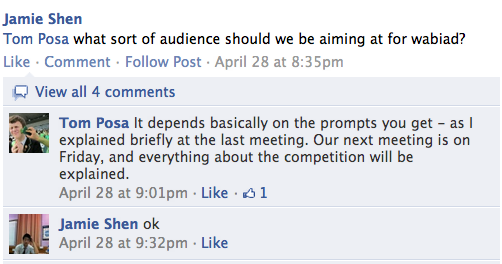
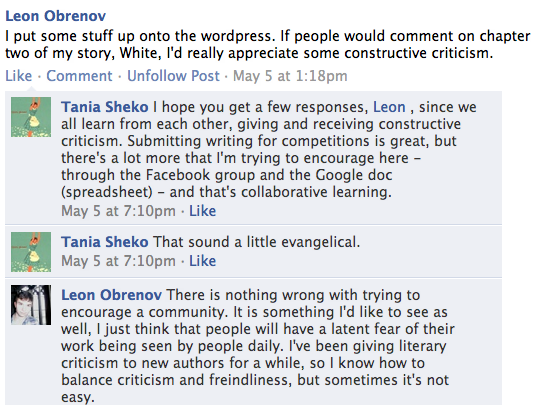
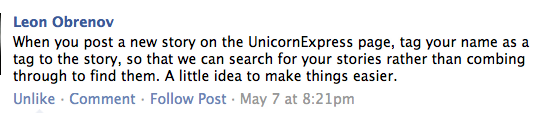
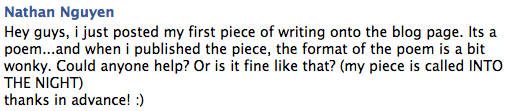
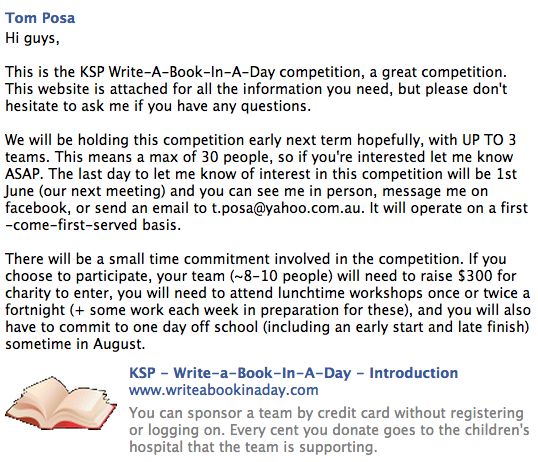
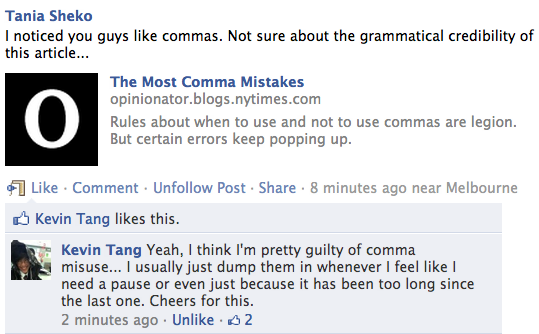
I’d like to finish off by showing you the kind of interaction that takes place in the Facebook group – bearing in mind this is out of school hours (Facebook is blocked at school). So here’s a snapshot of the Facebook group activity:
The students are asking intelligent questions –
They are really ‘getting’ the importance of community –
They are sharing the things they do outside school –
They are sharing their expertise and ideas –
Troubleshooting –
They’re asking for help and giving it –
Practising leadership –
There is a willingness to learn and keep learning –
 I’m proud of my students and feel privileged to be a part of their dynamic community.

Our students were told to get lost – online

Yes, it’s true, our blogging boys were told by Nick to ‘get lost’ –

Have you ever had the pleasure of being lost? Not just a bit disoriented, but utterly, irredeemably confounded?

The excitement of not knowing what’s literally around the corner mingles with the terrifying possibility of never finding your way back home and the result is the humbling revelation that you’re not the centre of the universe after all; your known world is a tiny speck on the edge of a vast and beckoning globe. Bliss!

I’m amused by the esoteric nature of the student tasks, and how well they’ve embraced each new challenge, putting in their heart and soul in most cases. I don’t think they’ve ever been told to ‘get lost’ online, never been asked to think about and document the randomness of online browsing, to think about how it made them feel. One of the students commented at the end of his post –

Meh. By far the weirdest task so far –

but on the whole, students have good-naturedly played along and produced writing which was well worth reading.

Nathan is an example of this:

I soon ended up at the New York Public Library which was pretty bizarre considering that I started off with moths.

However, it wasnt the outcome of my research that left me spellbound. It was how I felt. I was reading article after article that I soon lost track of time. I was so engaged with these articles that I became lost.

The beauty of getting lost online is no matter how hard you try, you may never be able to retrace each individual step of getting lost. Each time you get lost online, its always a different story; always something new.

This task has inspired me to learn in a more positive light, that the online world has more power and is more influential than we know!  

Lachie was quite enthusiastic about the whole thing:

This task has inspired me to play endless hours of the wikipedia game to satisfy my now addicted curiosity of being lost. So goodbye satnavs and goodbye readers as hours of drooling over my keyboard tirelessly playing the wikipedia game await me!

Andrew did a lot of thinking and reflecting, coming to an honest conclusion about the task of documenting the process of getting lost online –

But, this gets me thinking. If getting something that you do conciously, to become something you do subconciously, is it harder the other way around?
Immeasureable amounts of information are processed subconciously. Can we get something we do subconciously, to become something we do consciously?

I honestly have no idea.

Fantastic! Questions leading to more questions – surely this is the beginning of a healthy thinking habit.

Richard started searching ‘purple’ and got lost on the way through the wrong meaning of ‘shade’, coming across an article about ‘umbrellas used about a Bulgarian who was killied by a dose of ricin injected by a modified umbrella.’ to secret police, methods of torture and finally thought experiments and Schroedinger’s cat.

I only just realised that I was well and truly lost online, here I was reading about some wierd paradox that I have absolutely no IDEA how I ended up here. So I guess curiosity takes over the feeling of being lost online. This activity took over an hour, but it was totall worth it and I have learned a lot more about the world. Looking back on this task, I am amazed and perplexed how I started from a simple colour, purple, to a brain-frying paradox.
It must be so much more satisfying to receive a comment from your class mate than your teacher, wouldn’t you think?
On first impression, the chain of links that you followed seems rather strange, but when I read your reasoning , I felt that the process by which you got to Schrodinger’s Cat was perfectly logical and quite coherent, which surprised me as the human thought process can be quite difficult to comprehend at all. It is testament to your very well-written and highly enjoyable writing style that people will be able to read this article and connect with it.P.S. Nice one on the Schrodinger’s Cat paradox. Have you heard about Wigner’s Friend. Read it, you’ll find it quite interesting.
It’s clear when comparing first posts with those recently written that students have moved away from the kind of formal writing they consider appropriate for submission to their teacher. They’ve relaxed and become quite comfortable with writing using their own voice. They are no longer writing for the teacher in a prescriptive manner; they are writing for their peer audience, and also for their wider audience. Most of them are openly enjoying the writing task, despite the ‘weirdness’, and occasionally a student expresses criticism at what he perceives to be a meaningless task. We noticed definite cynicism expressed by a particular student recently, but, as Nick says, ‘the positive spin on …’s post is that he is thinking about his mind, and forming opinions about productive ways to use it.’
This is why we both feel the blogging experience has been valuable – students are thinking. They are thinking about the world, knowledge, themselves and about thinking itself. Their writing comes from real perceptions and is aimed at real people. And more than that, they’re sharing their thoughts with class mates and the wider world.

2 Year 9 classes, a teacher, a teacher librarian, a couple of Australian YA authors and lots of blogs

This is a progress report for our blogging Year 9s (2 classes). Let me first say that I am loving, loving the learning that’s happening with this cohort. Following Michael Gerard Bauer‘s guest post, ‘I blog therefore I am‘, Nick and I were wondering how to respond and which direction to take. We loved the fact that Michael had tuned into what the boys were writing about. Michael has been generous to my students before – several years ago at my previous school. He has a brilliant way of speaking directly to the students in an informal way, combining humour with a serious message. Nick and I wanted the students to respond to his post, and to develop a theme in a post of their own. We decided to pull out Michael’s final message to the students:

So I encourage you to keep up the writing boys. Words are powerful, amazing and life changing things. Don’t pass up this opportunity to find your own and share them.

I like the idea of teachers modeling what they want their students to do, and happy that Nick agreed to both of us writing our own posts about the power of words. In doing this we lift the barrier between teacher and student, and we also let the students see a little of ourselves. I was also toying with the idea of introducing hyperlinked writing to the boys. I’ve written about the importance of hyperlinked writing before, and since then I’ve read an excellent post by Silvia Tolisano about it. Jenny Luca has referred to Silvia’s post in her own recently.  I believe it’s something we should take seriously – it’s the way we read online so all the more reason to incorporate hyperlinked writing in our set of literacies. Modeling is a good way to make a start. And so Nick and I both wrote posts using hyperlinked writing.

Nick’s post was entitled ‘Find the right words’, linking back to the earlier theme of ‘you are what you know’ and highlighting the idea of learning not just for school but ‘for the person you want to be’.

At school, we are constantly engaged in the getting and using of knowledge, and the main thing that makes this possible (even more so than an iPad!) is language.

Nick talked about poetry and revealed that he looked to

‘poets to reveal to me the ideas about life I sense in my gut, but don’t always have the words for myself.’

In his final paragraph Nick asked the students to

respond to Michael Gerard Bauer’s clarion call to embrace the power of language. Reflect on what this means to you. Perhaps think of a time when choosing just the right words was important.

The students were asked to read my response to the theme of the power of words, and to comment on three other posts, and see what kinds of ideas their classmates came up with.

More than anything else, I love the way we are all entwined in ideas which have been shared and developed – 2 year 9 classes, a teacher, a teacher librarian, a couple of Australian authors and the 2 classes of student blogs housed in the teacher’s blog. It really does become a form of diary, but not that of a solitary person, on the contrary, a shared document which traces the collaboration of ideas and dialogue as they develop over time.

It’s words, and it’s also so much more than words.

Please read some of our students’ posts (their blogs are linked on the right hand side of the main blog. We would love to hear your comments and ideas.

[vimeo http://www.vimeo.com/13768695 w=400&h=225]

WORDS from Everynone on Vimeo.

Writing – audience optional

For a very, very long time we have accepted the fact that teaching writing to students takes place without an authentic audience. Students’ writing is the property of one subject teacher, and if the students are lucky, they’re permitted to read their piece to the class. Generally it’s considered that learning takes place once the student has received a mark and feedback from the teacher.

There is a much better way, and students are often finding this independently, outside school. This is why, as moderator of my school’s Competition Writing Group, I’ve created a blog and a Facebook Group so that students can share their writing, receive feedback and feel like part of a like-minded, community. It’s taken a while for the conversation to develop as students gradually embrace ownership of the group, and that’s when I can pull back to allow peer learning to take over.

I’d like to post something written by a student who has experienced the benefits of a global writers’ community. Best to hear it from the source.

As a young writer looking to develop my skills, I started writing many short stories, and novellas and the like. After having written a large amount of stuff over the course of a year, I was faced with another problem. I was in need of feedback, but wary of going outside of my immediate circle of friends to find it.

One option was suggested to me, and that was to submit some things to competitions for students. I thought about doing this for a long time, before I realised I had a problem with that as well. Friends of mine had submitted things only to get a reply email saying they hadn’t made the shortlist, and that that was the end of that.

This was something I didn’t want. I wanted somebody who was good at writing themselves to look at my work and maybe leave me some constructive feedback, and the seemingly faceless judges of these competitions didn’t seem to be too willing to do that.

So it was by pure chance that I discovered another medium to gather feedback for my various writings, one that I still participate in today, and one that has led me on a literary journey of amazing experiences and wonderful creations. I discovered two websites, fanfiction.net and fictionpress.com, from a friend of mine.

Fictionpress.com was more relevant to me to begin with, because it is a site where authors can effectively post any kind of original material, and the wide variety of reviewers and other authors on the site can respond. I found the society there to be highly constructive, and highly informative. These days, some three years later since I began that journey, many things have changed. I now give tips more than I take them, but that is a perfect example of how the site has affected me. It breeds a community, where new people get help, become experienced people and cycle goes on and on. With many friendly people, the experience has been brilliant to be engaged in, and while it is also a faceless medium, it is certainly far more constructive than entering competitions.

Fanfiction.net wasn’t something that I got involved with until later, when I became more confident in my writing skills. Ironically, most people step the other way, and begin with fanfiction.net and move to fictionpress.com. One of the reasons for this is that fanfiction.net provides writers who want to improve their writing without spending enormous amounts of time creating a world and creating characters. On fanfiction.net, the worlds and characters have already been created for you, which is sometimes really useful. All the writer has to do is invent a plot and write.

The site is also particularly good because the community is very friendly and very informative. When I first began to work on this site, people critiqued my writing effectively, and in return I critiqued theirs, and since, I have had some amazing opportunities through the community. I have had the opportunity to review works by some truly outstanding writers, and the opportunity to work on things collaboratively with up to as many as five authors from all over the world. The experience is amazing, and the friendliness of all involved has been outstanding.

Overall, I like the online community because of its productive kindness, as opposed to judges for a writing competition who are mostly nameless, faceless and not really helpful at all.

Cheers, Leon 

Thanks, Leon.