All posts by Tania Sheko

My name is Tania Sheko, and I am a teacher librarian at Melbourne High School, a selective secondary boys’ school 9-12 in Melbourne, Australia. ‘Teacher librarian’ usually requires a bit of an explanation. I think it’s a ‘School Librarian’ or ‘Library Media Specialist’ in the US and Canada. Often people are not sure what my role is, and it’s not easy to define. I like to think of it as the focus on ‘skills’ and ‘passion’ which exists in the spaces between the teaching of curriculum which is the domain of subject teachers. Some of my areas of focus include all sorts of literacies (information, digital, critical, network, etc.), collaboration with teachers as a kind of third hand (curating resources, differentiating learning, experimenting with blogs), and connecting people to ideas and an understanding of self and others through reading, discussion and debate. Most of our students go on to university, and we are always thinking about how we can best prepare them for the world of university and work. I’m interested in the educational environment, behaviours and directions of tertiary institutions, particularly as they move from traditional to innovative practices with connective courses. Connected learning makes sense to me, and I’m concerned that schools are often still envisioning learning as a passive consumption of content delivered by individual classroom teachers. With so much research-based evidence about student-centred, interest-driven and collaborative learning, and with the findings from the NMC Horizon Project, identifying and describing emerging technologies likely to have an impact on learning, teaching, and creative inquiry in education, I really think it’s time we woke up to ourselves about the anachronistic nature of our educational practices and took action. I learn from my colleagues, but also from my online network, reading their blogs, interacting with them on Twitter, exploring the wealth of their shared expertise online. This is what excites me about learning – connecting with people globally for a shared purpose.

Learning: that’s how we live

Learning is not something that can be captured, predicted or assumed. It doesn’t fit neatly in a table, it’s not defined accurately in a chart, a survey, it doesn’t happen the same way for you as it does for me.

We try to prove that we understand it, control it by conducting research, analysing results, following assessment rubrics, but we should just keep our eyes open and watch. It’s happening around us, at breakfast, in the classroom, the playground, during the holidays, on the bus, and even as we sleep.

Sometimes, as educators, we think that we haven’t influenced the learning process in any of our students (or even our colleagues). We may have been too impatient, too hasty in making that assumption. Evidence of learning can surprise you at the most unexpected times.

I have to admit I wasn’t thrilled to return to school after many weeks of holiday, but it had to happen. Last year I was very happy to join forces with a dear friend, teacher of English, who was brave enough to weather the uncertainties and hazards of ning learning. We tested the Web 2.0 waters together, and made learning interactive with real-life connections and conversation for our students. It seemed that this kind of teaching and learning was not going to catch on fast.

In the first couple of days at school this year, to my delight, several teachers have approached me to help them create a ning, blog or wiki for their class. I’m stoked. I hope that this year will be as fulfilling for them and their students as it has been for me in my own participation in learning communities online: learning from each other wherever we are.

One (or even two) of our classes will be participating in a photo blog project with Marie Coleman in Florida, USA, and Sinikka Laakio-Whybrow. Inspired by our own experiences in the Flickr 365 day photo challenge (and similar projects) – and this is how we met – we wanted to try this out in the classroom. With a weekly theme for photos, we hope that students will enjoy learning from each other,, and that literacy development will naturally spring from curiosity and an exchange of cultures.

A seemingly simple task, posting a photo and writing about it, can actually be a higher order exercise. Marie’s and Sinikka’s posts attest to the depth of thought which can be achieved.
Sinikka’s post:

Today’s Daily Shoot also became the theme of my 365 photo:

“Let’s have some fun on a Friday. Make a photo that goes with the title (or lyrics) of a song. Interpret away!”

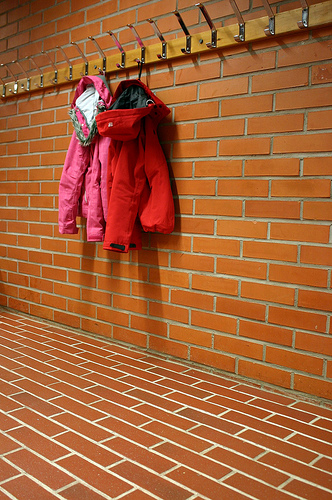
Another ordinary day at school, in the familiar red-brick environment. I am thinking what is the state and purpose of education today. I’m sure many students would still sign Pink Floyd’s message of not needing any education from back in 1979. At least not the same old, numbing and repetitive, factory style.

Aren’t schools still too often working like the meat grinder in the brilliant Gerald Scarfe animation of the song where kids are dropped only to spew out uniform minced meat at the other end? Is there any space for individual thinking, learning methods and goals, or chances for each individual to realize their full potential? Why does it seem that the spark, the passion, the joy and creativity are all buried and forgotten inside these walls? Can our students, in their bright pink and red coats, be themselves, and not just other bricks in the wall?

By the way, there is a Finnish expression ‘counting the ends of bricks’, meaning to serve a prison sentence. Sometimes, for me as a teacher, the brick school seems prison-like, too. There are too many outside pressures, constrictions, national assessments and rigid attitudes, which tie my hands.
Marie’s post:

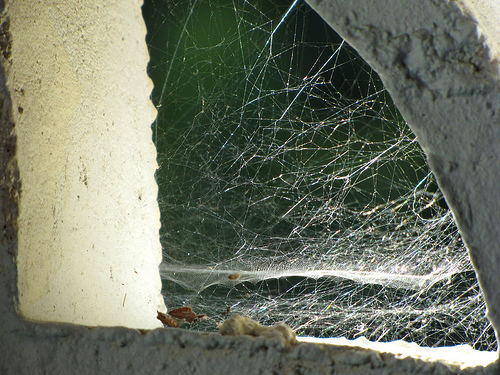
While keeping an eye out for right angles (today’s @dailyshoot assignment), it became apparent that there were a large number of examples in ‘man-made’ structures. On the other hand, there were fewer (or perhaps less obvious) instances in nature and humankind.

Though there is an expectation of support from the angled structures, this cobweb’s network may exemplify the ‘real world’ much more accurately! It certainly reflects the ‘hyperlinked’ nature of today’s youth in their learning and in the interconnectivity of the Internet and all of its tendrils. The web is also much more appealing to the eye, but where would it be without the support and structure of the foundational right angles – guess we need the synergistic relationship of both!

I think these examples illustrate the depth of thinking and fluency of writing which can result from a single image selected to address criteria which still allows choice.

One more thing…

The learning that springs from passion is a wonderful thing. My elder son, who has never studied photography or even art (as an elective) at school, has recently discovered a love of photography, and is learning on the fly. He has joined Flickr groups, and has challenged himself to a daily photo blog. Just last week, he was approached by Zulya and the Children of the Underground for a photo shoot for their next album!

I’m holding onto these examples of learning in the hope of making a difference to student engagement with learning, not for grades, but for life.
A few minutes on Twitter yields hours of exploration

It does. I just spent about 5 minutes on Twitter and pulled out what caught my eye for further investigation.

Google Wave – feature by feature by Jane Hart (tweeted by @TBGooglewave)

Pythagorean Theorem on animoto made by student  (sorry, forgot to note who tweeted this)

Article about Beth Kanter posting links to Haitian support I follow Beth on Facebook and am amazed by her efforts to rally people into supporting the Haiti relief efforts (tweeted by @ZolaMedia)

Her links communicate the groundswell of support, both financially and emotionally, that has grown so large, so quickly, thanks in large part to the role of social media networks such as Facebook, Twitter, Flickr, Linked In and You Tube. 

Jane Hart shares a passionate discussion about the need for change in learning and teaching (tweeted by @netdimensions)

Jenny Luca shares on Twitter her blog post where she recommends a video of a speech by Steve Jobs on life, love, loss and death.

John Connell tweets a post about how the Scottish digital intranet enables students to keep learning when severe weather prevents them from getting to school.

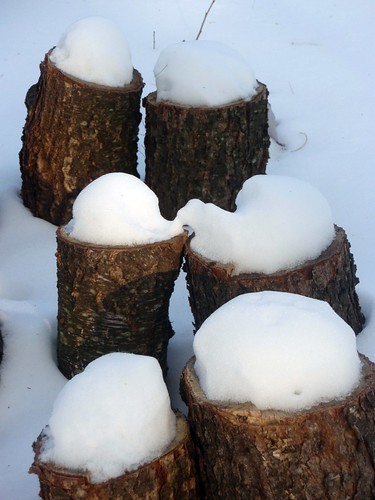
Dianne Cordell shares a Winter photo on Flickr

Joyce Valenza writes about rethinking the role of the teacher librarian (library media specialist)

I wonder if we are too busy doing lots of things that don’t really matter to others.

It’s still January and this is going to come in just under the wire for suggesting resolutions. I am going to suggest a new type of resolution for school librarians.

Let’s stop resolving to do the stuff that doesn’t matter. 

Instead, let’s unresolve.

Let’s focus on those things that make an impact on learners and learning.

@coolcatteacher informs of Google certified teachers and their useful tutorials, including turning spreadsheets into self-grading quizzes

A post about the myth of internet safety; it should be internet awareness that we teach (from the blog Library Media Tech Musings)

@karlfisch asks if anyone has used the search engine Yolink

@langwitches writes about connected learning opportunities

I would like to share a small examples of how technology tools can enhance a learning experience by making (personalized) connections to what is being learned in the classroom, bringing in the outside world, and taking learning literally “off the page”.

Twitter really does churn out the good stuff, and that’s because it’s from people you’ve decided are doing the things you think are valuable. What only took minutes to pull out will provide deep learning. That was just a drop of the ocean I allowed to wash past me. You can’t keep up with everything, but you can be selective.

Whatever time you decide to give to Twitter, it will always provide plenty for deep investigation, keeping up with what’s happening in your sphere, and many, many links embedded in each tweet.


Who needs to learn first?

Amanda Marrinan shared this video on Facebook today – Kevin Honeycutt’s song I need my teacher to learn 3.0.

[youtube=http://www.youtube.com/watch?v=3CIh7FWv4UA]

Yes, I think the learning needs to start with us. Thanks, Kevin, you’re amazing – doing so much to make real learning happen and sharing it with all of us. Not sure how he manages to find enough hours in the day. And thanks, Amanda, for finding the video.

How do we learn from people? Do we trust people? What do people know?

Photo courtesy of Okinawa Soba on Flickr

If I’m going to convince others about the whole point of Web 2.0 technologies, not just teach them how to use the technologies (what for? being the pivotal question), then I’m going to have to sort through for myself what it means to learn from and with other people (as opposed to the traditional learning from books, teachers).

Here’s an example. I’ve been reading the photo blogs which are part of a 2010 flickr challenge. Many of the blogs I follow are written by those living in the northern hemisphere. It’s interesting observing opposite weather patterns, for example, of those celebrating Christmas and the new year in snowy winter while I’m experiencing sweltering heat with temperatures in the high 30s in Melbourne today. Not only is the blog reading informative but the conversation is satisfying, and underpins the joy of learning from people who are real, who have a sense of humour and can answer your questions.

I’ve been enjoying sinikka’s blog. Sinikka writes from Finland so, for example, I learned about Finnish Christmas and post-Christmas customs. Not only that, but I could tell her about our Russian customs. Again, learning through conversation. Not static, dynamic learning.

Some blogs are very specialised. The library history buff blog is very impressive in its range and detail of information about the history of American libraries. You’d be surprised how esoteric some blogs are.

Photo from Library History Buff Blog.

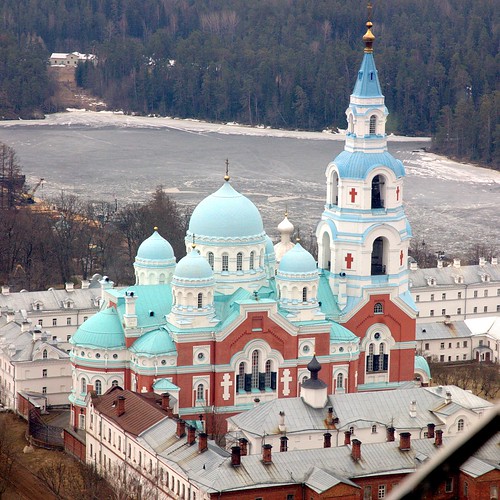
Recently I’ve been mesmorised by the Flickr photostream of priest Maxim Massalitin who shares photos and information about Russian Orthodox churches. He’s from Kiev, and currently lives in France. He seems to have done his research about the churches and monasteries he photographs. In this way, writing blogs and posting photos on Flickr becomes a learning experience for the author too; information is retrieved and provided at point of need. It’s a great way to learn for me, like virtual travel. This photostream contains beautiful iconography, and I love the Byzantine tradition. It’s interesting to see so many different churches and monasteries and to read about their history.

Photo courtesy of H.Maxim on Flickr

I think it’s good to think about what learning means. Does it only happen at school? Obviously not. But we may not realise how much of it happens outside of traditional environments. Think back to when you finished school or university – did you think the main part of your learning had been completed? Well, sure you didn’t. But did you realise that you’d barely begun?

Maybe we don’t think that way but kids sure do – at least younger teens. If you don’t give them a written assignment to complete and hand in for correction, they don’t consider themselves working. Spend the lesson having a discussion which peels away at layers of understanding, and you’ll still be the only one considering this work. The kids won’t think they’ve learned much unless it’s on paper and with a percentage or grade.

My elder son has recently discovered a passion for photography. Now that he’s on University holidays, he has been able to spend a lot of time taking photos, learning how to play around with them, and reading books and manuals about photography. He has spent many, many hours of his time voluntarily researching and learning. And he is loving it.  The best example of out-of-school learning. I note that it takes time, and unlimited, but focused learning can be very, very productive. He also commits to daily posts in a blog celebrating his final year as a teenager. Self-initiated and passion-based learning.

Photo courtesy of phillipsandwich on flickr

Every day I learn so much that is interesting from people online – people who share their expertise and special interests, and who are willing to communicate with others. So much more engaging than learning facts from a static page. We can learn a lot from each other.

People are brilliant

Long school holidays have given me the time to browse online to my heart’s content. I’m overwhelmed by the constant stream of what everyone is reading, writing, thinking, commenting, asking, creating and sharing. How would I know about any of these things otherwise? I wouldn’t.

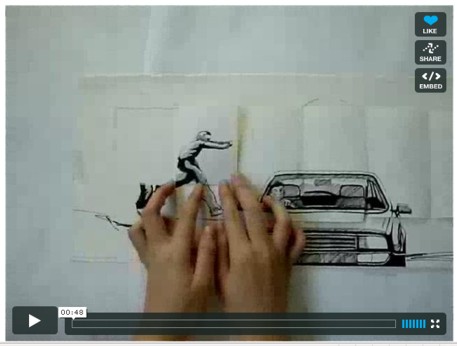
Examples of people’s creativity are shared online all the time. I love the way technology combines with basic skills like drawing and paper folding in this video. The creator of the following animation describes this as ‘a shot at animating the old flip book’.

I can’t upload the video so here’s the link.

parkour motion reel from saggyarmpit on Vimeo.

Thanks to @mizminh

What are your New Year’s resolutions?

Photo courtesy of phillipsandwich on Flickr.

I don’t usually make New Year resolutions but I’m considering it. Resolutions pertaining to my role as an educator.

I’ve been spending a enormous amount of my personal time online – either reading, commenting, writing, on Flickr, Twitter, nings, my own 3 blogs, wikis (both maintaining my own and following others), a ridiculous number of groups, and trying to keep up with some of the obscenely long list of subscriptions in my Google Reader. This exercise has been the result of me jumping in, having a go, experimenting to feel for potential.

Next year is hopefully going to be different. I’d like to have more control so that I don’t feel as if I’m drowning, be more discerning and selective so that I’m not as tired or overwhelmed, and always ask ‘why am I doing this?’ and ‘is this adding value to the educational experience’.

Is this a realistic promise? I’m not sure at this point. Although I’ve really pulled back during these holidays, and I feel the benefits of this in terms of creating some headspace, I’ve also recently added Edublog winners’ urls to my rss feed. I’ve talked about not restarting a 365 photo challenge in 2010 but then joined the group EdTech 365/2010.

It’s not going to be easy. It’s going to require discipline and determination.

In terms of integrating technology into teaching and learning, I’m not going to try to change the way people think or behave. Did I really think I could change the way things operate in my school? If I did, then I was deluded. Do I think I can make a difference? You bet I do, otherwise there would be no point in me being there, or anyone else for that matter. But the difference will be in a very small way with one or two people. My resolution will be to stop spreading myself thin while my head is swivelling 360 degrees in case I miss something, and settle on less but with more depth and lots of evaluation.

I’ll make it clearer that I’m not advocating technology for its own sake, that it’s not necessarily always the best platform and, as Maria and I discovered when we taught year 7 English within a ning, it requires many more hours of teaching support and good plain discussion, and even some old-fashioned, hands-on activities, in order to make it meaningful and balanced. Our ning was never about technology, it was about connection and interaction.

On an emotional level – and I’m not sure how I’m going to do this, but it’s worth a try – I hope to take things less personally (that’ll be a first), care less about the details of things, take up fewer battles, respect difference of opinion, and understand that not everyone wants to put as much in, and that’s okay.

For anyone who reads this blog, I wish you a rich and balanced year, with new inspiration and connections with people. Since I started operating within Web 2.0 platforms for my personal and professional learning, by far the most enriching benefits have been the personal connections with people from whom I’ve learned much and with whom I”ve shared even more.

Photos courtesy of VIRGOSAMARA. Book title translates as ‘With my own eyes”.

threesixtyfivephotos – daily photo challenge

This year I decided to take up the challenge of posting at least one photo a day as part of a Flickr group challenge. I ended up creating the blog, threesixtyfivephotos, so that the daily photos and small amount of written description would have somewhere to live. Now that I’ve almost finished, I realise that this exercise has proved to be surprisingly more than I expected.

Here are some of the themes:

My stuff, what I love and why Day 29 Toys     Day 232 Stuff

My garden and its seasonal transformation, how it responds to extremes in temperature in the summer (fellow bloggers in North America have documented how their natural surroundings have responded to extremes in temperature in the winter – interesting for me since we don’t have snow) Day 31 Heat damage in the garden  Day 242 First blossom   Day 225 Winter garden  Day 269  Rain rain  Day 256 The whole blooming lot

Good friends Day 13 Getting together with friends

Odd things around the place Day 20 The burning giraffe

Favourite Routines Day 17 Victoria Market

Traditions   Day 6 Christmas eve  Day 358  Christmas eve   Day 109  Orthodox Easter

Family Dramas     Day 5 Sasha doesn’t get his year 12 results  Day234  19th birthday saga  Day 302 Fencing

My City of Melbourne   Day 178 Federation Square  Day 164 Royal Arcade  Day 339  City sights

Food preparation   Day 212 Guest Photographer makes tarts  Day 348  Christmas baking

School events   Day 210  School Gala

Overseas visitors   Day 206  PLP and bloggers’ dinner at Southbank

Milestones and triumphs     Day 197  16th birthday  Day 187  He has wheels  Day 238  Namesday  Day 264 Day of Triumph  Day 246  Still smiling about yesterday  Day 338  Last day of school

Holidays   Day 185  Heaven  Day 318 Back to Barwon Heads

Special occasions    Day 312  Anna and Pat’s wedding   Babies Day 172 Baby’s first communion  Engagement Day 297

Self-fulfilling prophesies   Day 265 Once upon a time and Day 266 Lalo Symphony Espagnole

[youtube=http://www.youtube.com/watch?v=ZcwdppSunjs&feature=player_embedded]

Special things    Day 288 Russian carving

The photoblog has been a surprisingly rich journey without even trying to be. It’s like a time capsule of sorts. And best of all, it’s connected me in a personal way with people I would otherwise not communicate with.

This could work as an individual student or collaborative class project. Definitely. Just one photo and minimal written description a day.

Why don’t you try it?

What if you do it differently…

Photo courtesy of neloqua on Flickr.

Personally, I have much to be grateful for this year. One of the best things to happen is my younger son being accepted into Victorian College of the Arts Secondary School to specialise in music during his final 3 years of school. It gives me enormous pleasure to know that he will be following his passion for playing and composing music, and doing this in the company of equally passionate students and teachers.

The first newsletter arrived in the mail today, and I so loved reading the end-of-year reports by the principal, the heads of the music and dance departments. Even second-hand, I’m going to enjoy my involvement in this school as a parent. For example, in the principal’s commitment to the students is very inspiring:

If I have been a good role model, offered you good advice and created a good environment for you, that is a pleasing year’s work and one I am proud of. To my students, please have a well earned break, enjoy some family and social time. Read the letter I have written to each of you carefully when it arrives in your mailbox, think about it, but beyond some new year’s reflection, forget VCASS for a little. Well done everyone, I am, as always, proud of you!

I think you can guess where this kind of approach will lead. How will the students react when they feel appreciated, understood, supported and spoken to as individuals? I’m guessing they will want to do their best.

As I said in my last post, I’m reflecting and rethinking now that our long break has arrived. This can appear to be a lazy time, as we understandably try to relax and spend time with family and friends, but this is also potentially the most fertile time, when output diminishes and input increases. By input I mean reflecting and evaluating what we’re doing and what we want to do next year. You need space for that. And patience.

I hope to return to school with a renewed vigour and commitment to the students, and with a refined focus which has come from the distance from the everyday school routine which we all need more than we realise.

I’d like to finish this post with a quote from the same VCASS newsletter. This has been written by Steven McTaggart, Head of Contemporary Dance. Although it speaks to dancers, I think it has metaphorical significance for all of us.

It’s all about the movement not just the shapes you make.

Could you be more flexible, fluid, smooth, sustained, controlled, dynamic, exultant, extended, continuous or explosive?

How can we improve our actions?

What can we do from here?

Where does our body want to fall or move to next?

Could you do it slower, faster, backwards, upside down or in reverse?

What if you do it differently…

What if…

What if…

Time to stop blogging – for good

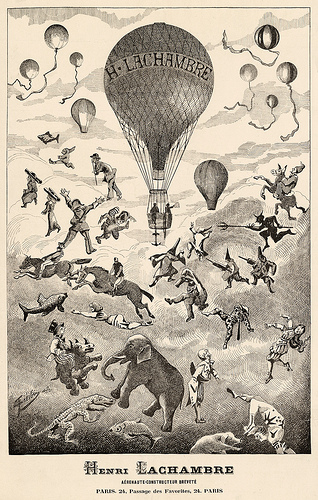
Henri Lachambre, aéronaute-constructeur breveté, ca. 1883 courtesy of trialsanderrors on Flickr.

The start of the long Summer holidays is something I have to grow into. Change of routine throws me out of wack, and I’m torn between the need to give in to the end-of-year exhaustion, frantically tackle household jobs which have been pressing down in a compulsive manner, or follow my online focus to see where it takes me.

Well, I’ve made a start on the last two of these options, although it takes a little while to move through dissipated interests and settle like dust on something satisfying.

Still, though I’ve squandered some time online, there’s been a significant pause in posting here, and I’ve been thinking my way through this, or trying to. Is it because I’m on holidays or is it simply that I have nothing to say?

That’s an interesting thought, and anybody who knows me well would laugh. I really do feel that, at the moment, I have nothing to say, and it could be a good thing. We all need a break, and if you look at my Diigo bookmarks from today, you’ll see (retrospectively) that my interests have refocussed from educational to predominantly gastronomical interests. Well,, not entirely. Actually, I’ve been saving odds and sods, for example, I’ve saved a chocolate praline tart, but I’ve also saved a bookcover archive blog, old Broadway theatre handbills, a fantastic blog which boasts a mean collection of animal illustrations, and then, even stranger things, like the frog museum. Amongst these bits and pieces, there are some educational gems, like Larry Ferlazzo’s “The Best of ‘The Best’ lists“, and a brilliant science blog called Science Blog, recommended by the fabulous Sean Nash (and I always take note of what he recommends, believe me).

One of my online discoveries this year, a jewel amongst art resources, Art 21,  is a PBS documentary series about contemporary visual artists in the United States, and for us not in the States, it’s still a rich resource for Art teaching. I recommend it, and if you join on Facebook, you get regular updates. It’s a rich resource of images and film for teachers and students of Art.

It’s through Art21 blog that I read ‘Nothing is new, but personal interpretation can often be so.
Alexander Girard, 1956′ and stumbled across the blog Nothing is new. Fascinating.

Apart from that, I’ve spent an inordinate amount of time on Flickr, indulging my passion for design and illustrations, and adding more and more contacts, people such as trialsanderrors whose sets include Early flight, with photographs of late 19th Century Paris from the Tissandier Collection, Finsbry’s set of Florence Upton’s vegetable people illustrations.

This diversion, the reason for my blogging absence, is the result of a release from the routine of school and school-related activities. It’s the direction I’ve taken with my newly found freedom. It’s pure pleasure; it feeds me.

I’ve also been struggling in the last days of my 365 day photo challenge blog, called (strangely enough) threesixtyfivephotos. Yes, the blog has been rewarding as a journal which records what would otherwise be lost to time, and in terms of connecting with others who read my blog and write theirs. But there comes a time when you just can’t find an interesting photo day after day. Time for a change. Will I continue? Maybe, in a different form. Maybe not.

I think holidays are a good opportunity to stop, have a break from the relentless reading and writing online, even miss good conferences, and not even have time to vote in all sections of the Edublogs Awards before the winners are announced. A time to think and evaluate what I’ve been doing, decide what worked and what didn’t, and why. Consider what I will do differently, goals, new challenges.

I haven’t stopped. I’m just processing…


Melbourne – Centre for books, writing and ideas

Did you know that UNESCO bestowed on the city of Melbourne the title of City of Literature as part of its Creative Cities Network?

Maybe you did, but did you also know that the Arts Minister, Lynne Kosky, announced two days ago the creation of The Wheeler Centre: Books, Writing, Ideas. It has been named after the founders of the Melbourne-based Lonely Planet travel guides.

From 2010, Melbourne will have a new kind of cultural institution. The Wheeler Centre. A centre dedicated to the discussion and practice of writing and ideas. Through a year-round programme of talks and lectures, readings and debates, we invite you to join the conversation.

The city of Melbourne is home to an impressive collection of literary organisations, including the Victorian Writers’ Centre, Express Media, the Australian Poetry Centre, the Melbourne Writers Festival, Emerging Writers’ Festival and the Centre for Youth Literature.

These organisations will reside at 176 Little Lonsdale Street, a newly renovating wing of the State Libray of Victoria. I still remember the Melbourne Public Library housing the National Art Gallery, the Museum of Melbourne and the Planetarium.

Now it is the home of the Wheeler Centre for Books Writing and Ideas.

Browsing the Wheeler Centre’s website, I discovered a remarkable short animated film for the New Zealand Book Council.

[youtube=http://www.youtube.com/watch?v=F_jyXJTlrH0]

No doubt some wonderful initiatives will be coming from these literary organisations, like the Summer School Novel Writing workshop in January 2010 organised by the Victorian Writers’ Centre.

 And if you ever doubted the connection between reading and writing (as if you would), you’d be advised to read what the Victorian Writers’ Centre writing tips state at the top of the list:

A few good tips to develop your writing.

Every experienced writer reads widely. Professional writers always recommend reading as a way for the writer to learn their craft. Reading widely can enhance your writing technique, broaden your scope, multiply your ideas and deepen your understanding of literary form in all its variety.

And if you’ve ever been confused by punctuation rules, think about following the great French author, Gustav Flaubert, in his ‘musical’ rules for punctuation:

Flaubert’s rule was that a pause of:

one beat equals a comma

two beats equals a semi-colon

three beats a colon

four beats a full stop

That’s what I call simple rules of punctuation.

Thanks to CMIS Fiction Focus for the alert.