Tag Archives: internationalplp21

Playful, seductive, digressive, literate…

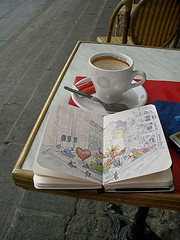
sketch

More on the differences between reading a book and reading on the internet…

I was reflecting about what it is I like about reading blogs. Something I hadn’t thought of before – a blog post is like a sketch – incomplete, open, promising ideas, suggestive, an impression to be used for further thought. It doesn’t replace a published book, nor should it. Books are wonderful, complete, well-thought out, often definitive writings. I have books on my must-read list, and look forward to devoting  myself to them completely. Sometimes, though, I feel pressured after I’ve bought a book; I feel obliged to read it, from start to finish, obliged to give my full attention to it out of respect for the author, or at least because I’ve paid for it. Occasionally this detracts from my enjoyment, particularly when guilt creeps in.

Blog reading is like dipping here and there, like enjoying tapas as opposed to sitting down to the main meal. Blog posts in themselves are snippets of thought and opinion, allowing for impromptu reflection, without the pressures of serious writing. My Google Reader is bulging ridiculously, but it allows me to dip here and there, unpressured, enjoying every moment.

I was reading Jonathan Jones’ blog at guardian.co.uk, Art and design. In his latest post he talks about the science writer, Richard Fortey. Here’s what he says about Fortey’s talent as a writer, and I think this could easily apply to good blog writing:

The strength of Fortey as a popular science writer is that he is a real writer. His prose is playful, seductive, digressive and literate.

The blogs I enjoy reading the most – not for their information, but for their writing – demonstrate these qualities. And I’m beginning to realise that being digressive in blog writing is not a bad thing – it’s sharing more of your ongoing interests and changing focus, and therefore more of yourself, with the reader. The blogs I love to read are those whose authors generously share of themselves, and so reading the blog is synonymous with reading the person.

What do you like about blog writing?

Do you turn to Twitter when you’ve escaped death?

planecrash-22-december-2008-009

Photo from The Guardian UK

Interesting to read this article in The Guardian news blog.

Plane crash survivor texts Twitter updates

What’s the first thing you’d do after narrowly avoiding disaster

The first thing Mike Wilson did after surviving the Continental Airlines 737 crash when his plane slid off the runway in Denver was use his mobile phone to update his Twitter community.

A dedicated microblogger or …? Whatever he is, he has now made history as the first person to tweet a plane crash directly after an accident. Twitter might be the up and coming way to communicate after trauma. I think psychologists may eventually decide that sharing directly after a traumatic experience decreases shock or at least somehow alleviates stress. What do you think?

Guggenheim 2.0

The Guggenheim Museum in NY has a great little online event going which encourages interaction and collective thought around some of its collection. 

Catherine Opie is an American artist specialising in issues around documentary photography.

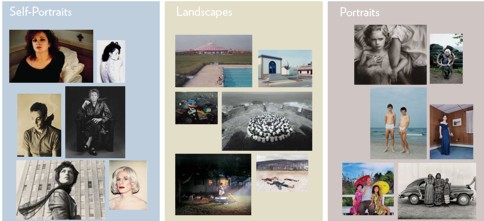
For this exhibition, Catherine Opie has selected images from the Guggenheim Museum’s photography collection and organized them into three sections: Self-Portraits, Landscapes, and Portraits. Visitors can write responses to the questions Opie poses about them and read other people’s responses.

Here are some more details from the Guggenheim Museum website:

September 26, 2008–January 7, 2009
While celebrated for her role behind the camera, Catherine Opie remains acutely aware of the voices of her subjects, and the diverse readings all images engender. Exploring this circuit of interpretation, Opie has selected images from the Guggenheim Museum’s photography collection to present alongside questions about the works’ themes and meanings, inviting museum visitors to respond with stories of their own.

People can participate online by writing about a photograph or reading other people’s comments.

guggenheimThe

I clicked on one of the portraits.

3infrontofcar

 These are the questions asked about the portraits:

What do you think makes a portrait interesting?

  • How do the titles of these photographs make you think differently about the people they portray?
  • Some of these images are made spontaneously while others are carefully staged by the artist. How does this difference in approach affect your response?

Here is one of the responses:

An interesting portrait to me is one that represents people honestly. Not only is it usually aesthetically pleasing, but it also is educational and interesting. In Keita’s photo of 3 women, she presents them in their usual daily clothing, telling the viewer something about their environment and status, and then the juxtaposition of the car brings to mind a completely different world or environment. The two together represent a very real albeit somewhat staged composition that’s intriguing and interesting.

I was excited to find this, and I’d like to keep up with the many innovative programs and ideas coming out of cultural institutions such as museums. The idea of  an artist selecting images from the collection is a creative way to bring out to more people what would normally remain within the walls of the museum, and perhaps not be accessed by as many otherwise. The addition of the questions and options to comment is added value,  inviting interaction and the sharing of opinions. I also like the fact that, whereas people would normally just look at the photos at an exhibition, maybe read a little about them, in this case the public is invited to express their impressions and opinions.

I was a little disappointed that only one or two responses were accessible, unless I’m missing something. I was looking forward to a real discussion and debate around the photos.

Nevertheless, an inspiring concept. This would be an excellent way to initiate discussion and reflection in the art classroom.

Which cereal did you eat?

Drawn has plunged me into childhood nostalgia by compiling an archive of cereal boxes. There are 100 of them on this site. I don’t think we had a lot of these in Australia.

cereal

There’s something smile-worthy about the cheery, colourful graphics of cereals past. Even though I don’t recognise many of these, and despite the fact that most of these were forbidden, the happy times of simpler days still shine through these colourful graphics.

I wonder how many people remember a childhood of uncensored cereal-eating? Was it the norm to eat these sugary breakfast treats? My childhood was a mixture of ‘the norm’ and not. Yes, I was allowed sweets, even fags, and no, I wasn’t allowed fairy bread for school lunch, but had to eat doorstopper sandwiches full of ‘disgusting’ fillings that would now be popular in trendy cafes. I wasn’t allowed to watch things on TV that many others were so I couldn’t talk about these shows in the playground. I wasn’t allowed to play in the street. I didn’t have free weekends at a time before children’s lives were so overcommitted, but went to ballet and Saturday Russian school.

I was talking to my 18 year old son about fitting in and standing out. This can be particularly painful in the primary school years. If you had Corn Flakes like everyone else then you didn’t have to feel it. If you had vegemite sandwiches for lunch you didn’t have to feel it. If you could wear Target jeans instead of well tailored handmade ‘slacks’ you didn’t have to feel it.

Different. You didn’t have to feel different. You could walk around in your jeans and miller shirt and talk about Number 96 on TV, you could stay at your friend’s house instead of crying crocodile tears over your Russian homework and going to play rehearsal for The Governor Inspector.

So we were talking about not fitting in during childhood, and I talked about not letting him watch The Simpsons in primary school, not because it was ‘bad’, but because childhood was too short not to savour the innocence of TV, film  and literature written especially for children, and because a very young child cannot understand satire. He said he didn’t understand it then, but he understood it now. I told him that a parent who made the decision to be selective about a child’s early experiences also suffered when it meant that the child couldn’t talk about popular TV shows (Big Brother) in the playground, couldn’t talk about computer games that were out of bounds. It really was hard. And he said he’d survived; he didn’t think there was anything wrong with him, he was his own person, stronger for standing out.

Sometimes when I see parents of young children agonising over choices – wanting to make all the right decisions, but torn between the possibilities, I want to say –  Go with your gut feeling; if you take something away, then replace it with something else that’s wonderful; talk about everything; respect your children’s viewpoints; don’t be afraid for them to be different.

When they grow up, differences become attractive, being your own person is respected, strength lies in being true to yourself.

When we look back at past cereal boxes, none of us ate all of them, but we share the memory of the collective culture.

Embellish the interior passageways

I know that you would have seen these before – these strangely reworded Christmas carol titles or, as described on the site, obfuscated Christmas carol titles, but I thought I’d pull them out – as one pulls out of a dusty box that’s been sitting in the back of a dark cupboard – as a light challenge for the season.

The website calls them titles of Christmas Carols, rewritten in florid and multisyllabic language!

See how many you can guess.

  1. Move hitherward the entire assembly of those who are loyal in their belief
  2. Listen, the celestial messengers produce harmonious sounds.
  3. Nocturnal time span of unbroken quietness.
  4. An emotion excited by the acquisition or expectation of good given to the terrestrial sphere.
  5. Embellish the interior passageways.
  6. Exalted heavenly beings to whom harkened.
  7. Twelve o’clock on a clement night witnessed its arrival.
  8. The Christmas preceding all others.
  9. Small municipality in Judea southeast of Jerusalem.
  10. Diminutive masculine master of skin-covered percussionistic cylinders.
  11. Omnipotent supreme being who elicits respite to ecstatic distinguished males.
  12. Tranquillity upon the terrestrial sphere.
  13. Obese personification fabricated of compressed mounds of minute crystals.
  14. Expectation of arrival to populated area by mythical, masculine perennial gift giver.
  15. Natal celebration devoid of color, rather albino, as a hallucinatory phenomenon for me.
  16. In awe of the nocturnal time span characterized by religiosity.
  17. Geographic state of fantasy during the season of mother nature’s dormancy.
  18. The first person nominative plural of triumvirate of far eastern heads of state.
  19. Tintinnabulation of vacillating pendulums in inverted, metallic, resonant cups.
  20. In a distant location the existence of an improvised unit of newborn children’s slumber furniture.
  21. Proceed forth declaring upon a specific geological alpine formation.
  22. Jovial Yuletide desired for the second person singular or plural by us.

If you reach saturation point guessing these, scroll down past the picture for the answers.

 cimg5610

  1. Oh Come All Ye Faithful
  2. Hark the Herald Angels Sing
  3. Silent Night
  4. Joy to the World
  5. Deck the Halls
  6. Angels We Have Heard on High
  7. It Came Upon a Midnight Clear
  8. The First Noel
  9. Oh Little Town of Bethlehem
  10. Little Drummerboy
  11. God Rest Ye Merry Gentlemen
  12. Peace on Earth
  13. Frosty the Snowman
  14. Santa Claus is Coming to Town
  15. White Christmas
  16. Oh Holy Night
  17. Winter Wonderland
  18. We Three Kings
  19. Jingle Bells
  20. Away in a Manger
  21. Go Tell It on a Mountain
  22. We Wish You a Merry Christmas

cimg5626

Newsmap – attractive news

newsmap

What is Newsmap?

Newsmap is an application that visually reflects the constantly changing landscape of the Google News news aggregator. A treemap visualization algorithm helps display the enormous amount of information gathered by the aggregator. Treemaps are traditionally space-constrained visualizations of information. Newsmap’s objective takes that goal a step further and provides a tool to divide information into quickly recognizable bands which, when presented together, reveal underlying patterns in news reporting across cultures and within news segments in constant change around the globe.
Newsmap does not pretend to replace the googlenews aggregator. Its objective is to simply demonstrate visually the relationships between data and the unseen patterns in news media. It is not thought to display an unbiased view of the news; on the contrary, it is thought to ironically accentuate the bias of it.

So, in a way, Newsmap is an interpretation of the news, allowing patterns and biases to be visualised.

I think this needs to be viewed over time to get a feel for it. Meanwhile, it stands out as being a very attractive way to get world news.

Has anyone explored Newsmap? What are your thoughts?

PicLits

piclit-1

I thought I’d try out PicLits: inspired picture writing.

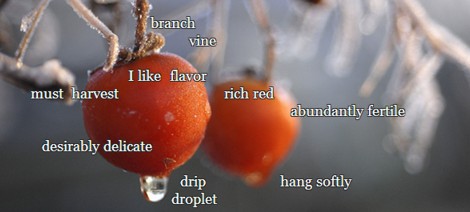
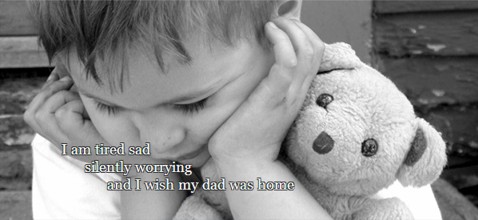
PicLits.com is a creative writing site that matches beautiful images with carefully selected keywords in order to inspire you. The object is to put the right words in the right place and the right order to capture the essence, story, and meaning of the picture.

I wasn’t that pleased with my first effort, so I tried another one.

piclit2

Well, unless I’ve missed something, the list of words is limited. Then again, I haven’t read the instructions, just had a go.  I think there’s something to be said for adding text to a picture from a limited supply. The challenge is to work with what you’ve got, thinking about the position of the words, whether you want a sparse message or story, or whether you want a more crowded and descriptive text. 

Definitely much to play with either in English, foreign language or English as a Second Language classes.

I almost forgot to thank Tom Barrett for this application, and if you go to this post you’ll find 9 other digital writing opportunities.

A limerick for all occasions, but in a dictionary?

spaceodyssey

In the spirit of holidays, I thought I’d tone down the intensity of my posts – seriousness interfering with the holiday spirit…

Reading through Articulate, I found The Omnificent English Dictionary In Limerick Form (OEDILF).

The goal of The OEDILF, our online limerictionary, is to write at least one limerick for each and every meaning of each and every word in the English language. Our best limericks will clearly define their words in a humorous or interesting way, although some may provide more entertainment than definition, or vice versa.

Look up a word, browse by author or topic/genre, or join the project to submit original limericks.

There’s an impressive list of topics/genres.

Here’s an example of what you’ll find:

If you look up the word anticlimactic, you find this limerick:

In picking up women, my tactic?

I promise adventures galactic

We watch Lost in space

When we’re back at my place

Which they find to be anticlimactic


Here is one result for genres: science fiction:  

asphyxiate by mephistopheles (Limerick #8004)

Though you’re weightless and moving with grace,

You’ll asphyxiate here, out in space.

Is your very best pal

a computer named Hal?

You could die here and leave not a trace.


And some background is included:  In Stanley Kubrick’s classic 1968 film, 2001, a Space Odyssey, an astronaut, Dave, was famously locked out of the spaceship by a malfunctioning computer named Hal. If Dave had not succeeded in getting back onto the ship, he would have died when he ran out of air.

Lots of possibilties with this dictionary, both educational and recreational. For the sake of holidays I’ll abstain from the usual heavy-handed instructions.

One more under ‘ballet’

Her willowy arms flutter slightly,
Her feathered white head drops down lightly.
Alas for Odette,
Men who love soon forget.
Thus, she’s dying in Swan Lake once nightly.
…Except on Mondays, and twice on matinees.

There.

Winding down

2487518879_ca2e8f3642

The school year is over for me. I know that many poor souls are still fronting up until the end of this week (is there a point?) but for me it’s the long stretch ahead, the one I’ve been waiting for. Time to wind down.

It’s been a strange end to the year for me in that I missed the last 4 days, and am now recovering from spectacular oral surgery, looking less like a hamster every day, and still turning sickly shades of yellow and blue (wish I had less yellow, more blue) down my face and neck. And now that the fear of losing feeling in the lip has been put to rest, I can think about the year, looking both back in time at events and learning, and forward to next year, planning new projects for 2009.

Funny how you don’t realise the extent of change until you stop to measure it. It was only May this year that I began this blog as part of a State Library of Victoria Web 2.0 PD initiative. During the course of the following 6 or so months I’ve learned many things – lots of how-tos and bits of technology – and I’ve acquired an online presence on Facebook, Twitter and NINGs.  Most  importantly, I’ve learned what it’s like to be part of a community of learners and educators, a community that never sleeps, always on the lookout for new ways of thinking, doing and sharing.


So, winding down…

Well, actually, it’s easier said than done. I know that I’m not as tired as many teachers, having escaped report writing (as a teacher librarian), and not having the exhausting face-to-face of constant classes, and that may be one of the reasons I’m not finding the winding down easy to do. Although, I think the main reason is the feeling of excitement which comes from new discoveries, possibilities and connections. Already I’m thinking about what I want to do next year (and I’m lucky to be co-teaching with two wonderful teachers), already I’m planning new ways of doing things in class, ways of engaging and challenging students, using technologies which will inspire creativity and authentic learning. And I’m reading, reading, reading other people’s ideas and experiences.

The best thing about holidays – if you still have any energy or brain capacity left, and amongst all the Christmas and New Year bustle – is the unregimented  time for exploration. The joy of investigating new blogs,  discovering people, and making connections, branching out and connecting those connections around the world, until gradually the world starts to shrink as your map is filled with people you know  and relationships amongst these. How can you wind down when people ‘out there’ are posting great links, new ideas and articles which inspire and challenge?

Yesterday, I started looking at the Edublogs Awards 2008, and here are the categories for nomination:

1. Best individual blog

2. Best group blog

3. Best new blog

4. Best resource sharing blog

5. Most influential blog post

6. Best teacher blog

7. Best librarian / library blog

8. Best educational tech support blog

9. Best elearning / corporate education blog

10. Best educational use of audio

11. Best educational use of video / visual

12. Best educational wiki

13. Best educational use of a social networking service

14. Best educational use of a virtual world

15. Best class blog

16. Lifetime achievement

As you  browse those 16 categories, you’ll come to know a group of people you’ll admire and want to keep in touch with. These people have spent the time making transparent their learning journeys and acquired skills, not keeping these things to themselves but sharing with the world. I’m having difficulty in unwinding because there’s so much to read and enjoy!

Merry Christmas to all. Happy, safe holidays, good family and friend times, and take the time to do what nourishes you.

Different kinds of reading – internet and literature

noteasytostayfocussed

 Photo courtesy of imago2007

I’m aware that my reading behaviour on the internet is different from when I read a book, in particular fiction. In addition, I think that my book reading focus has altered since I’ve discovered hyperlinked online reading.

I’ve included a paragraph from a piece written by Sven Birkerts on Britannica blog, Reading in the open-ended information zone called cyberspace.

Again, I’m not saying good or bad, I’m just saying. When I am online I am perpetually aware of open-endedness, of potentiality, and psychologically I am fragmented. I make my way forward through whatever text is in front of me factoring in not just the indeterminacy of whatever is next on the page, I am also alert, even if subliminally, to the idea of the whole, the adjacency of all information. However determined I am to focus on the task at hand, I am haunted by this idea of the whole. Which is different than what I might experience sitting in a library chair knowing that I’m in the midst of three floors of stacks. The difference has to do with permeability, with the imminence of linkage, and it is decisive.

 Here is the complete article.

I’d like to explore this topic to gain an understanding of something that affects our students and us as teachers.

What do others think about the author’s views? What are your thoughts about the different kinds of reading? Do you think our generation of online students are affected, and is this positive or negative?