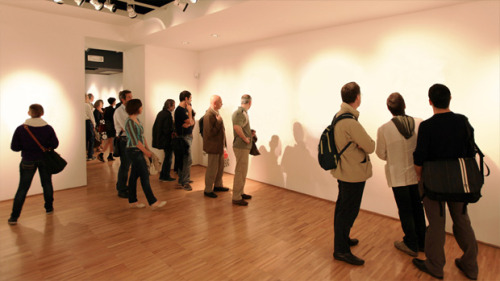
Critical pedagogy – fishing from others’ posts, haha #moocmooc

Source 

This post is a response to the first week’s ‘homework task’ for the online MOOCMOOC: Critical Pedagogy which is introduced here. The reading is Chapter 2 of Paulo Freire’s Pedagogy of the Oppressed.

So first of all a confession. As a student I didn’t read any of the literature about pedagogy. I’d been a conscientious student all through school and undergraduate years and I’d had enough. So when I started my Dip. Ed. year (my sixth consecutive year of tertiary studies) I chose the C stream (nicknamed the Communist stream – not sure why). I couldn’t believe my luck; there was NO prescribed reading and, apart from our methods classes (mine were English and languages), there were no formal lectures.  We were required to offer or take sessions from each other, and there were no limitations on these sessions. The idea was that we learned from each other, and we learned while teaching others. At that stage I didn’t think I had anything to offer (how would I feel now?) so I just signed up for other students’ sessions. We all thought it was a joke – was it a joke? I vaguely remember (this was 1983 after all) what sorts of things people offered to teach. Knitting.  Wow, that had nothing to do with real teaching (I thought at the time. Do I still?) I signed up for Greek and Italian – not out of my comfort zone (so how much learning was I doing? Hmm…) I signed up for Godzilla. Yep, we sat and watched Godzilla movies and then talked about them. That was out of my comfort zone; I’d never watched it,  hadn’t wanted to and still don’t. But it was fun. I really can’t remember what else I signed up for. In terms of written submission we ‘just’ had to keep a reflective/evaluative journal – so that wasn’t ‘real work’ I thought. I found that easy, blabbered away and actually enjoyed it. I don’t think we had examples of ideally structured journals so maybe some people felt uncomfortable about it but I enjoyed it. Those poor people in A and B stream; they really did look stressed. Their course was all about serious reading and writing, and they kept complaining to us about all the work they had to do, but we didn’t care, haha.

Did I care once I stepped into the classroom? At the time, no. My early teaching years were not smooth sailing but I didn’t often stop to think – hey, if I’d read this or that I would have known how to teach from the outset. Was I wrong?

It’s never too late to start reading about pedagogy, and now that I’ve established my ignorance in the field, I do want to add that I’ve been interested learning from the outset. Lots of questions – which I thought stemmed from ignorance only – and particularly once I had kids (2 sons) whose learning paths were very different but both, from my observation, in need of careful choreography. From me. The person who hadn’t read anything about learning and teaching. What I discovered was that I knew (as all parents do – and perhaps more intensely than some because I’m intense) that I wanted their learning experiences to nurture their evident keen curiosity and love of learning. Or at least not to kill it entirely. My observations as a secondary school teacher in schools with a low academic standard (read a sizeable proportion of challenging or disengaged kids) was that something happened throughout schooling to kill off their initial thirst for learning and ability to focus somewhere along their schooling journey. I was determined not to let this happen to my own kids. Some reading occurred and a lot of observation and evaluation, discussion with others and intervention of sorts.

Does it matter to me now that I don’t have a background knowledge of pedagogy? Yes, I think it does. Despite all the good instincts – and they can’t all be good – I know that I need to read the important pedagogical literature so that I can gather all the raw, instinctive, confused ideas I have about teaching and learning (and my focus has definitely shifted from teaching to learning in the last few years of learning from virtual communities) and see where it fits in thinking that has been written out in a disciplined way. And another thing, my ideas need a voice. Just now on Twitter I favourited a retweet by Nick Kearney @nickkearney of Peter Shukie @ShukieOne’s shared link to this short video of Henry Giroux, one of the founding theorists of critical pedagogy in the United States (well, I had to look him up, didn’t I?) It’s a very short snippet, just over a minute long, but Giroux says that in his early years as a teacher he started playing around with things and moved the students’ tables and chairs into a circle, and his principal told him to move them back into straight lines facing the front. And Giroux says he ‘didn’t have the theoretical language’ to justify why he did what he did, and that, after reading a text on educational theory, he suddenly felt empowered (my paraphrasing) because he now had a language that gave him a way of theorising his practice/experience rather than just say ‘I think it works’ or ‘I think it’s good’.  “Something was happening… it was the beginning of moving from a position of being voiceless to having a voice.”

Had Giroux not read any education theory before he started teaching? I wonder how much this reading would mean to a pre-service teacher. Certainly it would have so many more hooks to hang on after some teaching experience. Although it is good to start with some formal ideas of teaching approaches and styles. Certainly I never felt confident that I could share my instincts about a positive learning environment in a serious way with people who were well read and experienced. And this is how some mothers feel, I’m sure, tuned in to their kids’ development but powerless against teaching professionals with no qualifications or language. Fathers too, of course, if they spend a lot of time with their kids.

So, conveniently, Martin Lugton shared on Twitter his summary of the chapter of Freire’s that’s been set for this week, of Freire’s explanation of the banking and libertarian models of education from The Pedagogy of the Oppressed (1996 Penguin Edition).  I’m not going to pretend to summarise anything. Instead I’ll pull out things which I’ve highlighted from the reading and from others’ posts. The banking metaphor still rings true today with teachers depositing knowledge into students without realising how passive students then become.

Another admission: There’s a lot of political background that I’m missing because  of my general ignorance of political things and history, so that’s not good because I often miss out on important context.

Certainly you can’t separate the way education works from the way society works.   The author of the blog NomadWarMachine makes a strong point in this post:

I picked up Freire’s Pedagogy of the Oppressed this morning to reread chapter 2 for #moocmooc and, as I read it  was struck by how much it resonated with my feelings about our awful, bullying conservative government and the edits of the eejits like Gove and the rest of them, trying to turn all of our children into obedient little drones to service the capitalist empire that they and their cronies own.

Hmm… I do think there’s a large disconnect between the way our current world works and the outdated education system which worked well during the Industrial Age when students were skilled for specific tasks within a larger production assembly, when you could say with confidence: study hard and learn your content and you will have a secure career – not so anymore. Who knows what kinds of jobs and skills will be needed once our students finish their studies? I’m wondering if it’s all a vicious plot by governments to keep us passive and powerless or just lack of vision and refusal to understand change. But I plough on.

In his post, MMCP: The “critical” in “critical pedagogy”, Sean Michael Morris writes:

One of the most difficult things to reconcile as critical pedagogues is the exercise of our own authority… At times we are too ready to drag learners kicking and screaming into their own learning process.

Critical pedagogy could be thought of as a philosophy of teaching that shows more than tells.Telling” equates to what Freire calls “the banking model”of education — a model that leads away from liberation and down the road to oppression.

“Knowledge emerges only through invention and re-invention,” Freire writes, “through the restless, impatient, continuing, hopeful inquiry human beings pursue in the world, with the world, and with each other.” (53) To “tell” is to rob the learner of her capacity for inquiry.

And left me with this question amongst others:

  • If it is not our task to “make deposits” into students’ minds, to reinforce learner passivity, but rather to spark inquiry, where is the best place to start?

The best teachers will always spark inquiry but how difficult is this in education system (VCE in Victoria, Australia) which requires the TEACHING of specific content and skills with little time for alternative teaching methods, and no time for diversion in the last 2 years of school? I know I keep banging on about this but we are a 9-12 school with a reputation for ‘helping our boys to achieve the highest ATARS’ so they can get into the courses which need the highest ATARS and then… presumably achieve long lasting success. Hmmm….

Our classrooms are still largely all desks facing the front with the teacher as the focal point and authority – but not always. Some subjects more than others. How much time would it take to recreate the learning environment in our classes and ‘give up’ our authority so that our students could become active agents? Is this possible in VCE? There are so many distractions (sports days, chorals, etc.) and so much to cover. Yes, this is the language of the oppressed – both teachers and students! We are all slaves! (You see, so many questions and so few answers. Am I being lazy? Certainly dramatic.)

I love Ann Gagne’s post entitled: Critical Pedagogy as Ethical Pedagogy. Ann’s opening paragraph tackles Freire’s ethical pedagogy head on:

Ideally education should treat all participants equally and humanly/ humanely but it often doesn’t. Often the need to monetize or highlight KPIs institutionally prevents/ erases humanization.  There is no one simple solution to bring the human back to education but I believe the first step is a focused on an acknowledgement  of lived experience. Curricula, syllabi, lessons should all incorporate (in all senses of the word) lived experience.

This is something Nick Fairlie and I have been doing with the year 9s and 10s – before they get serious – bringing their writing back to personal experience, and it’s yielded much fruit through the students’ blog reflections and reading of their colleagues’ thoughts. Connecting to themselves, writing about what they think and what matters, and guess what? the writing just happens and it keeps improving – along with the self confidence and enjoyment of writing. Otherwise many of our boys are very dependent on prescriptive instruction – more than our teachers feel comfortable with. It’s a bit like what Ann says here:

Sadly more and more students are becoming increasingly comfortable with the banking model and want the teacher/instructor/ professor to “just tell me what I need to know to get an A.”

Very sad indeed.

And more goodness from Ann:

Nothing can be advanced with conviction unless it creates community, works towards tearing down boundaries, and engages as many as possible. This is the core of authenticity in pedagogy. The participants (students and educators) can only be true and authentic to themselves by acknowledging their relation to others- an ethical creation of learning communities requires reflection and open communication.

Community, engagement, relationships, reflection and open communication. Who would deny that these are important things on which to focus in education – aren’t these the most important outcomes? Is our teaching style and classroom design conducive to these things or do we not even have the time to think about them?

As you can see, I’m avoiding a wholly personal interpretation of Freire’s chapter and instead piecing together others’ responses because they’ve done a damn good job and because I’m a little uncertain about how I feel, ie I’m fishing around and pulling out fish but I’m not up to making the final meal. This is the way I learn.

I’ll finish with Ann’s words again:

Learning and spaces for learning, should not been seen as confining (or a jail as dear Emily Dickinson suggests in her poem), but rather ever expanding and critical engagement with pedagogy allows for that expansion and hope for an always inquisitive and knowledge producing future.

Amen. And here is dear Emily’s poem From all the Jails the Boys and Girls:

1532

From all the Jails the Boys and Girls
Ecstatically leap—
Beloved only Afternoon
That Prison doesn’t keep

They storm the Earth and stun the Air,
A Mob of solid Bliss—
Alas—that Frowns should lie in wait
For such a Foe as this—

If you’re interested in critical pedagogy or want to read what others have written about Freire, there’s a Scoop.it collection of all things #moocmooc.

And Kris Schaffer @krisschaffer has shared a list of recommended readings for Critical Pedagogy. Thanks, Kris! I’m currently reading Now you see it by Cathy Davidson and it’s so good!
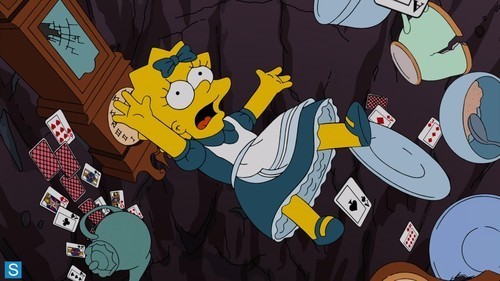
Being ill. (The Flu). How it plays with your mind and senses, your perspective.

I wrote this a little over a year ago and just found it. Thought I might give  it a home here.

During the very sick period, there is no joy to be experienced. Even in the first days of Spring. The blossoms are just there and pink. Sunshine is registered and associated with memories of past enjoyment. The disconnect between what should be felt and what isn’t being felt is part of the torture. And most of the time you are either sleeping, whining or taking a shocking number of pills – just in case they help. Where did they all come from?

Little things annoy you intensely. The stupid design on the tissue box – unbearable. Most of the people on TV are extremely ugly. You can’t stand looking at them. That speck of dust under the couch, the one you can’t bend down to reach… is plotting to kill you!

When you start feeling a very tiny bit better, it’s worse, in its own way. You feel an almost unnoticeable amount of energy has returned, that is to say, you can get up with a struggle and you don’t fall down straight away. You feel obliged to do something so you think to yourself, I’ll take advantage of the lovely sunshine and water a few neglected plants in the garden. You’re dragging your feet, but you push on, when suddenly you see all sorts of problems around the yard, rotting wood, dying plants, unswept verandah – things you didn’t see while you were well enough to go to work, and definitely not while you were feeling too, too sick to care about anything. And because of the lethargy, the withering muscles, the stiff joints from lying around for days, everything seems appalling, unmanageable. You wonder how you ever managed to get up every day and neglect the fact that these things were falling on your head.

And now the mind games. You try to do some of the things you have always done as part of your job. They have become obscenely worthless! There is no joy to be had from these meaningless tasks! You have been wasting your time, frittering away valuable hours from your receding life span, routinely repeating the same tasks – and for what!?

The memory of your past life (last week) alerts you to the probability that this dismal state of affairs is temporary and due to illness, and promises a return to a cheery purposefulness in life. You are suspicious of this and consider the possibility that illness has uncovered a vile truth which is truly unsettling but nevertheless a truth. You have been deceived into thinking your life has a purpose and value. You wonder if Nietzsche would have determined God as dead had he been of good health.

To be or not to be cartoon characters. In a Greek tragedy.

It started with a tweet (mine)…

I swear it was only minutes before Simon Ensor @sensor36 published a post with enough substance for a PhD – or at least a 3-part TV series. A cartoon program.

Simon says:

Then there was Tania suggesting in a tweet that tweeps such as @Bali_Maha, @dogtrax, @sensor63  et al in her PLN were ‘cartoon characters’ – if she had not met them F2F or should I say 3D?

So is that my friends what we are to one another – Cartoons – (on)line drawings?

Now Simon thinks in colour:

Like a canary to a black and white cat that was a red rag to a bull.

He also believes in getting straight down to (serious) business:

Existential questions

1) Are our online ‘friends’, ‘follows’ ‘followers’, akin to Loony Tunes?
2) Are our offline ‘friends’, ‘follows’, ‘followers’ not akin to Loony Tunes?

I will pause here before the ‘cartoon preamble’. Simon has muddied the waters (in my head) with his cartoon world/real world questions. I’m propelled back into my early childhood when I wished that my world was the cartoon world. We all knew it was much more fun. Cartoon worlds were more colourful, more exciting, funnier – and risk taking was never a problem because even if you ended up falling off a cliff and being squashed into a flat pancake upon landing, you would always, always be able to stretch yourself out and back into your normal body shape. And with a cool sound effect.

Simon is playing with my head. He should not tempt me into going down the rabbit hole into fantasy land. Mixing realities. Switching worlds.

So now, we’re up to Simon’s

Cartoon preamble.

I can quite accept that @dogtrax or should I say Mr Hodgson K. qualifies as an honorary cartoon character.

His lifetime achievement to cartooning in itself would merit such an accolade.

I am not sure that I am quite yet ready to take on the caricature mantle without a fight.

Simon, how can you resist the lure of the cartoon reality? You, whose prose is poetry, references labyrinthine, whose playfulness is akin to the Dadaists.

But, yes, I will play your game.  I see it’s four rounds and then you’re out.  Or so you think you are. You concede defeat and accept the cartoon character identity. You have chosen wisely.  You have chosen the cartoon reality. No more ‘He he he’ as part of the Queen’s court which was as taken with Boy George’s superficial mask as the people who insisted they saw the king’s finery in ‘The Emperor’s New Clothes‘.

Round one.

The strange case of Culture Club.

I can boast quite openly that I once met Boy George F2F (3D) outside the Mud Club in central London, while driving a London cab.

Boy George was undoubtedly a larger than life character, dressed to the nines, painted in broad strokes, armed with an infectious laugh.

He was surrounded by acolytes, disciples, hangers-on, groupies, and various fawning clubbers, similarly attired.

They appeared to be infected with George’s laugh.

“Ho ho ho ho.” (George)

Micro-second later

“He he he he.” (Queen’s court)

I am quite sure the boy George had more depth than this vignette.  There was no apparent desire among the performers to go beyond the make-up.

Well done. You have not been fooled into thinking the pantomime of school is real – surely you must choose the cartoon world again. You will never again be able to be that teacher operating the Cambridge textbook franchise.  You will never again be the teacher conducting the masked chorus who played out the lesson scenario to the last letter.  Surely your cartoon avatar had already escaped down the rabbit hole or up the Magic Faraway Tree into magical lands.

Many of the my 3D colleagues are unknown to me, they remain line-drawings.

Yes, you are losing control here; worlds are colliding and changing places. Can you feel it? You admit to have a more lifelike exchange with unseen friends online than in your 3D pantomime life.  You/we all speak the same Cartoon language.

And in Round Four you have a strong inkling that brings you closer to your unreality. Your blog is the Tardis, and you are all the Doctors.

You have one voice, you have another voice. (Some voices have trouble throwing off the old voices to take their place).  Time and place matter not. Your voice, your identity do not reside in one body, are not located in the 3D world.

I sometimes feel that a distinct voice, that is evidenced in this Touches of Sense blog, has become a distinct character.

There are times when I feel distanced from it’s mannerisms, its annoying ways with words.

You are ready for the new Doctor.

There are times when I feel that I shall introduce a new character to stem its irritating flow.

CARTOON character.

Do not despair of your identity breakdown. In your last hours as a 3D  entity of the pantomime world, you are having brief flashes of revelation.

I am reminded of Maha’s reflections on how she feels at times as catalogued as an ‘exotic’.

I am reminded of Susan’s reflections on her various incarnations.

I wonder if despite ourselves we become characters in others’ performances.

And there it is:

CARTOON character.

You are reborn. You throw off the skin and step out of the world you’ve been taught to accept as the real one.

OK Tania, I accept defeat. I am a caricature.

Do not think for a second that you are accepting defeat. On the contrary, you have returned home. You are where you belong, in the Cartoon World, the colourful world, the exciting and funny world.

This comic metaphor has become too complex for the cartoon @sensor63.

He accepts the mask.

He is one of the Connected Comic Characters.

He must live with it.

Oh the tragedy!

And it’s a genuine tragedy you now inhabit. Your comic tragedy has a speaker and a chorus and everyone is in costume. Everything is brightly coloured. You have many lives and you live your fantasy life.  We are all there too – Maha, Kevin, Susan and the others. Me.  In our cartoon world.

But who is watching us play out our online lives?

Co-learning – our students are doing it now

We have just moved into Unit 5 of Connected Courses:   About co-learning. I’m thinking about it as I sit in the school library during exams.

19dd9fde36ec274bf5e7eec6919651c4

Photo source

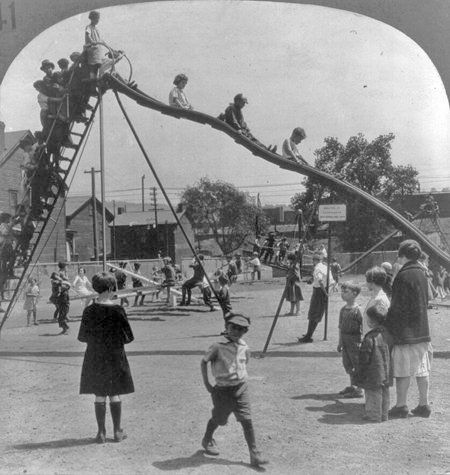
The library is the playground for study before exams. Classes have been cancelled and the signs of playground are all over the library – noise, noisy groups, grouped learners, learning clusters, clustered distractions, distracted discussions, discursive learners…

Many students have chosen not to stay home because they predict being distracted. (They know themselves. They have acted.) Wouldn’t the noisy playground be a distraction in itself? How do you remained focused in such an environment? (They are alert. They are engaged. It is social. They interact. There is laughter.)

mess

We sometimes talk about study habits to students. Of course, there are students who need help, lots of help, learning how to study. We talk about study habits. Do we study? How long ago have we studied? Do we watch our students studying? I see study habits in action now. The library space has become a learning space with energy – not from us, but from our students. They have taken over. It’s how it should be.

Do you have an exam today?

No, I just came in to help a friend. Now I’m going to get onto my own study.

The technology is being used. Apple TVs, screens are being used for small group presentations. (Nobody told them how to do it.) Whiteboards are being filled with mathematics and diagrams. One student standing and teaching (yes, teaching) and others sitting attentively, listening, putting up their hands to ask a question (Yes, really). Have we modeled this?

We step back. We observe. They are learners and teachers. It’s uplifting.

Going back to analyse the water #ccourses

Photo by Aleksey Myakishev

We’re in the 4th unit of Connected Courses: Diversity, equity and access. I thought I’d look back at some of the previous questions and objectives from which  we’ve been making meaning together. Only now have I realised that each unit has a ‘design touchstone’, and while I was investigating what this could mean and how these linked to each other, I decided to re-familiarise myself with the first one: Water.

I watched again the video of the speech given by David Foster Wallace to Kenyon College’s 2005 graduating class.  The video starts with the story of two young fish swimming along when they meet an older fish swimming the other way.  The older fish asks ‘How’s the water?’, and after they’ve passed him, one of the younger fish asks ‘What the hell is water?’

A rough summary of the message would be that the most obvious and important realities are often the ones that are  hardest to see and talk about.   Foster postulates that a Liberal Arts education is not as much about filling you with knowledge as it is about teaching you how to think – not in terms of the capacity to think (which we all have ) – but in terms of the choice of what to think about. He mentions that we often live unconsciously, that is, not questioning where our belief systems come from, and he encourages us to have a critical awareness of ourselves and our certainties.  He talks about our default setting which positions us as the centre of the universe and suggests we do the hard work to rid ourselves of this hard wiring which leads us to interpret everything personally by learning how to exercise some control over what and how we think, and being conscious and aware enough so that we choose what we pay attention to and understand how we construct meaning from our experiences.

I feel that I need to go back and revisit readings many times to have the ideas and issues float to the top of my consciousness where they are in view and so that they don’t sink to the bottom and get forgotten.  Connected Courses has enabled me to construct meaning in conversations with people and in the solitude of my own thoughts. I’m beginning to feel as if I’m conscious of the water.

It’s interesting to note that although Connected Courses  is designed for faculty within higher education who are looking at developing online, open courses,  so far the technology part of constructing the courses has been in the background. This is a valuable lesson for schools introducing new technologies to support teaching and learning. In Connected Courses we started with the why and we moved at our own pace supported by the network of participants. Expertise has been distributed and sense making has not only been in the form of text; participants have shared creative responses which have included drawings, comics, songs and other audio, slides and video and more.  Some people have tried new things!

We’ve been given the opportunity to construct meaning together, and  given choices about how much and what we focus on.  My opinion is that this approach has enabled me to look more deeply into selected things.  I haven’t felt rushed or forced in any way; I’ve had choice and control.  At first I may have felt intimidated by learning in an academic cohort, but now I feel energized. It’s been fun!

Feel free to look at what I’ve collected so far in my Connected Courses Pinterest board.

Taking control of our digital lives

In a few weeks our team will be running sessions on digital citizenship with all the year 10 students. In an attempt to make sense of a very dense session I thought I’d throw it into a blog post.  I’m open to suggestions or advice if you’re kind enough to read the post. Thank you.

The leading question is:

In the digital age what are the most important skills we need to develop?

We will explore digital literacies and what it is to be a digital citizen in today’s information age. In particular, how can we take control of our digital lives?

In no set order, and depending on the dynamics of the class and their receptiveness to engage in discussion, we will look at:

  • attention (mindfulness) – thanks to the work of Howard Rheingold
  • online privacy
  • critical evaluation of information
  • your digital profile

With mobile devices and technology ubiquitous in our lives, is it possible that we are not in control of the balance in our lives?

To start discussion about whether we are online too much, I will show students this video.

I hope to talk a little on mindfulness. Mindfulness is something we can practice. It helps us have control over what we give our attention to.

We might do this one-minute meditation exercise or we might ask students to do this in their own time.

Mindfulness during study would be really appreciated by students; it’s so easy to get distracted especially with the ping of social media inviting us to take a ‘quick’ break. We will recommend to students the SelfControl app which allows them to lock themselves out of social media and email for any period of time. Sounds good to me. Students can download this app to their devices for free.

Next we’ll move on to the question: ‘Are we doing everything we can to secure our online privacy?

Then we’ll show students this video about nothing being free online and about how their online activity is stolen for the purpose of data collection.  Hopefully they’ll start to feel a little uncomfortable as they realise how little control they have over what is taken from what they do online . But will this lead to some good discussion?

At this point we’ll introduce our students to Duck Duck Go, an anonymous, encrypted search engine.  We’ll take a look at why Duck Duck Go is better for privacy than other search engines.  We’ll look more closely at how our search results are generally filtered and how we can escape our search engine’s filter bubble.

We’ll watch the following video to discover that our search results are far from objective and that the internet is showing us what it thinks we want to see.

Moving on to our digital identities, we might google each other and see what comes up. When I did this last year there wasn’t much which – as I said to the boys – is good and bad. It’s great if they don’t have inappropriate things on their public profile, but what if somebody wants to find out more about the, for example, when they apply for a job?

Here’s an revealing video about why our Facebook likes say more about us than we think, and why we should care.

At this point I’d like the students to take a look at what others see about them on Facebook by going to their public profile. Since Facebook changes privacy settings constantly and these are never simple, it should be an interesting exercise. Facebook allows a user to view their page as a person they haven’t ‘friended’ and also as a ‘friend’. Then I’ll ask the students to check out the Facebook Help Centre – I don’t think they will have looked at this in detail.

Although I’m not an advocate of the fear tactics used to scare young people off social media, I also want to make them aware of what can and does happen.  What happened to Alec Couros very recently is a sobering story. Alec Couros is Professor of educational technology & media at the Faculty of Education, University of Regina. Someone stole his online identity and created an internet relationship scam. Read about it here in his very open blog post where he explains how scammers stole his photos to lure women into online romantic relationships to get at their money. Alec lists a long list of things he recommends to fight internet scams. He says that ‘digital literacy is necessary for determining the validity of sources, including the integrity and authenticity of our relationships.’ He recommends that ‘this needs to be a topic in school as part of a required digital citizenship curriculum’. Yes, it does. And so, our one session is not enough, but we are squeezing in at least this one session.

Alec’s final words in this second blog post are:

Likely, what I’ve learned the most throughout this predicament is that we need better systems for identity verification. I don’t actually like proposing this because I’m a strong proponent for rights to anonymity on the web. But, there must be a way to allow for anonymity and to also build mechanisms in place for identity verification where necessary. Ideas, anyone? Maybe my life’s work is in this problem somewhere.

After this frightening real story we are actually going to go back to encouraging our students to cultivate a positive online profile. I know that many of them will ask why. Why do they need to go public online? Doesn’t this go against what we’ve just been discussing – all the negative stuff? While thinking about how I could possibly make this case convincingly with something our students could identify with, I was on Twitter and had asked a question about saving archived webpages from the Wayback Machine. A few seconds later I received an answer from Nick Patsianas (@nickpatsianas) – someone I followed a while ago. He is a year 11 student who lives on the Central Coast in NSW. Nick is an inspirational young man (as you will understand when you read his blog bio) and his blog is an outstanding example of how a student can create a positive digital footprint. I will introduce Nick to my students. Nick is part of an active network on Twitter, as you can see from his Twitter conversations if you follow him.  Nick is part of Oz Minecraft Educators. If I were an employer and were looking for evidence that Nick was an intelligent, literate, responsible, engaged and thoughtful young man, I would have everything I needed in the digital footprint he has created for himself.

To finish the session (if there is time remaining), I will take my cue from Alec Couros when he says

Detection of these scams requires critical thought, a healthy skepticism, and active digital literacy.

We’re going to look at photos and text posted online and try to evaluate their validity. Hopefully this will be a fun exercise, and we might do it together. We will ask our students if the following photos are real or fake, and if the accompanying information is real of fake. We will see how well they can uncover a hoax.

After discussion, I’ll ask the boys to find out here.

What about this?

Find out here.

What about this one?

Find out here.

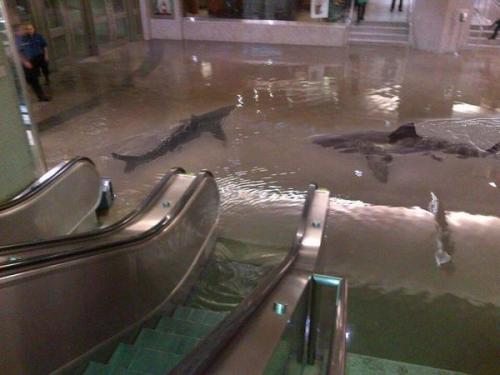
What about “15-ton prehistoric shark captured off coast of Pakistan”?

Find out here.

And “New York artist creates ‘art’ that is invisible and collectors are paying millions.”

Find out here.

Next we’ll have a look at some fake news websites.

In Australia:

The Shovel

World Daily News Report

See a list of international fake news sites here. 

We’ll look at some of the information taken from the article by Paul S. Piper,Librarian, Western Washington University, Better read that again: web hoaxes and misinformation. These categorise web hoaxes and misinformation, for example, parody and spoof sites, malicious sites, counterfeit, fictitious, questionable and malicious websites, and finally product sites and subject-specific misinformation.

Finally we will ask the students which of the following websites are reputable and which are not? Of those which are not, they are to specify which are counterfeit, parodies, fictitious, questionable, malicious or product sites:

I’ll leave the students with the following sites which are dedicated to tracking internet hoaxes.

Don’t Spread That Hoax

Scambusters.org

Snopes (Rumour has it)

Vmyths (Rhode Island Soft Systems produces this site designed to counter myths and hoaxes about computer viruses.

The National Fraud Center is a consumer centre for fraud, including internet fraud.

I think that ending with this lengthy activity is a safe way to approach different classes which may delve deeply into a couple of things listed here, and not complete all activities, or they might be less willing to join a discussion, in which case we will whizz through these activities.

So this lesson will be about 45 minutes long. If you are reading, please leave a comment at the end of this post. I would really appreciate it, and there is still time to edit the lesson plan.


Visibility and trust – glue for teacher librarians

Glue no.1

Photo by J. Down on Flickr

In his blog post,  Connecting trust to information literacy: class coordinated instruction,  Charles Greenburg, University Library Director at Wenzhou-Kean University, China, has written:

Librarians must be visible and trusted partners in the future of their institutions, if we are to ensure information literacy and management skills maintain their connection to life-long learning outcomes we expect and desire in student-centered higher education.

This is valid for school librarians too.

Visible. Yes, we must be seen in the library, that is, we should be doing something that makes people coming in or through (as is often the case) stop and notice.  Although, I think that’s not exactly practical, but I think that the school community should know what it is we are doing – often not the case, sadly. Out of the library, we can still be invisible. Waving our hands around, jumping on the spot and calling out doesn’t work.  Playing a meaningful part in the everyday teaching and learning is a challenge when we are often not seen as teachers and requires behaviour which convinces teachers we play an important role.

… it is not about merely going into classes as an agent of information literacy, but having a broad institutionally-connected visibility as an agent of institutional excellence, connected to the learning process at the broadest levels of concern.

I might just sit on these words for a long while. Thank you,  Charles Greenburg.  As I think about trust (prompted by the unit on Trust and Network Fluency in Connected Courses, it seems to me that trust is the glue without which nothing we (teacher librarians) say to teachers or students will be effective. I’m happy that it comes back to relationships and will remember this when I feel like I’m not doing enough. It’s not about ‘me doing’, ‘not about merely going into classes as an agent of information literacy’ (so funny, the image of a faceless/genderless agent barging into classes with a scroll of info lit.) – it’s about ‘having a broad institutionally-connected visibility as an agent of institutional excellence (wow, where do I get that?), connected to the learning process at the broadest levels of concern‘.

How?

Teachers trust that we will respect what they are doing. We listen to teachers and work with them, following their direction. They trust that we have a sound knowledge of curriculum. They trust that our research is sound, and that we do not take short cuts in preparing what is needed. They trust that we respect their teaching style, and that we are respectful of their students.

We are about to sink our teeth into our strategic plan this week. Where will ‘having a broad institutionally-connected visibility as an agent of institutional excellence, connected to the learning process’ sit? Hopefully right at the top as a powerful reminder that we must connect meaningfully across the school and be representative of excellence – and be trusted for it.

Like I said, I’m sitting on this for a long time. Elucidations welcome.

How many years does it take to change a light bulb? What about schooling?

Alec Couros shared this video. It’s a clever advertisement about lighting. Main message:

Our homes have changed radically over the past century. So why do we still use lighting that’s based on 19th century technology? Well, that’s all about to change.

Isn’t this an apt metaphor for education, specifically schooling? I really think so. So many aspects of life have changed  but the way we view learning and teaching in most schools and many tertiary institutions has changed very little since the Industrial Age.

I know that some educators reading this post will disagree, even be offended. It’s not that we don’t have expert, committed teachers. It’s not that students learn nothing; of course they do.  It’s just that the internet has opened up access to information, and the new opportunities to connect to information and people, the ability to create something online, to collaborate, to ask questions, to learn outside the classroom/course, to follow your passion, to drive the learning, to make a difference – all these things have changed the game. We can teach content well, we can also teach specific skills, but what are we doing to teach students how to learn what they will need when they leave school – because that is unknown to all of us. Learning how to learn – we’ve heard it all before, but what does it mean? If teachers were forced to be learners in an unknown learning environment, would it make any difference to their perception of their role?  When we’re used to teaching what we know and have known for years, are we out of touch with what it’s like to be bewildered learners?

We don’t know what our students will need to know throughout their working lives but we should recognise that the learning will be continual, and they won’t be in cosy classrooms with dedicated teachers. The curriculum is unknown. The only thing we know for certain is that being able to navigate the learning journey is imperative.  Will our students feel lost or will they know how to find the people they need to help them? Will they know what questions to ask, and will they feel comfortable developing their learning networks, or will they feel they have failed because they are not used to initiating their own learning journey?

There isn’t a simple solution to this but there is the possibility of changing the game.  Right now I’m enjoying the personal interactions in Connected Courses. I’m learning so much from other people through conversations, sharing of information and projects, of digital tools and research methods. Many blogging their way through this course have said what I’m about to say. Much of the learning is not explicitly related to a task. The incidental learning is getting me going – motivated, that is, to go in for more. Yes, there’s a structure, recommended readings, topics and videos to watch, but there is a choice of what, how much and when we do something. There’s company – that’s the best part. There are platforms like Twitter (#ccourses), Google+ (#ccourses), Facebook and others, where we can go. So as soon as we read something, as soon as we watch a webinar (in real-time or archived), in which we meet the facilitating people – and these people are contactable through social media – we have the opportunity to jump into one of the many platforms and say what we think, ask questions, benefit from other viewpoints, gather further information from our network, initiate or join projects or create things (eg #dailyconnect).

Why can’t learning be like this for our students? Why don’t all teachers enjoy a professional community like this one?

(Why can’t I stop asking rhetorical questions?)

I’d like to finish with a slab of transcript text from Anant Agarwal’s TED talk: Why massive open online courses (still) matter. (Thanks to Yin Wah Kreher’s post).

Here he is talking about peer learning.

Let me tell you a story. When we did our circuits course for the 155,000 students, I didn’t sleep for three nights leading up to the launch of the course. I told my TAs, okay, 24/7, we’re going to be up monitoring the forum, answering questions. They had answered questions for 100 students. How do you do that for 150,000? So one night I’m sitting up there, at 2 a.m. at night, and I think there’s this question from a student from Pakistan, and he asked a question, and I said, okay, let me go and type up an answer, I don’t type all that fast, and I begin typing up the answer, and before I can finish, another student from Egypt popped in with an answer, not quite right, so I’m fixing the answer, and before I can finish, a student from the U.S. had popped in with a different answer. And then I sat back, fascinated. Boom, boom, boom, boom, the students were discussing and interacting with each other, and by 4 a.m. that night, I’m totally fascinated, having this epiphany, and by 4 a.m. in the morning, they had discovered the right answer. And all I had to do was go and bless it, “Good answer.” So this is absolutely amazing, where students are learning from each other, and they’re telling us that they are learning by teaching.

Students learn really well with a great teacher and a finely tuned class but they can also take a more active part, and the collective whole can become better than the one-to-many model.


Short picture story on the theme of dandelions – farewell to our year 12 students

Inspired by the clever and inspirational posts and creative takes on the theme of dandelions in Connected Courses, I created a short picture and word story as a farewell gift to our year 12 students who will be leaving us soon. See shared thoughts by others on the theme of the dandelion here, here, here and here.

Can we be like children sampling new and foreign flavours?

One Saturday afternoon last month, six second graders from P.S. 295 in Brooklyn got a head start on the fine-dining life when they visited the acclaimed French restaurant Daniel.

Just watch this; children are the best.

In a previously unexplored environment, are we like them in any way? unlike them altogether?

First observations:

They are honest. Some are carefully adventurous. Some of them share their reactions and opinions. They form a little micro-community with different personalities.  Many of them delight in the experiences – both bad and good. They look at each other to compare reactions. They laugh. They bond.

Some background.

Button up, we’re out in the open

css.php