All posts by Tania Sheko

My name is Tania Sheko, and I am a teacher librarian at Melbourne High School, a selective secondary boys’ school 9-12 in Melbourne, Australia. ‘Teacher librarian’ usually requires a bit of an explanation. I think it’s a ‘School Librarian’ or ‘Library Media Specialist’ in the US and Canada. Often people are not sure what my role is, and it’s not easy to define. I like to think of it as the focus on ‘skills’ and ‘passion’ which exists in the spaces between the teaching of curriculum which is the domain of subject teachers. Some of my areas of focus include all sorts of literacies (information, digital, critical, network, etc.), collaboration with teachers as a kind of third hand (curating resources, differentiating learning, experimenting with blogs), and connecting people to ideas and an understanding of self and others through reading, discussion and debate. Most of our students go on to university, and we are always thinking about how we can best prepare them for the world of university and work. I’m interested in the educational environment, behaviours and directions of tertiary institutions, particularly as they move from traditional to innovative practices with connective courses. Connected learning makes sense to me, and I’m concerned that schools are often still envisioning learning as a passive consumption of content delivered by individual classroom teachers. With so much research-based evidence about student-centred, interest-driven and collaborative learning, and with the findings from the NMC Horizon Project, identifying and describing emerging technologies likely to have an impact on learning, teaching, and creative inquiry in education, I really think it’s time we woke up to ourselves about the anachronistic nature of our educational practices and took action. I learn from my colleagues, but also from my online network, reading their blogs, interacting with them on Twitter, exploring the wealth of their shared expertise online. This is what excites me about learning – connecting with people globally for a shared purpose.

The art of slowing down learning

Photo by Alexander Sheko

This blog post led me to a New York Times article (13 Sept. 2014) by Stephanie Rosenbloom : The art of slowing down in a museum.

There is something in this message that speaks to me about Connected Courses. Many of us have already remarked that the course is bursting and exploding with the wonderful shared information and ideas.  Mia Zamora even made sure, at the start of the course, that we acknowledged it was a guilt free zone. We were encouraged to dip in and out of things that spoke to us rather than tick off a (massive) list in a course which isn’t actually linear.

For me Connected Courses have been the most valuable and inspiring form of professional development – maybe ever. I even wished I didn’t have to sleep so I could keep learning and stay in the  conversations that were mainly happening in different timezones to mine. But at the same time I feel like a child who is overwhelmed by too much choice, and currently I’m aware that I’m running from this to that, not staying too long in case I miss out on something.

At times I feel like I’m skimming the surface; I would also like to go deeper. After all, there should be more times when I stop feverishly multi-saving to Diigo/Pinterest/Feedly and sit down to digest some things at a reflective pace.

The art of slowing down in a museum really resonated with me, and I started drawing parallels between looking at art works and reading and watching what the Connected Courses community shares.

If the average visitor spends 15 to 30 seconds in front of a work of art, according to museum researchers (as stated in the article), how does this compare with the amount of time we spend reading (and thinking about) shared blog posts or articles?  If we tweet out an article or post so quickly  that it becomes obvious we couldn’t possibly have read it properly, or at least read it deeply – and I’ve done that many times (even halfway through reading) charged by a passionate response and the desire to share – then are we being too superficial, and should we just take the time to read one thing more deeply?

Does ‘the breathless life of the Internet age conspire to make that feel normal?’ There is no doubt that our behaviour on social media is fast paced. ‘But  (as stated in the article) what’s a traveler with a long bucket list to do? Blow off the Venus de Milo to linger over a less popular lady like Diana of Versailles?’ How much breadth do we sacrifice for depth?

Professor Pawelski, who studies connections between positive psychology and the humanities, states that people who visit an art museum quickly and look at art in the same way as they might tick off a large reading list of books, see as much of art as you would if you read books by looking at their spines. He says that ‘ if you do choose to slow down — to find a piece of art that speaks to you and observe it for minutes rather than seconds — you are more likely to connect with the art, the person with whom you’re touring the galleries, maybe even yourself’.

So I’m thinking about my own behaviour in Connected Courses, and reflecting on how much I slow down for, and how deeply I’m engaging with thematic offerings. Of course, we don’t always have the luxury of unlimited time when we’re all juggling #ccourses with work and life, but it’s good to stop and reflect.

As a teacher librarian I’m like a squirrel gathering the goodies and adding to the stockpile so that I can curate best quality resources across the curriculum, or provide teachers with exactly what they want at point of need. But finding resources is only one part of my job, and I’m convinced that ‘connecting with the art’  in a way that enables me to connect with myself – metaphorically speaking – will benefit the teachers and students whose learning and teaching I support.

When Professor Pawelski asks his students to spend 20 minutes in front of a single painting,  he is confident that they will actually begin to be able to see what they’re looking at. The article also includes an interesting anecdote about Dr Julie Haizlip, a scientist and self-described left-brain thinker, who was a little skeptical about this exercise, and who confessed that she ‘had never spent 20 minutes looking at a work of art and prefers Keith Haring, Andy Warhol and Jackson Pollock to Matisse, Rousseau and Picasso’. ‘Rather than check master works off a list as if on a scavenger hunt’, the exercise aimed at finding an art work that resonated with her on a personal level.

At first nothing grabbed her attention but eventually ‘she spotted a beautiful, melancholy woman with red hair like her own. It was Toulouse-Lautrec’s painting of a prostitute, “A-Montrouge” — Rosa La Rouge.’

Source: Wikimedia

“I was trying to figure out why she had such a severe look on her face,” said Dr. Haizlip. As the minutes passed, Dr. Haizlip found herself mentally writing the woman’s story, imagining that she felt trapped and unhappy — yet determined. Over her shoulder, Toulouse-Lautrec had painted a window. “There’s an escape,” Dr. Haizlip thought. “You just have to turn around and see it.”

“I was actually projecting a lot of me and what was going on in my life at that moment into that painting,” she continued. “It ended up being a moment of self-discovery.”

Dr. Haizlip had been looking for some kind of change in her professional life but wasn’t sure what. Three months after looking at the painting, she changed her practice, accepting a different position.  She said:

“There really was a window behind me that I don’t know I would have seen had I not started looking at things differently.”

We have so many interwoven responses to the weekly themes in Connected Courses – so many wonderful perspectives, and so many engaging conversations, so many ‘aha’ moments. The value of the course is the community: the human interaction.  It really isn’t  about the content as much as the energy and elucidation which comes from connections within the cohort. It’s messy, and it’s frustrating – because we can’t capture everything or follow something to its neat conclusion – but it’s exhilarating. But if we don’t stay long enough in a post, article or webinar, if we don’t grow the personal connections, we’ll miss the meaning that is ours. Reading other’s reflections is not the same as looking for our own.

And while I secretly want to read everything (and capture it forever in my carefully crafted bookmarks and boards), I know that I need to let go of wanting the whole lot in order to focus more deeply on what speaks to me, and stay for a while, playing with others in that space.

Might you miss some other works by narrowing your focus? Perhaps. But (as Professor Pawelski put it), sometimes you get more for the price of admission by opting to see less.

Vilhelm Hammershøi - interior, young woman seen from behind (1904)


The issue of trust in open networks #ccourses

Photo source: George Balanchine’s Apollo – David Ingram & Traci Gilchrest – photo by Peter Zay

Trust.

It’s such a vast concept. Galactic even.

Unit 2 of Connected Courses raised these questions:

In the quantum learning space where interest is a key driver, how do we employ the same dynamics in our teaching? Or, how do we leverage the power of open? How do we maintain trust and a sense of security in open networks? How do we build our networks? What is social capital? How do we enable at-large learners to engage in our courses? Where should we teach our classes?

I started my pre-thinking by focusing on ‘trust’ as a general concept in my own understanding.

My reflections over the last week or so have been fuzzy, but now I think it’s time to attempt some kind of personal definition of trust in open networks, especially if I’m advocating these spaces to teachers.

Trust – we can talk about this from so many perspectives.

One of the difficulties of trusting in people you connect with online is the problem of not seeing them face to face, or not hearing what they have to say on a regular basis as we would with people we work with daily. I think we read visual clues about people without even thinking about it, even though some of our assumptions are not always based on scientific observation.

It’s also very difficult to read tone in text. You don’t always know for sure if people genuinely mean what they say, or if they are saying what you think they mean. This relates to people you know well in real life too. I go in and out of being sure that I know where people are coming from, especially online, and that’s part of the whole trust issue in open networks.

I usually stay away from self promoters while being aware that I may be coming across as one myself. I suppose I keep some sort of distance from people who don’t give back, that is, share things others have said without giving something themselves. This is not trust with a capital T: you don’t fear these people but you might not want them in your inner circle.

So, to state the obvious, to trust someone you have to know them to some degree. Trust is knowing someone well enough to make a judgement that they are someone you are willing to interact with.

Having said that, I ask a question: how do you know someone online?There is no simple answer, and I still don’t know. Maybe I rely on instinct?

Perhaps I warm to people who have similar interests? I’m in awe of people who have superior or expert knowledge, and so I trust them enough to learn from them. I think trust requires an openness, and a transparency, so that I can peek inside the person a little.

Who do I trust to be in my inner circle? (Haha, inner circle sounds very mystical and elitist). How can I trust that what they share is credible? Of course, it’s up to us to evaluate what others post online but I think that once you have a clear picture of their background and credentials, you can trust their shared knowledge. That’s why it’s important to provide a reference point for people in the form of a short biography, blog(s), Twitter handle, Google+ profile or similar.

So, turning the issue of trust around to me –

How can people trust that what I share with them is good quality and worth looking at?

This is a very important professional question for me: How can I build my trust as a teacher librarian who regularly shares online resources? Trust is at the core of everything that I do, and it’s been instrumental in the way I have developed my digital profile. I’ve made myself transparent online, which means interested people can check my bio, blogs, google+, twitter, etc.

My personal professional blog hopefully shows I’m serious about education. I’ve provided opportunities for people to contact me if they want dialogue through email and comments in many of my networks. When I share educational resources, I’m open to talk to teachers if they have any queries.

Why do we want to be trusted online? Some people might think it a strange question. They might think it’s nobody’s business but their own who they are even if they have an online profile. What if people want to be on Facebook, for example, so that they can see what their friends are up to but don’t want to reveal much of themselves?

I think that what you gain from a connected community will determine how much you get from it. To be accepted and considered a valuable participant requires trust, and then a continued demonstration that you can be trusted, for example, to behave respectfully, not to take over at the expense of community balance, to listen as well as contributing, to make an effort to contribute as well as taking from others.

It’s important to be yourself, to add value to the community, to share your unique perspective. If I’m hoping to be accepted as a valuable member of a community, people should be able to trust that I won’t be lazy and just piggy-back others. That is to say, it’s okay for me to retweet and share others’ stuff because I’m in awe of it or excited about it and want to share with others, but I also need to balance that out with my own contribution – and often that just means sharing my unique perspective on things.

From my observations, the best connected networks consist of people who are not afraid to be themselves, who push past the platitudes that sometimes make sameness in online communities undesirable or boring.

Admission:

Yes, I admit, I’m guilty of being lazy sometimes, of sharing of others’ resources without the value added comments, and I will try to add value each time with my own perspective, by sharing Diigo annotations, adding my perspective to retweets (although word restriction!), doing the hard work of research and deeper reading to get to the deeper observations which add to the group’s understanding.

Some people might say, I don’t have anything to add that is unique, and to these people I would say:

Trust in yourself. You do have something to add that is unique, and this enables you to become someone real online. In my interaction with people through Connected Courses, I would say there are many people who exemplify this online. Maha Bali stands out for me through her open, encouraging and accepting online interaction, but there are also many others.

Lastly, I think that trust goes hand in hand with being interesting.

Everyone is interesting because there is something about all of us which is unique and which others may be interested in, but it’s important to bring that part of yourself out. I connect with people online who give a little extra detail about themselves because it enables me to picture them eg playing an instrument, cycling, getting worked up about something they care about. Sometimes photos are useful in providing a little window into ourselves. Howard Rheingold gives us many insights into his life and his interests through photos. Of course, it’s up to you how much you want to share about yourself beyond the educational context. I could trust someone online and interact for the purposes of educational exchange but they don’t become real for me until they paint a little more about themselves.

But that’s another thing to think about in another post.


Step into the Known World of rare and collectible books in Ballarat. An invitation.

I visited The Known World Bookshop recently when staying with my dear friends, Tanya and Allan Adair. The experience was so magical that I immediately wanted to invite everyone I know to visit.  Because he is a generous soul and because he lives and breathes the stuff of books, Allan ‘minds’ the shop every second Saturday. Who better to capture  the bookshop’s essence with words than a man whose storytelling muse resides even in his everyday speech.

(I’m afraid my phone photos hardly do justice to this magnificent World. I would urge you to drive to Ballarat and visit as soon as possible.)

The Known World Book Shop (Michelle Coxall, proprietor) – post by Allan Adair

Born in Buninyong in 2001, this delightful shop now lives at the Melbourne end of Sturt Street, Ballarat’s main thoroughfare. Fittingly, its 1880’s building stands not far from where the Yarrowee Creek was once plundered for its gold, and mediates Camp St and Bakery Hill – sites from which the opposing forces of police and miner were to march and meet in blood at Eureka.

Such history still resonates in the shop’s amazingly eclectic collection of books and artefacts; to enter the shop (treading upon original wood flooring which is maintained using the original polish recipe!) is to walk into the past, a past which venerates books and all things in print.

Because here is Print’s Plenty: books on history and militaria, on the arts and artisan crafts, on maths, music and maps, books rare and books popular, books classical and contemporary, books to entertain, inform, fascinate. Discuss The Sewerage Question with author Krepp (almost!), learn The Art of Stalking from the Girl Guides’ Association, shudder at A Children’s Book of True Crime, or relish a first edition of Catcher in the Rye: they’re all there, and much, much more.

There’s coffee and time to browse; there’s a marvelous Children’s section (whole room actually) where Harry Potters lie beside The Girls Own Annual and the uncensored Noddys of Enid Blyton; and there is, most memorable of all perhaps, the remarkable and restorative stillness which fills its space. Old cameras stare upon the hush of leadlight lamps in shadowy corners. Quirky book-ends calm a leaning threat of chaos. And books, walls and walls of them, silently await your touch in this one still point of a turning world.

Hyper-connected learning – using Diigo to share reflections on a post reflecting on another post

Photo http://realidadestatica.tumblr.com/post/21361359191/roads

So I’ve been using Diigo for quite a few years now – especially to save and annotate what I’ve found online and want to keep, and to be able to find it again later and share it easily.

What I haven’t done very much is use the annotation tool to share with others in a group. I’ve shared things with groups but – you know how it goes, you’re in and out of groups over the years, so you’re not really a part of the group in a meaningful or ongoing sense.  I admit that I try to engage in too many things on too many platforms at the same time, and recently I’m feeling the loss of a network of people I connect with in a deep way.

Since joining Connected Courses, the excitement of finding so many interesting people thinking and writing openly in blogs and on Twitter has blown my mind a little, and I’ve spent a lot of time getting to know people in this way, saving their blogs to Feedly, following them on Twitter (#ccourses) while growing a larger network, and reading their blog posts about the why of teaching.

Today, while reading Maha Bali‘s response post, Why read this, why read that, to Mimi Ito’s post, Connected learning = abundant opportunity + terror + hard attentional choices + productive tension (brilliant title, don’t you think?), I was happily disappearing  down the rabbit holes of her hyperlinks, when I stayed a bit longer in her link to the Diigo group for #ccourses, and I had a forehead slap moment. I was reading and getting excited by what I was reading, highlighting what spoke to me, and annotating my thoughts in Diigo – to myself! D’oh! How absurd was this scenario? I was part of Connected Courses, reading the same things as the very large cohort – why wasn’t I annotating to the group?

Okay, so that’s been said and I’ve added some annotations to the group for this post. And now I wait until I feel a tug on the line I’ve thrown out, bearing in mind that most participants live in a different time zone, and the interaction may not be in real time.  But potentially, Diigo is another way to feel connected in sharing ideas about a post or article – apart from Twitter, of course.

So I’m thinking that it would be very cool if we could use Diigo for something meaningful at school. Although I’ve tried a couple of times to get teachers interested in Diigo,  and nothing came of it, I might have another go following my renewed enthusiasm. And I’d also like to use Diigo for a class of students to analyse a text in small groups. That’s the kind of peer learning we need more of.

In the meantime, I thought I’d use my highlights and annotations as a way to populate this post, to share parts of Mimi Ito’s post and my thoughts as I’m reading. So what I’ve done is opened the Diigo annotations tab in my annotated version of the post, and copied the transcript of what I’ve highlighted and commented on.  A pretty easy way to throw content into your blog post if you ask me.  I think it should make sense – if you realise that I highlighted phrases and not whole sentences, and in some cases just words.

Here it is – my highlights of Maha Bali’s post about Mimi Ito’s post. This kind of reading and annotation practice is very rich even though it might seem complicated. To give a bit of background, Maha Bali is remarking on Mimi Ito’s statement that she finds reading books easier than wading through tweets and blogs. My annotated comments are in green. There are too many highlights to include all of them, so I’ll be selective. I’m going to add some thoughts as I go and these will be in red. You would probably have to read both posts for the following to make sense.

  • that she found reading books (quickly, i assume?) easier than wading through tweets and blogs; whereas I clearly did the tweets/blogs things quite comfortably but found reading books “too much”
    • I feel the same as Maha, easier to read and respond to blog posts than read a book on my own – with nobody to talk to and no way of sharing my thoughts. Claustrophobic.comment byTania Sheko
  • Anyway, it made me reflect on why I, someone who LOVES reading by all accounts, have a strong preference for reading blogs/tweets over books/academic articles in MOOCs. There are many reasons,
    • This is something I’ve been thinking about for ages but feeling like I’ve failed in that I’ve lost the enthusiasm for reading books, or maybe don’t have the focus stamina any more. Thanks for writing this out, Maha, I might do my own blog reflection.comment byTania Sheko
  • Mimi’s point that a connected learning experience “welcomes people with different dispositions and orientations to learning”,

I love this aspect of online learning – it often reveals surprising treasures from students who are too shy to have a voice in class.

  • In terms of learning: Is the MOOC about experiencing connecting? Or about reading about it?
  • the MOOC is about reflecting on connecting,
  • My first PhD supervisor was big on encouraging me to read diverse articles not single-authored books

It’s the diversity of the ‘chaotic’ stream of shared information and ideas in Connected Courses that excites me.

  • My second supervisor (who replaced the first) was big on me reading original works by e.g. Marx, Foucault, etc.
  • I also find reading translated works really difficult and find it a better investment of my time to first read more contemporary (or at least, more education-focused) interpretations of the “greats” works, before reading the original. It helps me read it better

Thanks so much for saying this! I always feel guilty when I don’t manage to read a challenging book list. What you do is a much more productive way of managing things.

  • I do not value the book-authors more than I value the blog-authors
  • can interact with them more regularly
  • more accessible, easier to read quickly

We should revise our separation of authoritative information especially as many authors are also bloggers.

  • 2. Attention issues
  • Philosophical approach to reading
  • This is particularly funny because I keep not finding time to read the”attention literacies” part in Howard Rheingold’s Net Smart, as I get ‘distracted’ into reading different parts of it (i’ve probably read half the book already, just not in order).
  • And that’s why I voice these things in MOOCs, because I am pretty sure that courses about connection want ppl to feel they can participate.
  • So basically, I hope to engage with these readings “my way” (so not deeply with each entire book, unless it draws me in, but with parts of it)
  • hope that blog posts by other people & the hangout will fill me in second-hand (you see what I am doing here, don’t you?)
    • Very clever. I think this method wards away the guilts and also sustains engagement in the course. The alternative would be to give up and feel defeated if you couldn’t do everything.comment byTania Sheko
  • P.S. some ppl may say that w blog posts u have no guarantee of quality vs a book recommended by the facilitators. However, there are many ways to gauge a blog’s quality, incl knowing the person, seeing it retweeted often or with many comments – and it takes v little time to skim it to decide to read deeply;

I think that evaluating blog posts is an important skill, and definitely, with all the information online, some of it from experts who also publish in peer-reviewed journals, or books, that it is important to encourage students to discover what experts and professional people post online, and evaluate these as they would anything else.

  • lovely quotes from Mimi’s post:
  • Connected Courses is a veritable cornucopia of ways of participating with no central platform.
  • colliding through a loosely orchestrated cross-network remix, immersive theater where participants are all experiencing a different narrative.
  • hybrid network, more like a constellation that looks different based on where one stands and who one is.
  • a site of productive tension that is characteristic of connected learning.

I agree with Maha; these are exquisite quotes. 

  • Connected learning is predicated on bringing together three spheres of learning that are most commonly disconnected in our lives:
  • peer sociability
  • personal interests/affinity
  • opportunities for recognition.

That is, for us in Connected Courses:

  • our personal interests and expertise
  • reciprocity and fun in the social stream
  • institutional status/reputation


Thanks Maha and Mimi for your insightful reflections. I’ve had fun thinking about things in this connected way, and hope to make headway into a more connected way of reflecting using Diigo groups.

Why I teach #ccourses – Unit 1

12150a238966f9ba622b4e5ce791483d

Photo source

This is my Task 1 post for Connected Courses Unit 1: ‘Why we need a why’ which will be added to the collection here

Why do I teach?

Well, for starters, most people wouldn’t think that I do teach.

“What do you teach?”

“Well, actually, I’m a teacher librarian”.

“Oh, so you’re in the library”.

(Here we go again…)”Well, I’m not always in the library. And although I’m not a classroom teacher, I am a teacher but my role is very diverse”.

“So you take library lessons…”

(Ugh! Library lessons….) “No, I’m lucky to be able to support teaching and learning in a lot of different ways. I teach skills – information literacy skills, digital skills, critical thinking skills -”

“Aha… “(blank face)

Me thinking: Forget it.

So even before I answer the question “Why do I teach”, I should preface this with a deconstruction of ‘teaching’. Why does it have to be limited to teaching ‘subjects’ – content? Why does it have to be based on specific disciplines? Surely it’s not all about standing at the front of the classroom and commanding authority, of pouring information into students, and covering curriculum. Why are you not considered a teacher unless you are swamped with marking, exhausted by writing reports? Truly, it seems that being deflated by these things is what proves you’re a ‘real teacher’.

What about learning itself? What about the skills in between the subject content? Collaborating with teachers and co-teaching – filling in each others’ gaps? Having the time to think about authentic differentiation? Thinking about thinking. Playing around with social media platforms and authentic audience, encouraging peer feedback, asking the hard questions about the credibility of online information – isn’t all this teaching?

I used to teach English, German and French, and some Russian, and in the last 8 years I changed my teaching role to that of teacher librarian – school librarian or library media specialist in some countries. It seems that the role is so elusive that it’s not consistently defined.

So, why do I teach? What I love about being a teacher librarian is that there is so much freedom in the role, and so many opportunities to learn, to share learning, and to explore different ways of sharing ideas and information. I realise that I love teaching when I have the opportunity to keep learning especially from others, and when I’m a part of students’ learning. And although I’m very busy because I’m coming from so many different directions, I don’t have the weariness of subject teachers under the pressure of an ever expanding curriculum and brain numbing paper work (my impression only). I get to relate to students of all year levels regardless of their subject choices and I am privileged to be able to focus on learning itself while supporting teachers and students.

When my first born son was in preschool he was a questioning force to be reckoned with. His passion for learning was so wonderful to behold, and such a contrast to much of the disengagement I’d seen in teenagers at school, that I started thinking about how I could preserve his sense of wonder and thirst for learning. There is no simple answer to this, and although Montessori helped in the preschool and very early primary school years, going back into mainstream education as a very bright child was not the most positive experience, and almost damaging in some ways – certainly in a personal and social sense.  A primary school psychologist told him to ‘dumb down’ so that he would fit in, and I’m sure he is not alone in following that inevitable path to becoming a less switched on student so that he didn’t stand out. I don’t like to think about how unhappy he must have been. In later secondary years, and also in early tertiary (he is now in second year Masters), the passion to learn came not from school/University but recreational time, and my perception is that he kept himself ‘sane’ by following personal interests – thanks to the internet. Interestingly, his Arts degree (Politics and Psychology) morphed into a Masters Degree in Urban Planning – his formal education finally matching his personal interests.

So back to the question: Why I teach?

I think that people who love teaching love learning. I love being in the business of learning – my own learning; supporting the learning of students, supporting teachers in their role as learning facilitators. Being in the company of people sharing ideas, creativity, and debate. My role in supporting teaching and learning is very fulfilling. Usually I have the satisfaction of knowing that I’m essential to the classroom teaching going on in the school. Occasionally I’m disheartened by teachers who tell me they have everything they need in order to teach their subject, thank you very much. The teachers I see engaging students are the ones who love learning and are always looking for new ways to teach.

I think that learning is not always easy, and that lifelong learning really needs to be taught, or rather, practised. The learning process should be the focus at least as much as the content, if not more. The process should be made transparent to enable shared metacognition. I’m concerned that we are failing our students in terms of teaching them how to learn. Some are better at working this out for themselves than others. Without this support, many students will lose their self confidence and turn away from learning. I hope to play a small role in preventing this from happening in my school. My hope is that I help students to embrace learning, to learn from and with others, to never be afraid to admit they’re lost or confused, to learn the resilience and discipline they will need to keep learning in their careers and in life.

Task 2 

The only answer to the best questions is another question – Michael Wesch

Photo source: Jesse Stommel

The only answer to the best questions is another question – Michael Wesch expressed this in his article Anti-teaching: confronting the crisis of significance (2008).

Michael goes on to say ‘Great questions are rarely asked by students in an education system facing a crisis of significance. Much more common are administrative questions: “How long does this paper need to be?” “Is attendance mandatory?” Or the worst (and most common) of all: “What do we need to know for this test?”

Assuming that we all agree that the above-mentioned questions are a symptom of an education system that has failed our students, what kinds of questions should we ask to propel us into a direction which engages students in learning that is not aimed at marks? 

When marks are the most important goal of education, it follows that there is a right and wrong answer, or at least the answer teachers favour – which is the best way to stand in the way of genuine questioning and meaningful learning.

As a teacher librarian, one of my roles is to support students in the research process. What I don’t think works is presenting the research process as formulaic, a process that is sure to work if you follow the given prompts. Research is more like the behaviour of a detective uncovering truths when following clues. It is a thinking and reasoning path which leads anywhere and everywhere. There is no single path. 

Today I was helping several students who were researching an ‘Old Boy’ who fought and died in the First World War. As one of the tasks within the Civics and Citizenship curriculum, students are given a list of questions to answer about the veteran: What is his name? his rank? When was he born? Where was he buried? and other questions. Sometimes there is no easy way to find the answers to these questions; you have to persevere and think about piecing together what you have found, making connections and intelligent guesses.  

What kind of questions did these students ask me? 

“I’m finding conflicting information – what should I do?” “What is the right answer?” What do you think I should write?”

The learning here is not just about the veterans and the war, it is also about the nature of research, it is about the critical process in discovering information. It’s about developing the confidence to make conclusions based on the collected data, and it’s about understanding what you need to find out, and finding the language to express your uncertainty when you ask for help. 

I’m completely comfortable admitting I don’t know the right answers with certainty. I usually tell the students that I trust their instincts and that they’re heading in the right direction, that there are many questions that lead the research. In preparing our students for tertiary study, we need to remind them that research will always be difficult, and that it’s okay to feel confused and disheartened when facing a great unknown. Learning is process; let’s not forget the process.


Connected Courses : Active co-learning in higher education – jumping in from the secondary school sector

This is the tweet from Howard Rheingold that grabbed my attention.

It looked worthwhile. I investigated. I’ve been looking for the right sort of professional development, something interactive and engaging with community.  Lately I find that I learn best by connecting with others rather than from traditional lecture style sessions. The one day conference isn’t doing it for me any more. The blogging network also appeals to me, and I’ve been running dry with my professional blog. Time to refuel.

The background:

The goal for Connected Courses is to build an inclusive and expansive network of teachers and students, and provide educational offerings that make high quality, meaningful, and socially connected learning available to everyone. The go-at-your-own-pace collaborative course is free and open to all.

Mission

Connected Courses is a collaborative network of faculty in higher education developing online, open courses that embody the principles of connected learning and the values of the open web.

Our goal is to build an inclusive and expansive network of teachers, students, and educational offerings that makes high quality, meaningful, and socially connected learning available to everyone.

Our Course on Connected Courses

For Fall 2014, our major focus is on running a course for developing and teaching connected courses. The course is designed and taught by faculty from diverse institutions, some of whom are the folks behind successful connected courses such as FemTechNet, ds106, phonar, and the National Writing Project CLMOOC. You can find the syllabus here, and the people involved here.

The videos address issues I’ve been thinking about: what if our education system is working because it’s been designed for a world that no longer exists? It’s something I’ve been thinking about a lot lately – are we preparing our students for their future world of tertiary studies and work? I’m in – I can use all the help I can get in making sense of how to move forward in a rapidly changing world.


[vimeo 72000377 w=500 h=281]

[vimeo 98763656 w=500 h=281]

I asked Howard Rheingold if I could join Connected Courses even though it was designed for higher education people, and was happy when he said ‘why not?’


I’m excited to be learning with the vision:

A world where all young people have access to participatory, interest-driven learning that connects to educational, civic, and career opportunities.

The Alliance supports the expansion and influence of a network of educators, experts, and youth-serving organizations mobilizing new technology in the service of equity, access and opportunity for all young people.

I’m excited by the leadership line-up and I believe in connected learning environments:

Connected learning environments link learning in school, home and community because learners achieve best when their learning is reinforced and supported in multiple settings. Online platforms can make learning resources abundant, accessible and visible across all learner settings;

in peer supported participation for learning:

Connected learning thrives in a socially meaningful and knowledge-rich ecology of ongoing participation, self-expression and recognition. In their everyday exchanges with peers and friends, young people fluidly contribute, share and give feedback. Powered with possibilities made available by today’s social media, this peer culture can produce learning that’s engaging and powerful;

in interest-powered learning:

Interests foster the drive to gain knowledge and expertise. Research has repeatedly shown that when the topic is personally interesting and relevant, learners achieve much higher-order learning outcomes. Connected learning views interests and passions that are developed in a social context as essential elements;

in production-centred learning:

Connected learning prizes the learning that comes from actively producing, creating, experimenting and designing because it promotes skills and dispositions for lifelong learning and for making meaningful contributions to today’s rapidly changing work and social conditions;

in shared purpose in learning:

Today’s social media and web-based communities provide unprecedented opportunities for caring adults, teachers, parents, learners and their peers to share interests and contribute to a common purpose. The potential of cross-generational learning and connection unfolds when centered on common goals;

in the importance of academically oriented learning:

Connected learning recognizes the importance of academic success for intellectual growth and as an avenue towards economic and political opportunity. When academic studies and institutions draw from and connect to young people’s peer culture, communities and interest-driven pursuits, learners flourish and realize their true potential.

And the icing on the cake is that this is going to be a guilt-free learning zone, so that being busy and missing things will not be a problem.

As we collectively kick-off Connected Courses I officially declare this a guilt-free learning zone.  What a relief to know that even though you might have missed a couple weeks of Connected Courses (or you never even heard about it until mid-October) you can still jump in and your participation is welcome. What a relief to know that you can customize and calibrate your “take-away” from this experience based on what matters to you.  What a relief to know that even if you would rather lurk-to-learn, you are still a valued member of our community of co-learners. (Mia Zamora’s post)

Will you join me?

Shopping for libraries – Melbourne University libraries and the Library at the Dock

The most dangerous behaviour for librarians of any sort (public, school, technicians, teacher librarians) is to sit in their library and not go anywhere. Actually, I would say the same for teachers in their classrooms. Staying ‘home’  in a time of change in education and economic life can lead to redundancy.  Going out to visit libraries has been on our agenda recently for several reasons – mainly to take a look at innovative spaces and their functions and to enter into discussion about what we have in common with public and tertiary librarians, specifically the support of crucial literacies for young people.

Recently our library team enjoyed visits to several libraries – the very new Library at the Dock (in the Docklands precinct of Melbourne), 3 libraries at the University of Melbourne, and the University College Library (University of Melbourne). Apart from the sheer pleasure of seeing beautifully designed new library and community spaces, we loved the conversations and connection with librarians. Taking a look at how similar institutions do things differently is without doubt the most fantastic way to spark conversation which leads to evaluation and review of the way we currently do things with a view to an improved future.

The Library at the Dock

From the City of Melbourne website:

Library at The Dock is a three-storey building, 55.3 metres long by 18.1 metres wide, and is made from engineered timber and reclaimed hardwood.

Read about the building’s sustainability features (PDF, 600kb).

As well as a traditional library collection, the library and community centre offers an interactive learning environment and a state-of-the-art digital collection, multi-purpose community spaces and a performance venue that holds 120 people. Connections to Docklands’ rich maritime and Aboriginal heritage is embraced and celebrated with facilities to support local historical research and educational experiences.

This is a beautifully designed library in a fantastic location with gorgeous views. From what we observed, people living and working in the precinct happily use the library and its spaces in a variety of ways. I’m surprised that this exemplary project was funded, to be honest.

The Melbourne University libraries

The first library we visited on the Melbourne University campus was the newly refurbished Giblin Eunson Library. The first port of call was the newly redesigned library and IT help desk. Whereas the old desk was a traditional design where the desk formed a barrier between the librarian and the client, with the computer facing away from the student, the new desk was an irregular shape with the person on duty standing beside the student client and working through solutions with both people looking at the computer screen.

 There is so much we can learn from an ongoing relationship with university librarians in terms of library spaces and design for optimal student support, and in particular, in terms of our role in preparing our students for tertiary academic life (search/research skills, independent learning, navigation of online resources, bibliographies/in-text citations and more). This is particularly important for MHS because most of our cohort will end up at university. We have already developed a partnership in terms of shared online content for research – the Melbourne Uni librarians have kindly allowed us to use and modify their excellent Research Libguide.
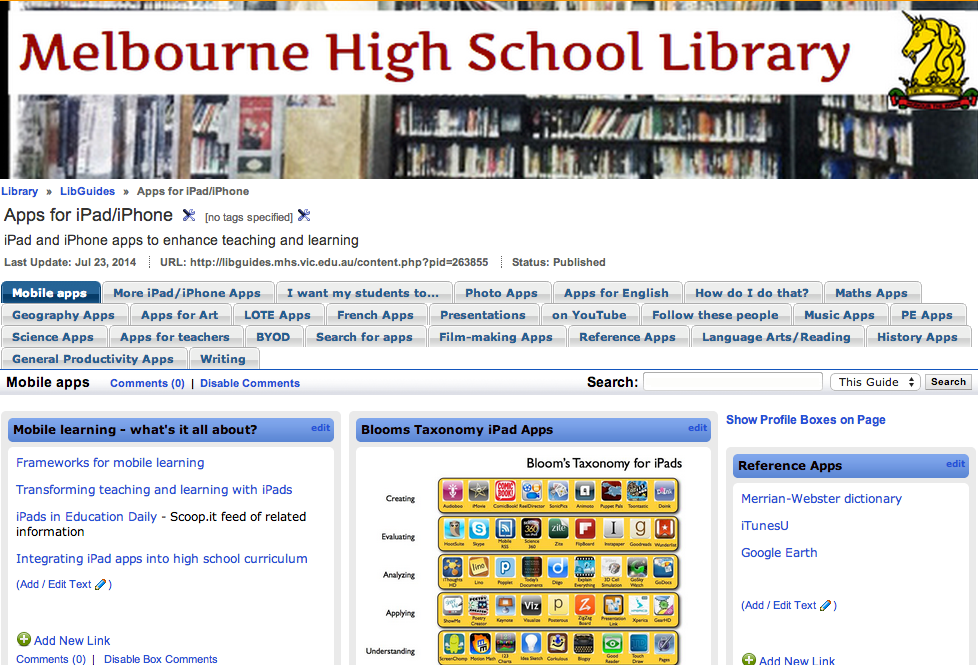
In turn, we have shared our Libguides resources for ipad apps with the Melb Uni librarians –
libguideapps
The visit confirmed for us the importance of revisiting the integrating research skills into all assignments at MHS – something which is always a struggle with the overcrowded curriculum and emphasis on content delivery within the VCE.
Of course, we have also greatly benefited from our relationship with Carolyn Brown (CJ), who has worked with us in between her job as College Librarian at University College library. CJ has provided a wealth of expertise, a link to tertiary academia, and to the role teacher librarians play in preparing our students for university.
We all agreed that our visit to the Melbourne University libraries (and our visit to The Library at the Docks before that) were an invaluable form of PD for us all – rich, relevant, ongoing and inspiring.
We will be unpacking what we’ve learned throughout the year, and collaboratively informing our practice and our future directions so that we can best support students and teachers at Melbourne High School.
I’ve included photos of our visit to Melbourne University libraries here, and photos of our visit to the Library at the Dock here.


Art is not just pretty pictures: The deep process of artistic creation

My topic today is Art as a subject in schools. I wonder if we sometimes underestimate or misunderstand the role of Art in a student’s learning. It’s so much more than making pretty pictures. Art personifies learning through a transparent process of deep exploration and problem solving – with an end product to show for it. Just as with literature, the end product can be unpacked to reveal the influences which were part of the creative process. Fortunately this is not a purely scientific process but one which invites the exploration and interpretation of the viewer. Art is a model for problem solving in other areas of learning. We should hold onto Art, and not be fooled into thinking that it is less valuable than subjects which are associated with occupational success. We need Art.

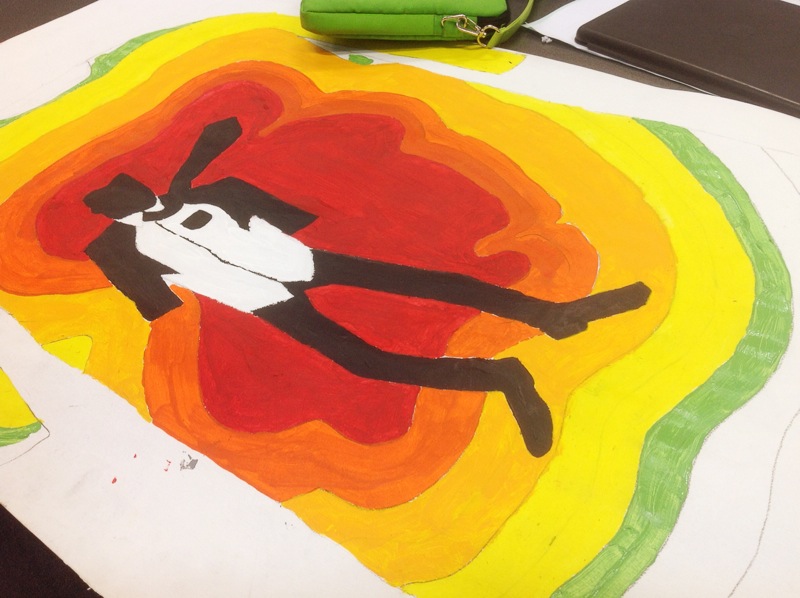
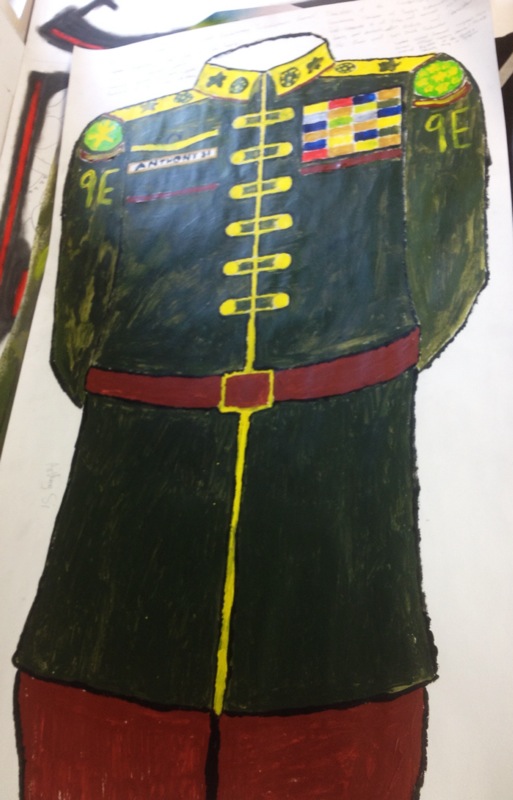
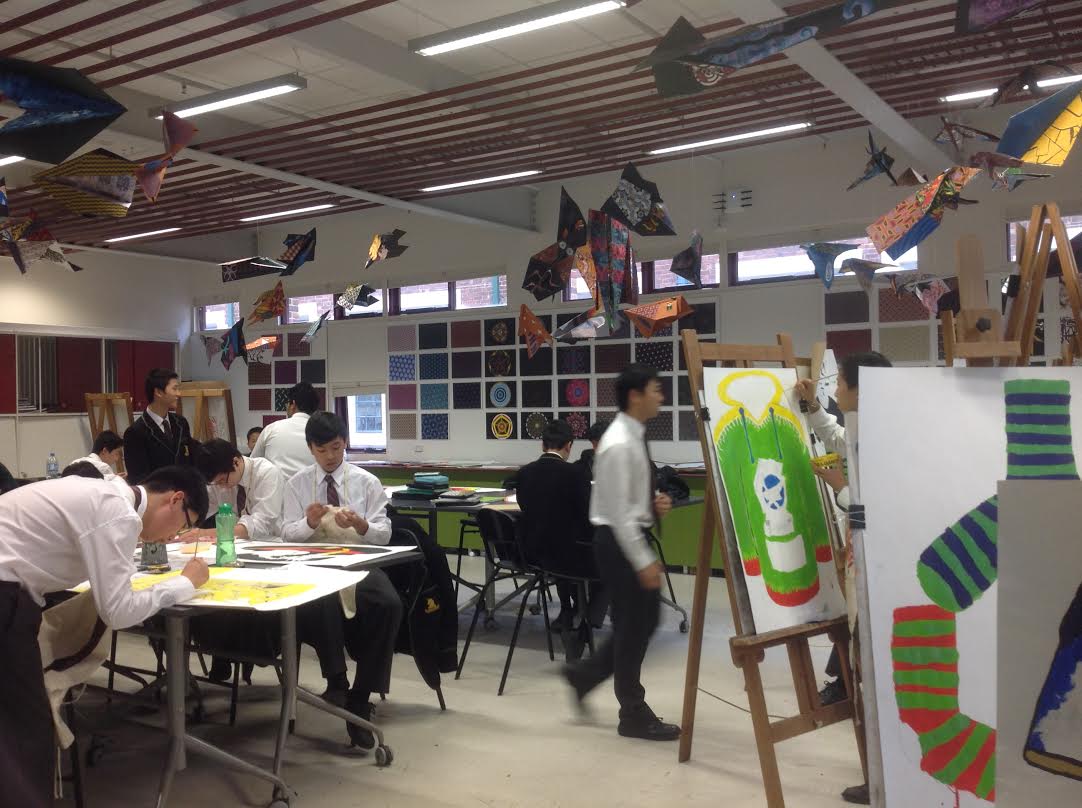
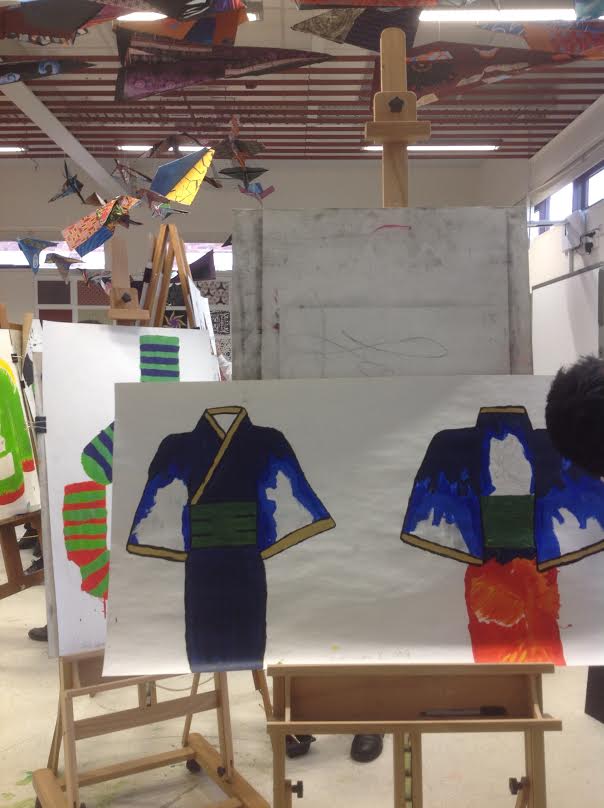
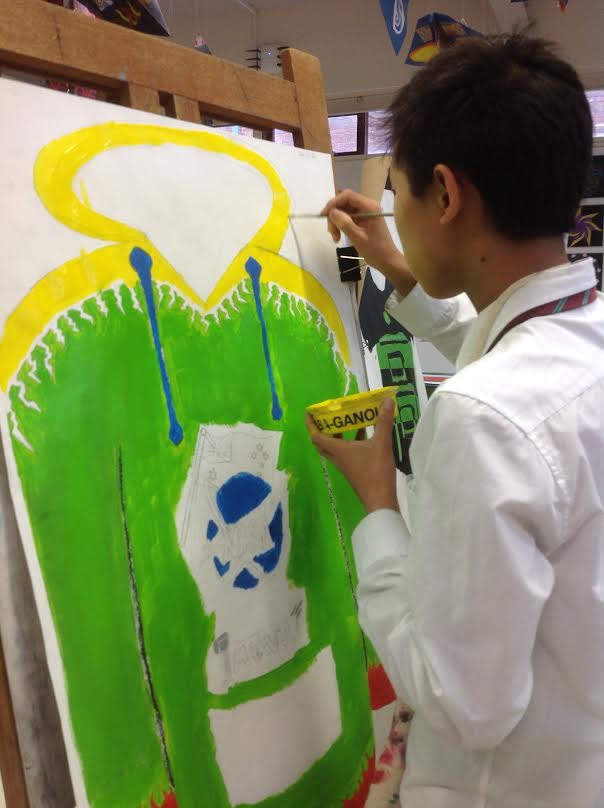
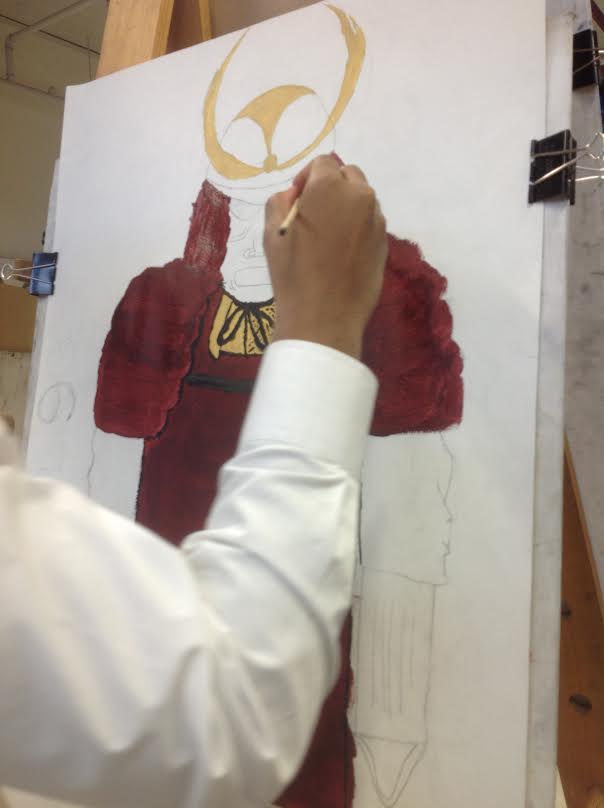
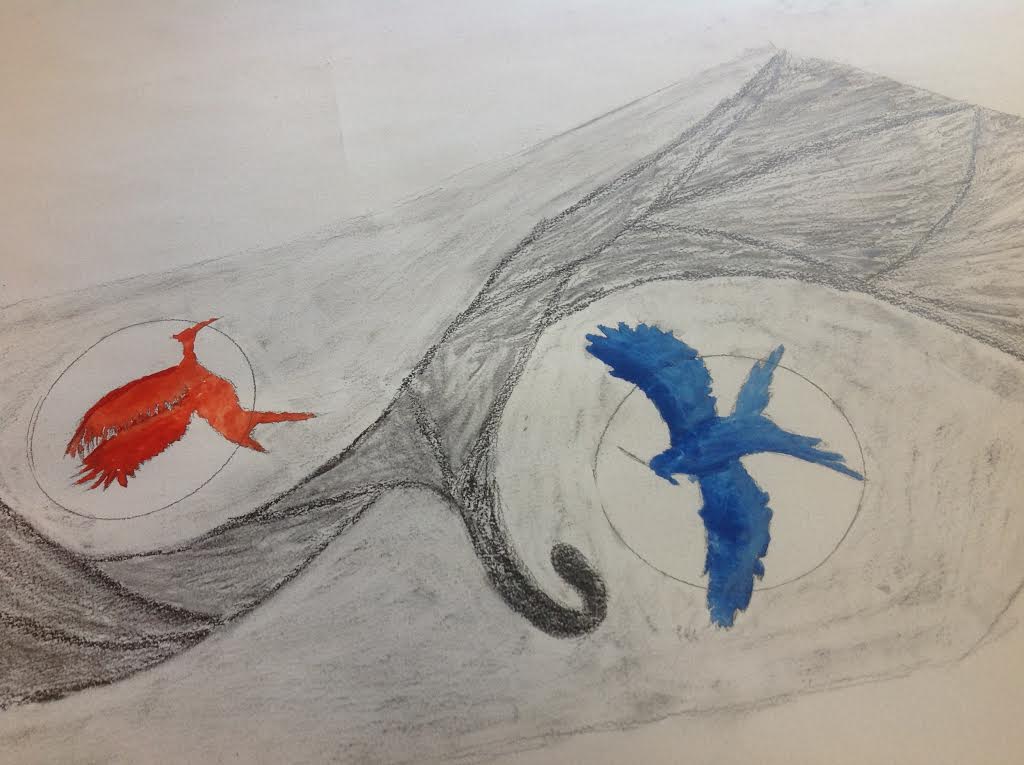
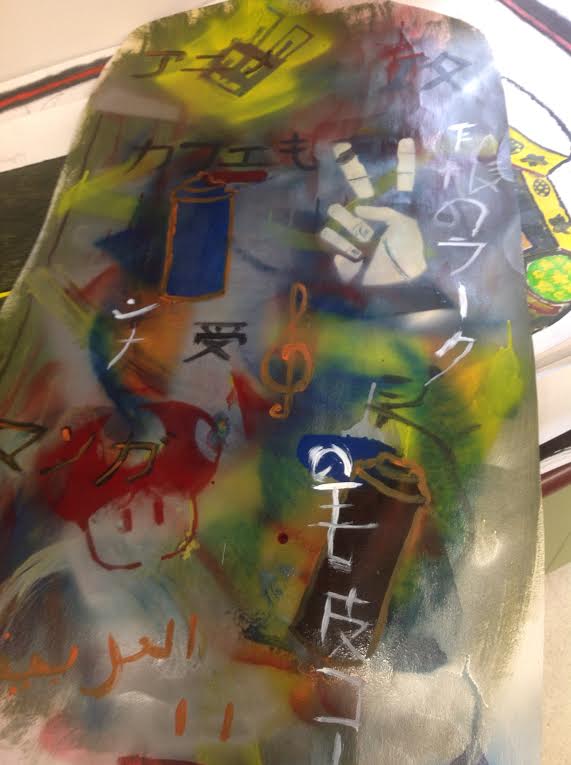
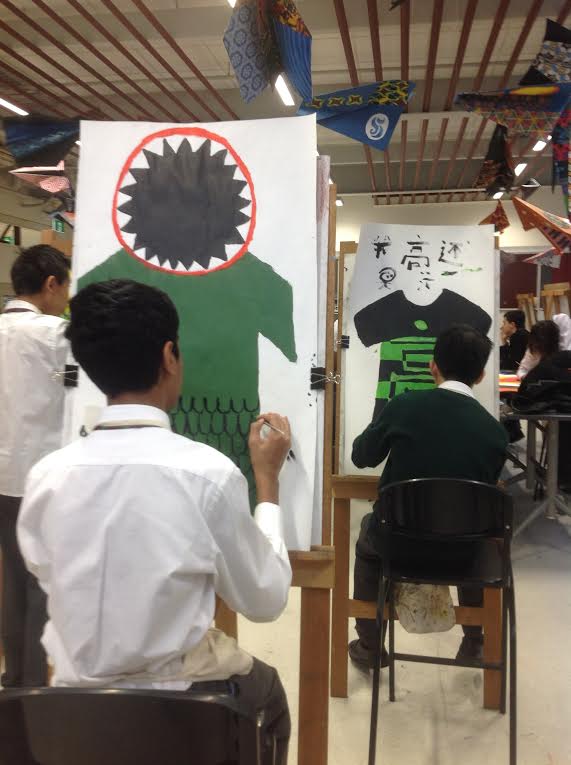
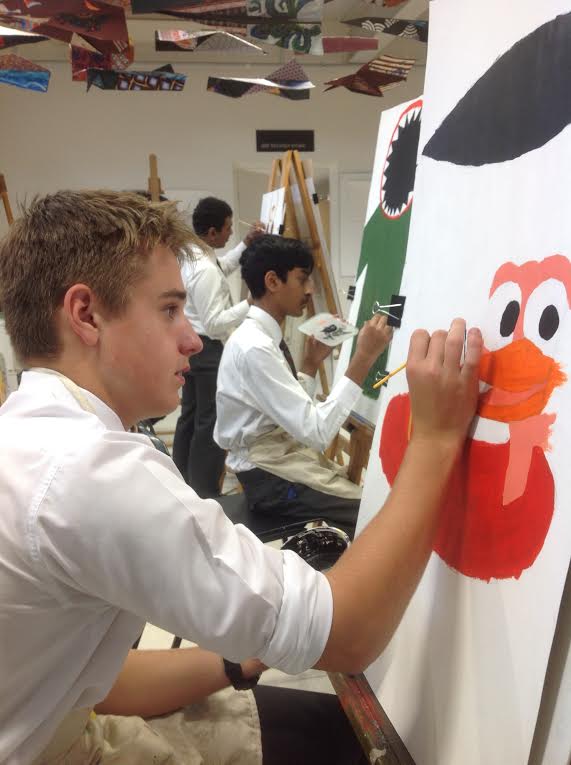
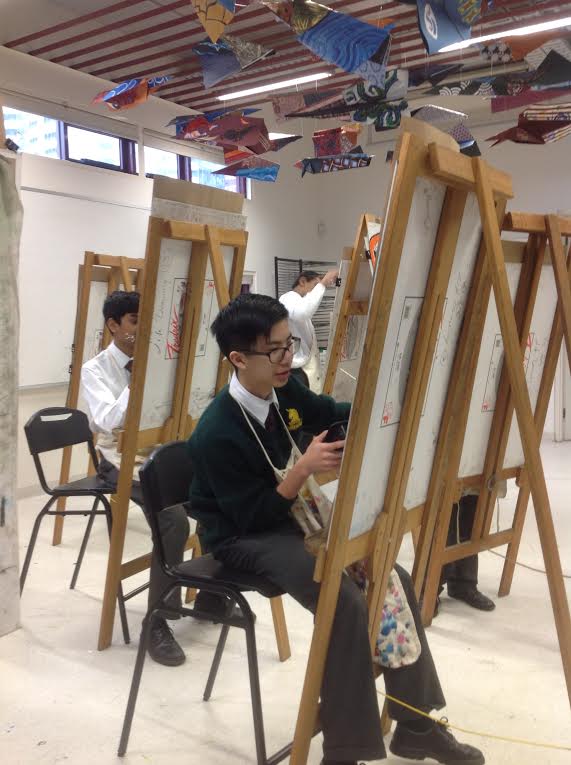
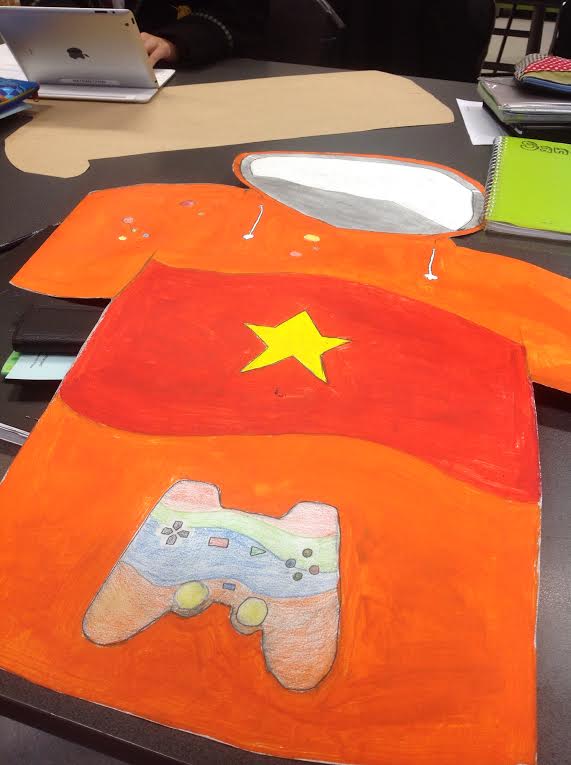
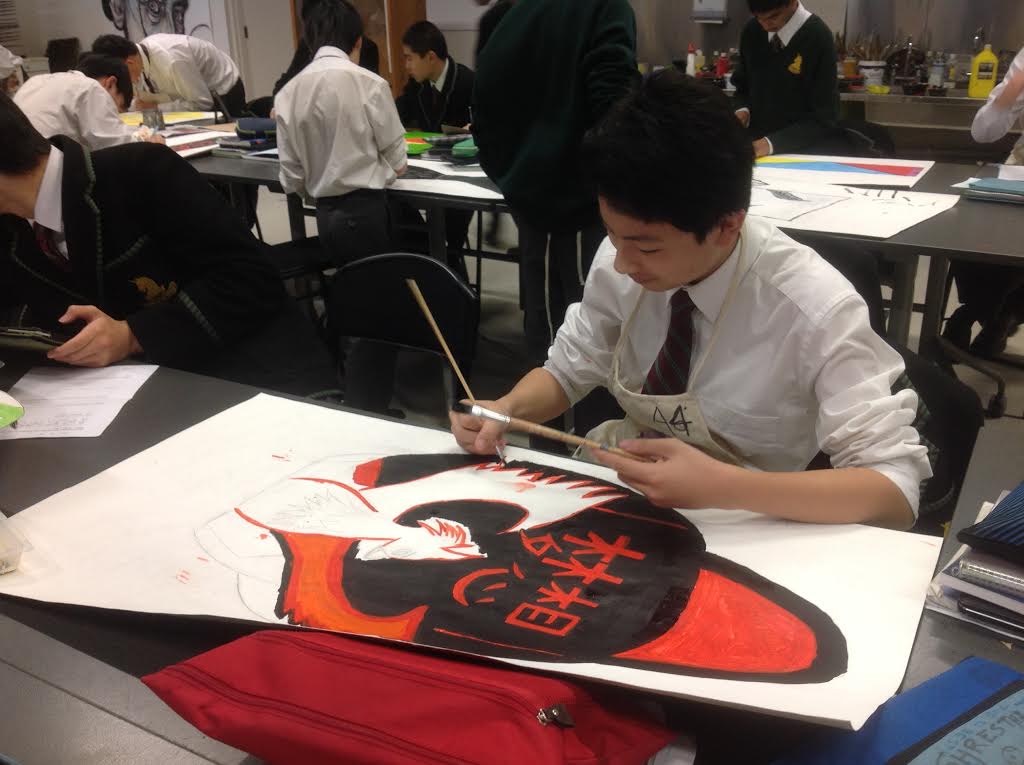
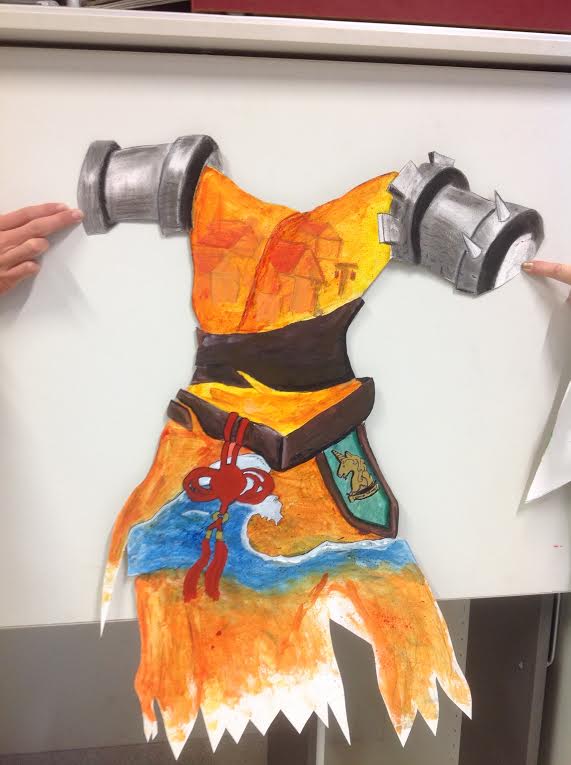
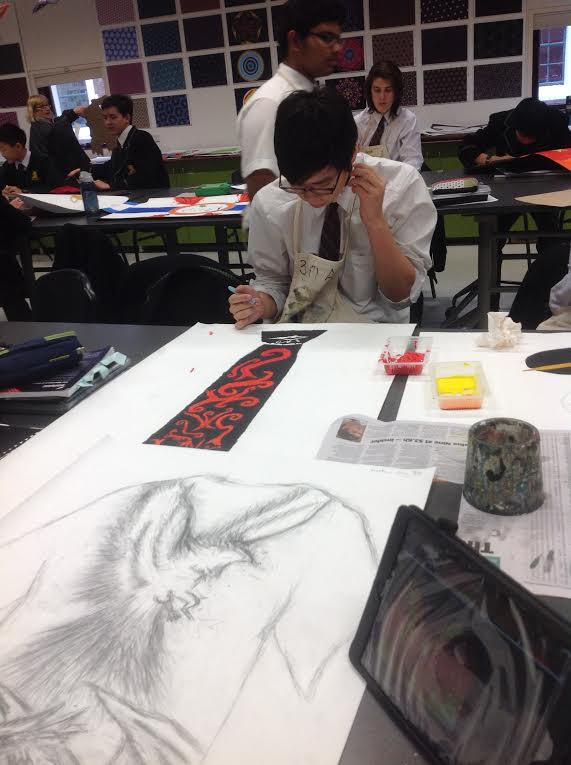
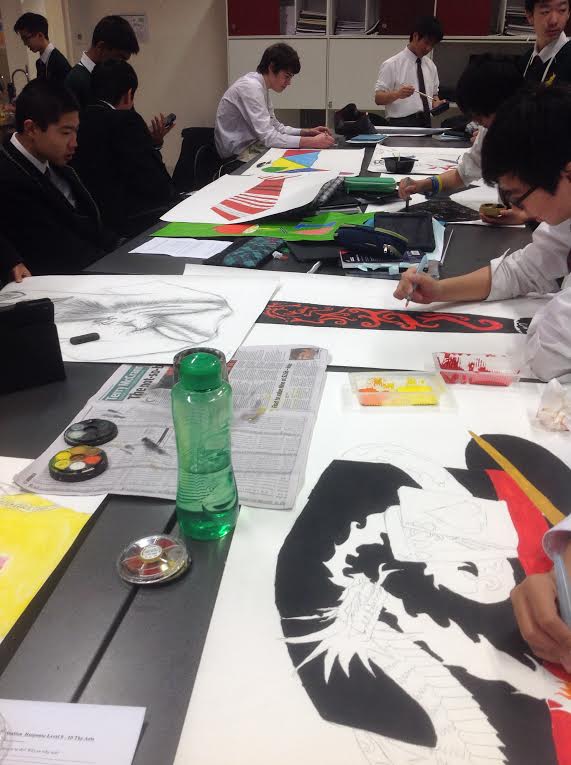
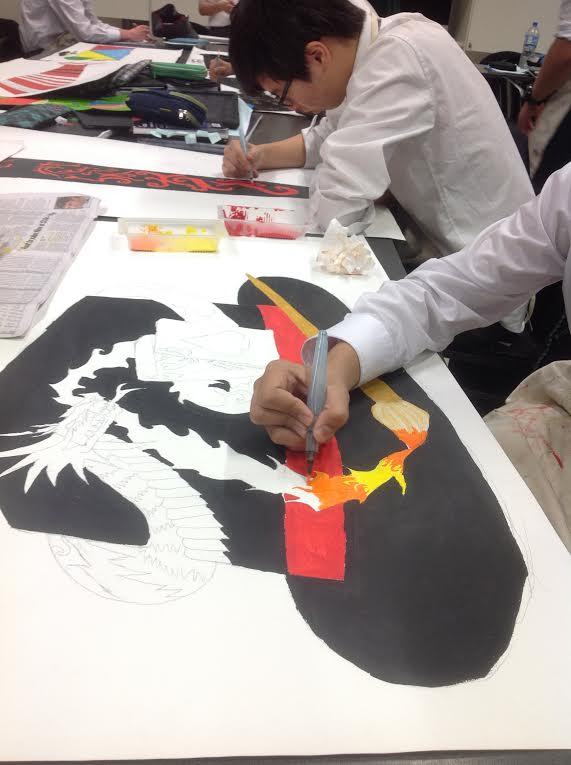
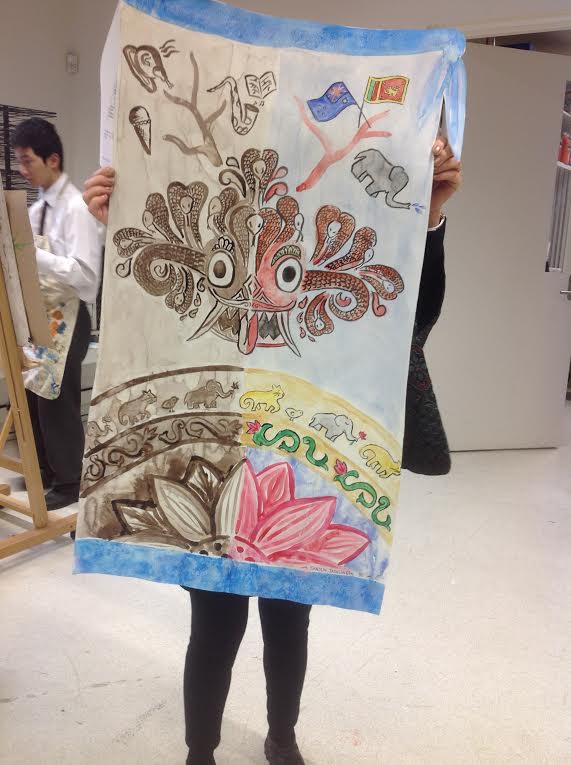
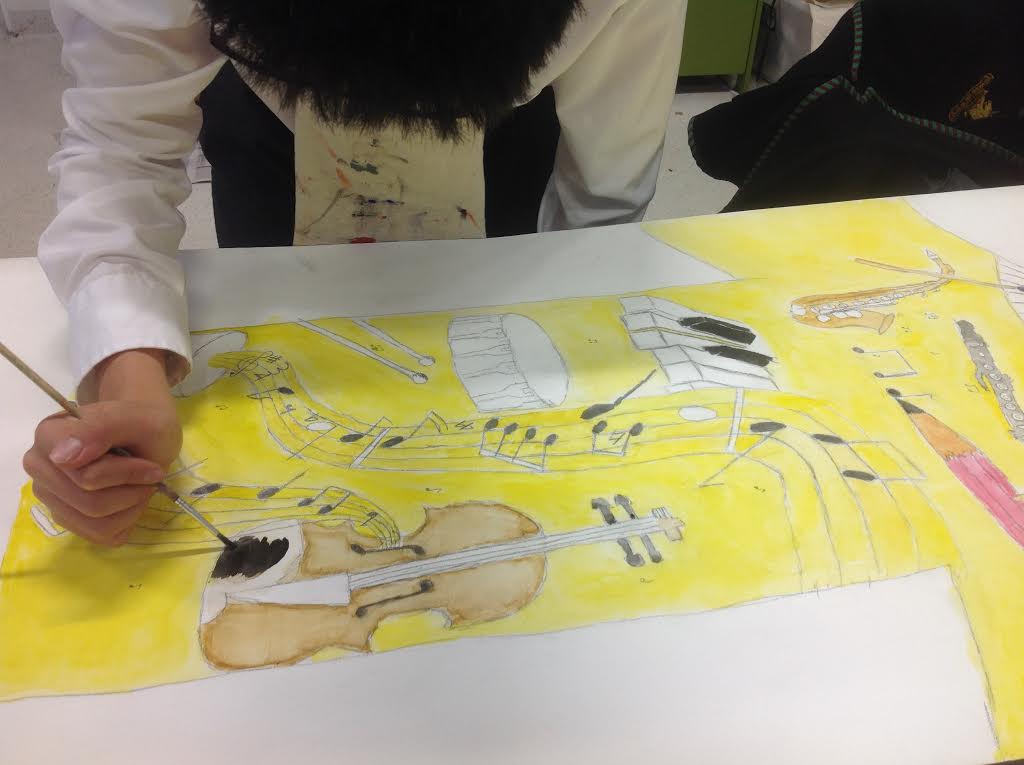
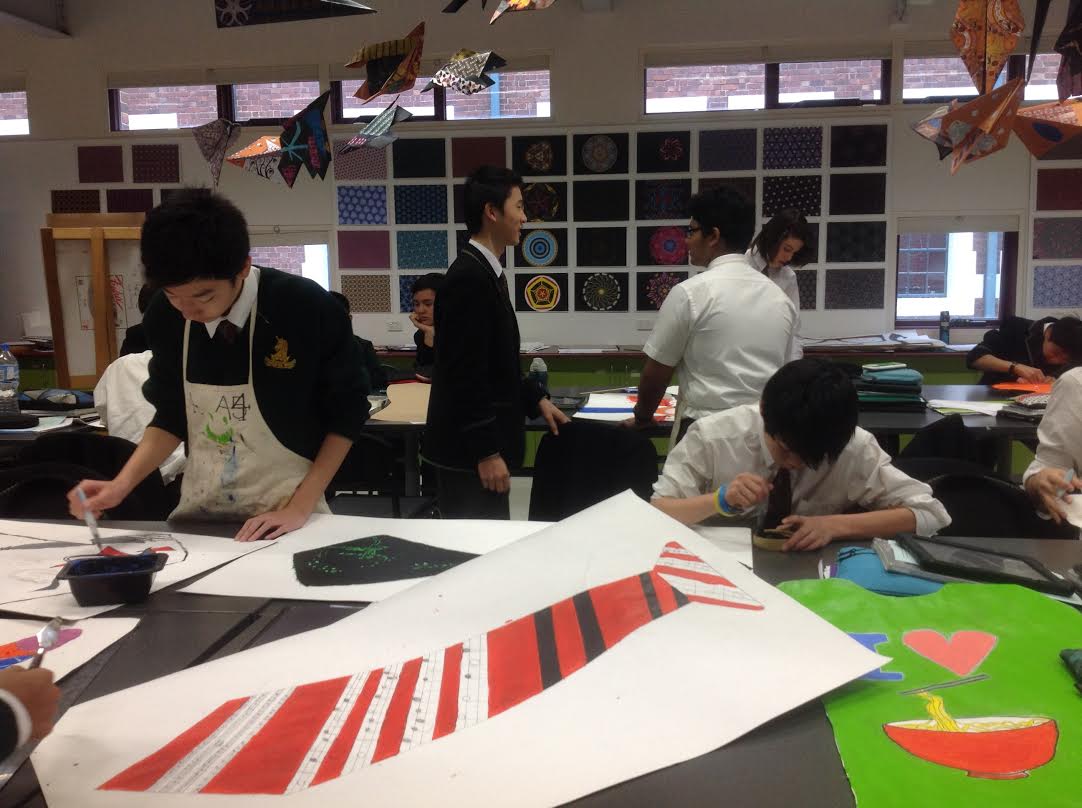
I visited a year 9 class today to see the students happily working on large representations of themselves based on their exploration of the unit ‘Home and Place’. My part in this project was the collaboration with Mihaela Brysha, Head of Art, in resourcing the project  in our library website (Libguides). I’m including the project brief:

This unit explores ideas about belonging and is designed to question our relationship and interaction with:

  • Others
  • Pop culture
  • Consumerism
  • Cultural beliefs,
  • Personal histories
  • The natural world

The aim of the exploration is to make and visually interpret personal statements about what home and place means to you and how it shapes personal and cultural identity.

Australian artists Patricia Piccinini, Fiona Hall, Gordon Bennett, and Howard Arkley address some of these ideas from very different perspectives, influences, art forms, aesthetics, materials and techniques. The study of their ideas and studio art practice as well as interpretation and analysis of their artwork aims to provide stimuli for the exploration of ideas, content and techniques for practical explorations.

The online resources were a starting point for further research into these artists:

Fiona HallGordon BennettHoward ArkleyPatricia Piccinini

The art of Gordon Bennett strikes a chord with many of our students whose families come from different countries. Bennett’s art depicts the cultural tension between his ties to his Indigenous roots and his association with Western culture.

I loved the size of these art works, their bold colours and strokes, delicate details, diverse imagery and visual storytelling. I loved the energy and focused activity in the classroom, the productive interaction between students and teacher. I took photos.

Image (1) Image (2) Image unnamed (1) unnamed (2) unnamed (3) unnamed (4) unnamed (5) unnamed (7) unnamed (9) unnamed (10) unnamed (11) unnamed (12) unnamed (13) unnamed (14) unnamed (15) unnamed (16) unnamed (17) unnamed (18)
unnamed (20) unnamed (21) unnamed


I’m looking forward to the hanging of these in the art show. Well done, boys, and well done, Mihaela.