Networking is working for some in the classroom

Photo by Thiyaga on Flickr

In his post The added value of networking, Will Richardson quotes Greenhow in a Harvard Graduate School of Education magazine editorial entitled “Thanks for the Add. Now Help Me with my Homework.” , who says that the kind of skills students are developing on social networking sites are the very same 21st century skills that educators have identified as important for the next generation of knowledge  —  empathy, appreciation for diversity of viewpoints, and an ability to multitask and collaborate with peers on complex projects’.

And yet skills are not the kind of thing that most people would expect to associate with Facebook or MySpace. Online socialising, maybe, wasting time, perhaps, collection of  too many ‘friends’ who couldn’t possibly be real friends, definitely, and what about inappropriate language and photos?  Isn’t this how most responsible people view social networking?

Surprisingly for many, and difficult to believe for most, is the fact that social networking has opened up a range of much more interesting possibilities for young people. Will quotes Greenhow saying that

most students use the medium to reach out to their peers for emotional support and as a way to develop self-esteem. One student created a video of his intramural soccer team to entice his friends to come to his games. Another created an online radio show to express his opinions, then used Facebook to promote a URL where friends could stream it live, and then used one of Facebook’s add-in applications to create a fan site for the show.

Recently our Head of English has decided to use Facebook to engage our year 12 boys in a discussion of their texts, as well as provide a platform for general questions about English skills. I’ve mentioned this in a previous post. What a brilliant idea! The boys are already on Facebook in their free time, so why not use the groups application in Facebook? What has ensued is an intelligent and stimulating collaborative discussion, in which the teacher comes in to stimulate discussion and answer questions only inasmuch as all this hasn’t been taken care of by the boys. There’s something to be said for this kind of discussion where everyone can comment, taking their time to think, not being interrupted or intimidated by others, or being able to re-read comments for clarification and review.

The Facebook project obviously had to go through the correct procedures before starting, eg. parent approval, and presentation and justification to the principal. This process is a good way to inform the school community, as well as clarify the teacher’s own reasons to support teaching and learning.

The relationship between the teacher and the boys would be strengthened, I imagine, following the Facebook group project. A teacher coming across to the students’ preferred way of communicating could only be seen as positive. The tone of the conversation is friendly, open, encouraging and often spiced with humour. The divide between teacher and student is diminished, as the teacher becomes more approachable. I think students would also appreciate the fact that the teacher is taking the time to interact with them after hours.

I only wish that somehow parents could see the valuable conversation that is taking place, so that they would understand the value of such a project, but I doubt that these students would enjoy their parents having access to their Facebook accounts!

What were those networking skills again? Empathy, appreciation for diversity of viewpoints, and an ability to multitask and collaborate with peers on complex projects. Students supporting and encouraging each other; learning to respect others’ viewpoints, working together to explore ideas and understandings. Not bad skills for life…

Earthquake in Melbourne: Twitter beats breaking news

Sitting on the couch earlier this evening, I felt a strange sensation of moving with the couch, as the bookshelf behind me creaked. Melbourne had experienced a light earthquake. Did it happen or did I imagine it? After a while I tweeted it in the form of a question, hoping to ascertain whether it really happened or not. Sure enough, Twitter exploded with tweets registering similar experiences.

Meanwhile, the TV was on, but no news about an earthquake. Look at ABC news online – nothing. Channel 7 Breaking News remained unbroken – just a repeat of the stories that had been broadcast several times already this evening.

Gradually, traditional news providers came on board. Channel 7 finally acknowledged the quake at 10.27 pm. Very slow, considering John Connell had already completed a post about the Melbourne quake from Scotland.

Here it is, and he has an image of the first 18 twitterers – I’m there on the right. I would have been quicker but my laptop was doing its usual slow-loading.


As Craig has pointed out in a comment below, Breaking Tweets (World News Twitter style)  reported 800 tweets before media jumped in.

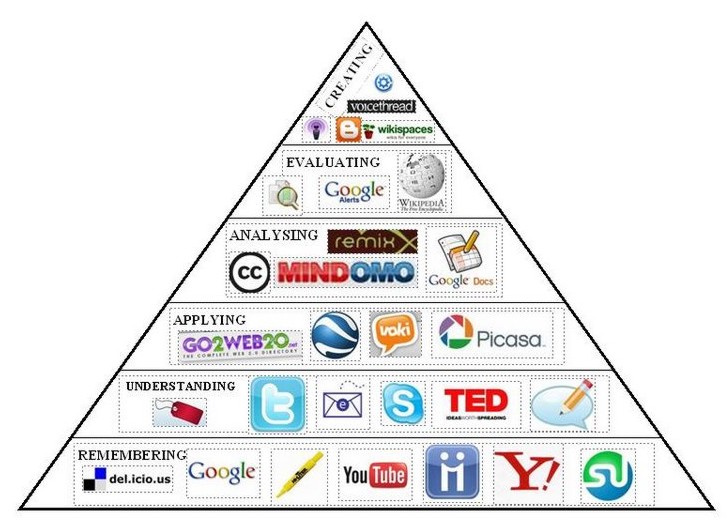
Visual Blooms Web 2.0 Taxonomy

visualblooms1

Bloom’s Taxonomy has come a long way. Well, so it should, since it originated in the 1950s.

Thomas, on Open Education, explains the logic underpinning the taxonomy:

The basis for the theory is rather straightforward, a person cannot understand something that he does not remember (know) nor can he/she analyze or apply that knowledge if the person does not understand the material. Though an ability to analyze and apply certainly supersedes the basic knowledge category, to synthesize entails divergently applying knowledge and/or skills to produce something new. Lastly, evaluating or judging the value of material is necessary to produce a worthy final end product.

The above image is  an easy visual overview of Web 2.0 tools and how they fit into Blooms Taxonomy. It was designed by Mike Fisher.  I think it’s open to interpretation. Twitter, for example, would fit in more than one category. What do you think?

For an extremely detailed and awesomely impressive account of Bloom’s digital taxonomy, here’s Andrew Church’s update on Blooms for the digital age.

Authoured by Andrew Churches, the digital taxonomy account for the use of social media and a variety of digital tools that can be used in educational contexts. Not limited to a discussion of the cognitive domain, the text includes discussions and suggestions for methods and tooling.

[scribd id=8000050 key=key-27g4ipakpdfrxflg9cr7]

Andrew’s work is invaluable in providing a framework for new technologies. As Thomas says in his post,

Churches digital examples at the evaluation level provide strong reinforcement for the use of blogs and Wikis to greatly enhance learning.

And if you want to go back and explore the taxonomy in depth, here’s a whole wiki on Blooms Taxonomy.

Dr Seuss on Google

googleseuss

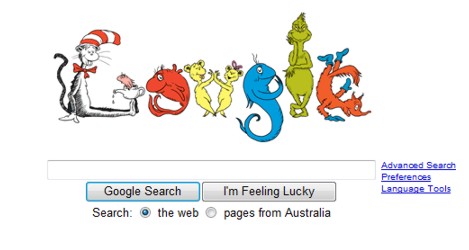
Today is the 105th anniversary of the birth of  Theodor Seuss Geisel, better known to the world as Dr. Seuss. Google has a little tribute.

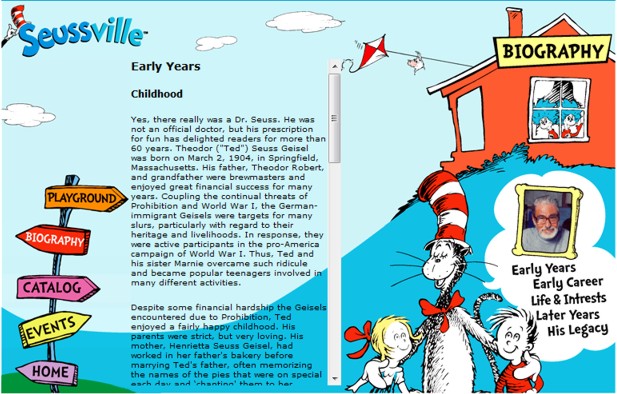
Random House has a Dr Seuss website for kids. Amongst the fun stuff, there is also a biography.

seusseville

Many children learn to read through Dr Seuss stories. I can’t say I did, although we did have a copy of The cat in the hat. Most children would have read some Dr Seuss, I think, and adults remember the stories fondly.

What is less known is the fact that Theodor Geisel’s early political cartoons demonstrate a passionate opposition to fascism, and that he urged Americans to oppose it, whereas his cartoons tended to regard the fear of communism as overstated. He also denounced discrimination in America against African Americans and Jews (Wikipedia).

Many of Geisel’s books are thought to express his views on a myriad of social and political issues: The Lorax (1971), about environmentalism and anti-consumerism; The Sneetches (1961), about racial equality; The Butter Battle Book (1984), about the arms race; Yertle the Turtle (1958), about anti-fascism and anti-authoritarianism; How the Grinch Stole Christmas! (1957), about anti-materialism; and Horton Hears a Who! (1954), about anti-isolationism and internationalism.

However, I don’t think that’s what Dr Seuss is remembered for. That would most likely be his rhythmic and catchy verse, and his quirky characters.

I’ll leave you with a video of Green eggs and ham to enjoy.

[youtube=http://www.youtube.com/watch?v=RdR0LXOiEB8]

Web 4.0 thanks to GE

One thing leads to another. That happened to me today as it happens so often. The pathways within social networks are as mysterious as they are surprising. I was checking my Twitter updates, and I did what I often do – check out who else is interesting through my own network. So I was checking out @art4change who was conversing with @hrheingold, and I followed a link she had tweeted. I was hoping it would be good, because she had promised: ‘Watch this NOW. Dead serious. It will blow your mind. Thanks @JohnStauffer http://tinyurl.com/cydomk’.

This comes from GE. As John Stauffer says in his post ‘Hangin with Mr Cooper’,

Sit back and prepare to be amazed. No video editing was done to create this, just a flipcam and some Friday afternoon brainstorming with our Creative Director, Robert Cooper….

[youtube=http://www.youtube.com/watch?v=DkqtklABgGQ&eurl=http://blog.ogilvypr.com/2009/02/hangin-with-mr-cooper/comment-page-1/#comment-35235&feature=player_embedded]

Kissing, the pavement and squashing heads on Flickr

I think I’m in Flickr phase. I’ve had my Blue Period, and now I’m in the middle of my Flickr Period.

Today’s obsession will focus on Groups. There are so many interesting, sometimes strange, and varied groups on Flickr. I’ll give you some examples:

Beautiful Kiss

The pavement

Photo by splintered

Prints of darkness  A place where darkness comes to light, a place for smart photos that aren’t too bright…

Photo by Prudencebrown121
Vanishing beauty  As my father would say, “old things, falling down”

Photo by suspiciousminds
In numerical order  In Numerical Order, photographs are posted to the Group in numerical order.

Photo by vin60
Film noir mood  ;

Photo by Sanchi Saez Agurto

I crush your head “Inspired by Kids in the Hall, these will be pix where you take your fingers and squish the head of someone else.”

Photo by Jeff the Trojan

Social documentary photography A place for professional documentary photographers to discuss emerging technology, marketing and the impossible act of making a living through photography.

Photo by Andrew.David
Visit the world travel guide

Photo by Quejaytee

Gossamer glimpse  “this group is intended to showcase photos of (and through) transparent stuff. delicate fabrics, screens, dirty windows and other such veils will ideally fill our photos’ frames.”

Photo by ratsbeyfus
The secret life of plants 

Photo by Sammie Lynne

Graves, tombs and cemeteries

Photo by njpara31

Flickr fan art   “or any kind of artwork featuring the letters ‘F-L-I-C-K-R'”

Photo by alleluja

Macro photography

Photo by jamesdunbar42

Rural decay  Rural Decay, Pictures of Barns, Silos, Farms and other Rural buildings decaying.

Photo by Mattreynolds

Green is beautiful   

Photo by Peter Hajas

Tell a story in 5 frames

Photo by Robx

Colour and colours 

Photo by edi.peck

Whatever the weather  picures of cloud formations, weather patterns, rough seas, etc.

Photo by johnstravel

Altered signs 

Photo by _kriebel_

Apart from wasting (no! it’s not wasting; but it does eat up time) on these quirky little groups, I do believe that a little ingenuity in conjunction with these groups will lead to some interesting classroom projects.

Some of them leap out –  Tell a story in 5 frames

There’s no need for me to spell out the possibilities for an enjoyable project involving choice, creativity, visual literacy, storytelling skills, etc.

What about Rural decay  or Flickr fan art for art students?

Lots of photography ideas for sure. And don’t disregard the quirky ones, eg.

In numerical order and I crush your head.

There are many more groups and definitely many more ideas to be gleaned from these groups. What are your ideas?

Siftables – the toy blocks that think

[youtube=http://www.youtube.com/watch?v=JP0w9lZoLwU]

David Merrill is the creative inventor of Siftables, small computer blocks that interact with each other, offering a myriad of learning possibilities using physical manipulation and play.

I’m so inspired by people like David, and by the way he talks just as much as what he does. His passionate explanation of his new discovery reveals  creative and innovative thinking. He says “I started to wonder… what if…?” And that’s the point where you  know something great is going to happen. ‘What if…?’ is something I think we should do more often.

So he thinks ‘What if, when we use computers, instead of having a single mouse cursor, we could reach with both hands and grasp information physically, arranging it the way we wanted it?’

David’s idea came from watching kids play with blocks, and understanding that through this physical play they were learning how to think and solve problems by understanding and manipulating spatial relationships.  He argues that spatial reasoning is deeply linked with how we understand the world around us.

From this idea, David, the computer scientist, came up with a concept and developed a new tool – Siftables; you could grab information physically and arrange it the way you wanted to. Siftables, according to David, are an example of a new ecosystem of tools for manipulating information, for exploring new and fun interaction styles. The blocks are somehow aware of each other, aware of the nuances of how we move them, and respond accordingly. The examples he showed were language and maths games, as well as musical composition, but he hinted that there were many more applications.

The game aspect is appealing. As David says, you don’t have to give kids many instructions – they work it out for themselves by playing around with the blocks. Discovery.

The music was my favourite example, and I immediately wanted to have a go.  The Siftables enabled you to inject sounds into a sequence that you could assemble into the pattern you wanted.

David says, ‘My passion is to make new human computer interfaces that are a better match to ways our brains and bodies work… we are on the cusp of a new generation of tools for interacting with digital media that is going to bring information into our world on our terms.’

A powerful statement.

I like the way he’s thinking about matching digital tools with our brains AND bodies. I often think about how traditional education, with its expectation that students sit still and listen for prolonged periods of time, or work on teacher-prescribed work which focuses on text, doesn’t match the way adolescents function, and definitely doesn’t take into account their need for physical activity.

Siftables may have been created for young children but I think there is much potential for adolescents too. This is an excellent example to underline something I’ve been saying for a while: technology is not an end in itself. Technological tools are just tools, but they can enhance learning, and with the learner in mind, and particularly with the learning aims in mind, they can enable creative and innovative activity.

 Thanks to @marciamarcia for this link.

ABC Articulate now on Twitter

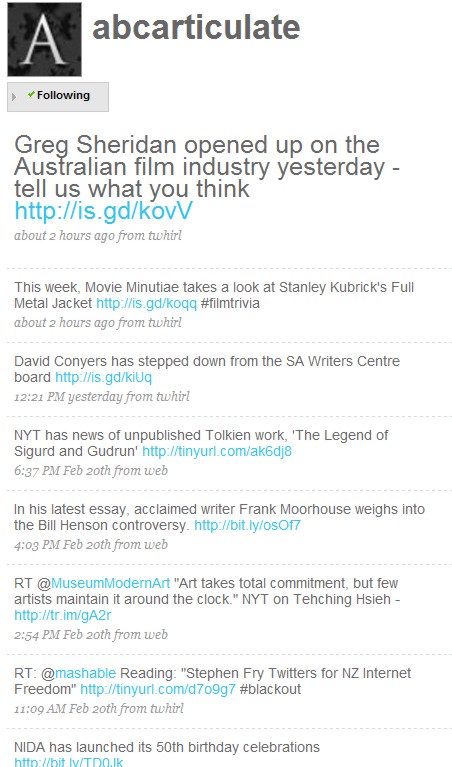
ABC’s Articulate is now on Twitter. Follow it here.

articulateontwitter3


People have been asking questions about Twitter lately – wondering what the point of it was, and whether it was unnecessary when you could just use your Facebook status.

In this case the news update aspect of Twitter is something to consider. I’m following Articulate on Twitter so that I can quickly view  the ABC’s daily take on arts news and events in Australia and throughout the world. It’s quicker and cleaner than going through Google Reader. Interested? Just click on the link.

What did I discover today?

A New York Times article aroused my curiosity about the release of a previously unpublished Tolkien book

There will be much celebrating around the Party Tree in Hobbiton: Houghton Mifflin Harcourt said in an e-mail message that it planned to release a previously unpublished book by J. R. R. Tolkien that predates his novel “The Hobbit” and his fantasy epic “The Lord of the Rings.” The book, “The Legend of Sigurd and Gudrun,” was written during the 1920s and ’30s, while Tolkien held the Rawlinson and Bosworth professorship of Anglo-Saxon at Oxford University. It is his English-language narrative of the Norse hero Sigurd the Volsung, whose medieval adventures were — of course — populated by magic horses, dwarfs, dragons and gods with mischievous motives. Houghton Mifflin Harcourt said that it would publish the book, with commentary from Tolkien’s son Christopher Tolkien, on May 5.

I clicked the link for this tweet

“Stephen Fry Twitters for NZ Internet Freedom” http://tinyurl.com/d7o9g7 #blackout

and read the opening paragraph to an article which explained the tweet:

British actor Stephen Fry has given a global highlight to a protest against a contentious New Zealand internet law due to come into effect next week.

This tweet interested me also

Cinema adaptation of Life of Pi may have found a director in Ang Lee. Good choice? http://twurl.nl/2lc8nu

Having skimmed The Life of Pi, I’m curious as to how it would translate into a film.

This one caught my eye, since I’ve posted about the YouTube Symphony Orchestra earlier

Youtube wants you to vote for its symphony orchestra; 3 Aussies are in contention. http://twurl.nl/oteltl

Reading these and other tweets didn’t take long at all. Quite satisfactory.

Stick figures in peril – Flickr groups

Originally uploaded by superlocal


I enjoy Flickr for its access to a diversity of images, and have joined several groups to zoom in on a specialised focus of interest. Flickr groups also allow the geek to have a home, and I’m quite comfortable in some of these groups – in fact, I entertain myself exploring some of these esoteric groups.

One such group is ‘Stick figures in peril’ which is intrinsically funny AND also entertains with the ensuing discussion.

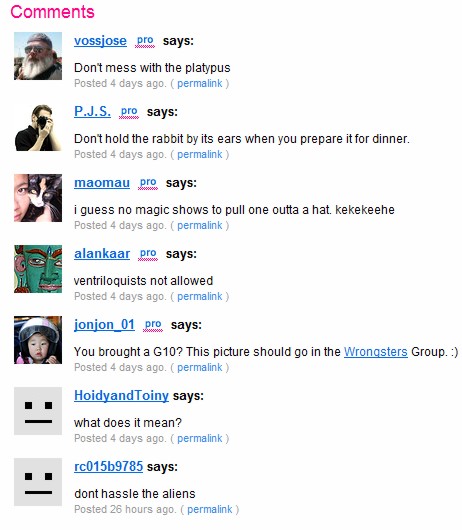
This image has tickled the imagination of some of its group members who have ventured to guess what the picture could mean.

stickfigures1

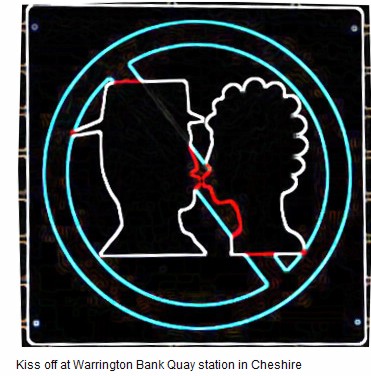
Here’s a funny sign

nokissing

indyfoto says:

www.independent.co.uk/news/uk/this-britain/no -kissing-all…
No kissing allowed at Warrington station – it blocks the platform

By Mark Hughes
Tuesday, 17 February 2009
The ‘no-kissing’ sign at Warrington Bank Quay station in Cheshire
Lovers hoping to bid each other an intimate farewell will no longer be able to do so in certain areas of Warrington Bank Quay train station after “no kissing” signs appeared following concerns that embracing couples were causing congestion.

The signs were installed on Friday as part of a £1m refurbishment of the station and have divided the car park and taxi ranks into “kissing” and “no-kissing” zones.

Interesting what you can learn from a Flickr group with a strange name.

I can think of ways to trigger discussion and imaginative speculation in the classroom using flickr groups images.  Any other ideas?

Button up, we’re out in the open

css.php