All posts by Tania Sheko

My name is Tania Sheko, and I am a teacher librarian at Melbourne High School, a selective secondary boys’ school 9-12 in Melbourne, Australia. ‘Teacher librarian’ usually requires a bit of an explanation. I think it’s a ‘School Librarian’ or ‘Library Media Specialist’ in the US and Canada. Often people are not sure what my role is, and it’s not easy to define. I like to think of it as the focus on ‘skills’ and ‘passion’ which exists in the spaces between the teaching of curriculum which is the domain of subject teachers. Some of my areas of focus include all sorts of literacies (information, digital, critical, network, etc.), collaboration with teachers as a kind of third hand (curating resources, differentiating learning, experimenting with blogs), and connecting people to ideas and an understanding of self and others through reading, discussion and debate. Most of our students go on to university, and we are always thinking about how we can best prepare them for the world of university and work. I’m interested in the educational environment, behaviours and directions of tertiary institutions, particularly as they move from traditional to innovative practices with connective courses. Connected learning makes sense to me, and I’m concerned that schools are often still envisioning learning as a passive consumption of content delivered by individual classroom teachers. With so much research-based evidence about student-centred, interest-driven and collaborative learning, and with the findings from the NMC Horizon Project, identifying and describing emerging technologies likely to have an impact on learning, teaching, and creative inquiry in education, I really think it’s time we woke up to ourselves about the anachronistic nature of our educational practices and took action. I learn from my colleagues, but also from my online network, reading their blogs, interacting with them on Twitter, exploring the wealth of their shared expertise online. This is what excites me about learning – connecting with people globally for a shared purpose.

Flickr – take a closer look

I use Flickr to upload my photos, when I need images, and to share photos and the stories behind these photos in groups.

Today I went for a walk around other parts of Flickr. Here’s what I saw.

I scrolled down to the bottom of the Flickr homepage and clicked on ‘Explore’. Here’s what I found.

This photo is from M_Jose’s photostream, and comes with a caption:

Sometimes (always), we “need” (no must) to stop and look inside (it is an option not an obligation)

Flickr explains the ‘explore’ option:

Flickr labs have been hard at work creating a way to show you some of the most awesome content on Flickr.

We like to call it interestingness.

What’s ‘interestingness’?

There are lots of elements that make something ‘interesting’ (or not) on Flickr. Where the clickthroughs are coming from; who comments on it and when; who marks it as a favorite; its tags and many more things which are constantly changing. Interestingness changes over time, as more and more fantastic content and stories are added to Flickr.

To explore, you can choose a month of selected flickr photos; here’s an example:
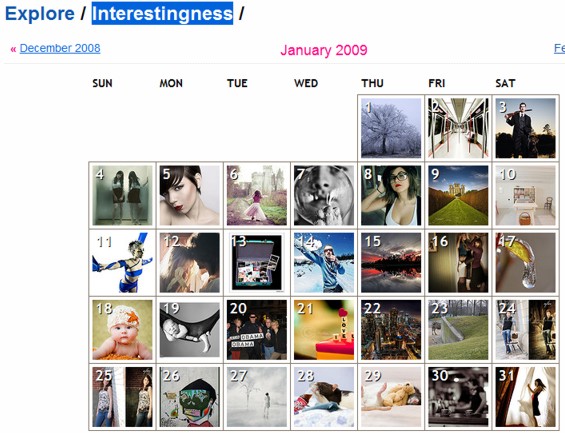
calendarflickr

When you click on one of these photos, you get to see more interesting photos for this day
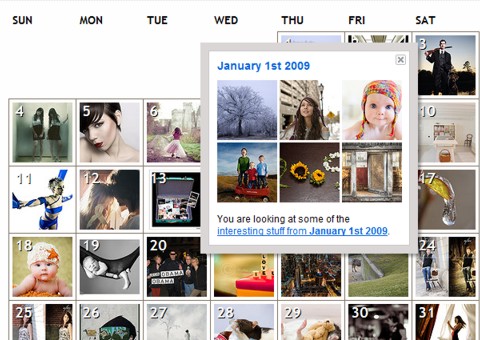
jan1calendar2


You can also explore many geo-tagged photos, for example, I chose Manchu Pichu, Peru
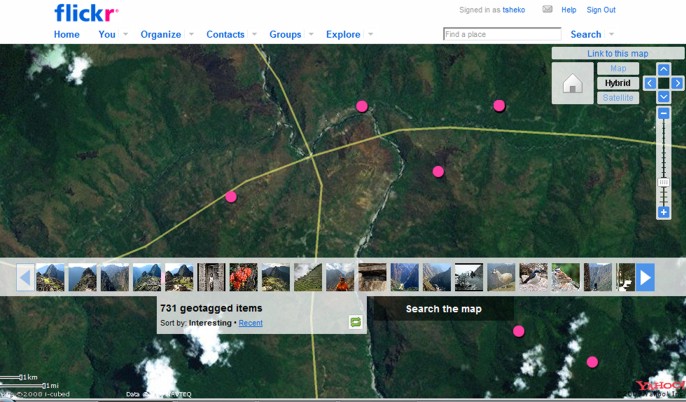
geotagged

I picked Machu Picchu terraces from Stut’s photostream
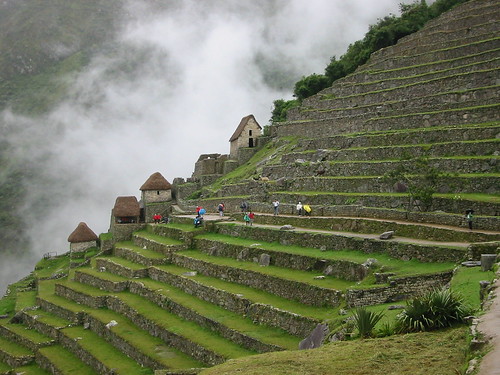
An amazing photo of extraordinary detail. The rest of the photostream turned out to be just as impressive. Some people are very talented, not to mention lucky to be able to travel.

There are tutorials on how to explore, how to geotag your own photostream, or you can do a location search on geotagged photos.

Why not explore the map of the world? I entered ‘mosaic’ in the search box of the map of the world and got this
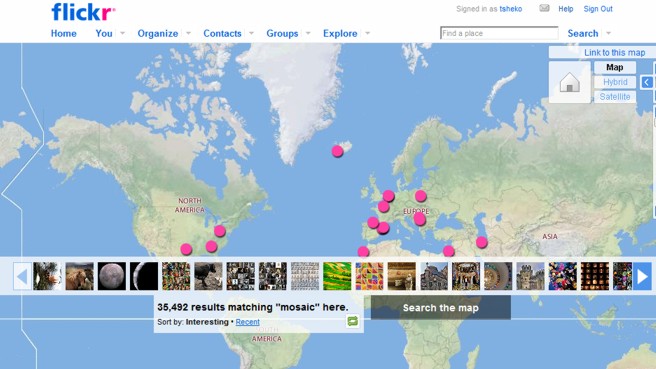
mosaicworldmap1

Great find for art classes! There were so many interesting results. Here’s one of them:

It’s from Nir Toba’s photostream. Fascinating to read about the photo.

All the photos in one layout.
It took about 15 hours, in 2 sessions, and every letter had about
30-50 takes until i got i right (and lot’s of gasoline!).

This is a part of my portfolio for graphic design school,
& if you we’re wondering: yes, these are real photos, not photoshop… 🙂

I also looked at the church of St George, Oplenac, Serbia by Katarina 2353
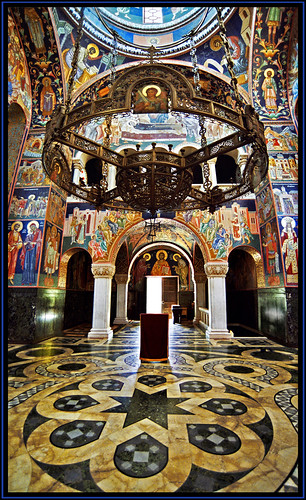
Interesting to note that the photo belongs to several photo sets that are also worth exploring (it never stops!): Serbia(Belgrade), religion and mythology, Balkans, and architecture. I love the information that’s included with the photo:

The church of St. George and the mausoleum of the Karađorđević dynasty was built at the top of Mali Oplenac (Little Oplenac). King Petar I decided to build a church and a mausoleum for both his ancestors and descendants to fulfil a wish of his parents buried in Vienna.
The church is covered with white marble from nearby Venčac mine. Interior is covered in mosaics, with more than 6 million pieces.

What’s also interesting is the interpretation of ‘mosaic’. This lends itself easily to various possibilities in art or English lessons. Compare the previous images for ‘mosaic’ to this one by Lucy Nieto

This belongs to a set ‘mosaicos de fotos’ which is an amazing page of colour and design
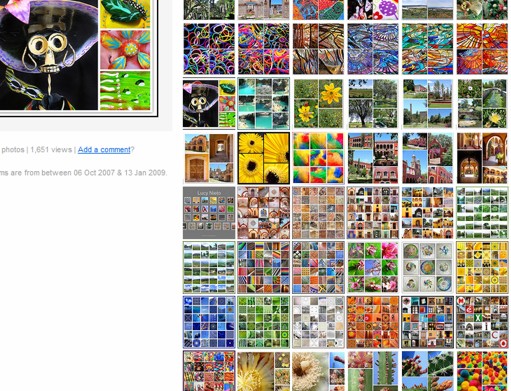
mosaicosdefotos

Here’s yet another interpretation of ‘mosaic’ by Katarina 2353
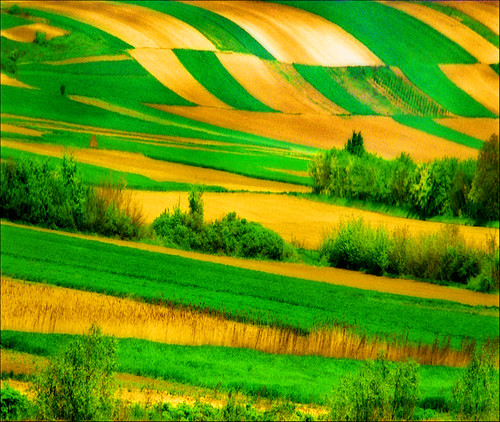
I could go on forever, but the trouble with that would be that forever is a very long time. And the Flickr site is always changing. Every time I reload a page, a different photo is showing. I think the post is getting too long, so I’ll hurry up my last observations. Other ways of exploring include popular tags, flickr blog, most recent uploads, and more. The camera finder  page checks out the most popular brands of cameras used.
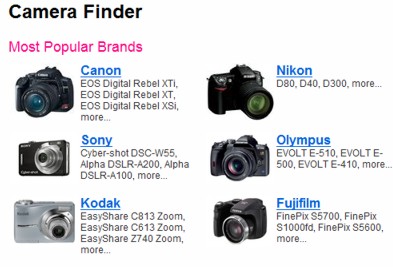
camerafinder1

Why not look at the sitemap to get a comprehensive view of what’s out there. I know that I haven’t explored every aspect of Flickr, but I’m tired now, so I’ll leave the rest of the exploration to you.

Don’t forget to let me know what you find.

Ever wanted to leave teaching?

Well, if you have, you’re not alone. Daniel Willingham on Britannica blog has a list of 10 famous people who left teaching to do great things. Not that they left teaching with the aim of becoming famous – you know what I mean; they left teaching and ended up doing great things. Still, I wonder if it’s worth leaving in case greatness follows? What I actually think is that amongst teachers there are some outstanding and extremely talented people.

D H Lawrence

Anyway, here’s the list of people (think about which one sounds a little like you):

The US president, John Adams; Alexander Graham Bell, who taught at a school for the deaf; Gail Borden who invented evaporated milk; the anti-slavery activist Levi Coffin; the American poet, Robert Frost; Andy Griffith of the Andy Griffith Show; the American president Lyndon B Johnson; the poet D H Lawrence; Gene Simmons of the rock band Kiss (who was reportedly fired for, amongst other things, replacing Shakespeare with Spiderman comics); and Carter G Woodson, who was was an essential figure in bringing Black history academic credibility as well as popularity.

Gene Symmons

Why are there no women in this list? Are there no women who have left teaching and achieved greatness? Have we all stayed to instil greatness into our students?

Images4Education

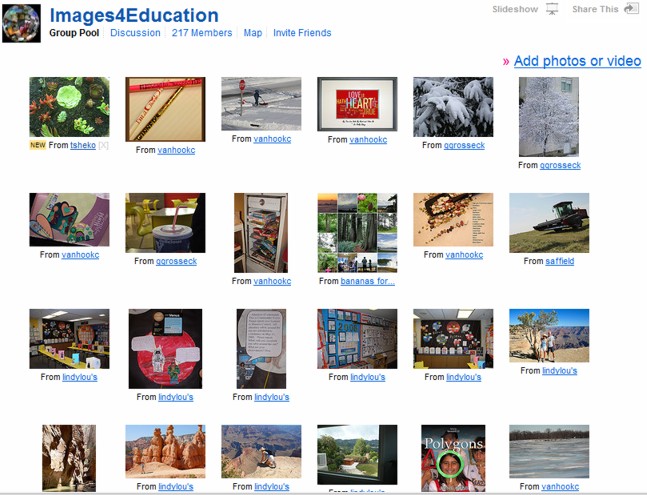
I’ve joined the Images4Education group on flickr.

images4education


Like all photo groups, the collaboration and community is fantastic, but there’s the added focus on education. There’s something satisfying about using images that have a story or explanation, images that come from real people that we can communicate with. It’s easy to check permission and always possible to contact people for permission of use when you’ve added them as a flickr contact.

What’s even better is the NING supporting Images4Education.

One of the administators of this group, Carla Arena, offers 3 supportive offshoots:

a NING group

a wiki

a flickr-related discussion for the group

Shame that I’ve been too busy to participate in the 6-week online workshop focussing on using images in education.

In this six-week online workshop offered through the Electronic Village Online, participants will be introduced to various online image manipulation tools and will learn how to effectively incorporate these resources into their teaching practices. They will explore how images can be used in educational settings for photo sharing, storytelling, slideshows and comics creation, as well as understand how Creative Commons licensing can be beneficial for classroom use.  By the end of the workshop, participants will have the chance to develop a plan to begin incorporating digital production into their lesson plans.

All is not lost, as browsing through the NING will attest to. Blog posts, discussions, photos and videos are some of the treats in store for you here.

Currently the focus is on digital storytelling.  Members share their stories and links to their presentations. Sometimes a favourite book is recommended, for example, 99 ways to tell a story, and sometimes favourite tools will be reviewed or showcased, such as Capzles or other tools.

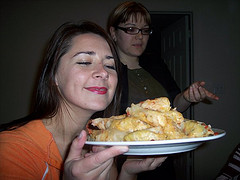
What may seem like a trivial theme always turns out to be a fascinating learning experience. A good example is ‘What’s on your table. A gastronomic view of our group’.  Scroll through this page and you’ll learn about cultures and customs through colourful photos of food and get-togethers.

moldovancabbagerolls

 Some of the images are clickable and take you to a page with information about the picture.

Here’s a photo with everything on my plate (yes, I know! I’ll have to exercise the whole month after this gastronomic orgy!). We put the Feijoada over the white rice, eat the oranges and the collard greens. Some put the fried plantains with the rice and beans.On this photo, you cannot see the fried yuca and the cassava flour which are also very traditional side dishes to the Feijoada. You have to try it! It’s irresistible. Even better with cold beer or Caipirinhas, our national drink made of lime. 

The NING has excellent groups such as one dealing with everything you need to know about using flickr, or everything you need to know about Creative Commons.

There’s a slideshows group, a Moodle tools group (which I’m yet to investigate), and a lesson plans group.

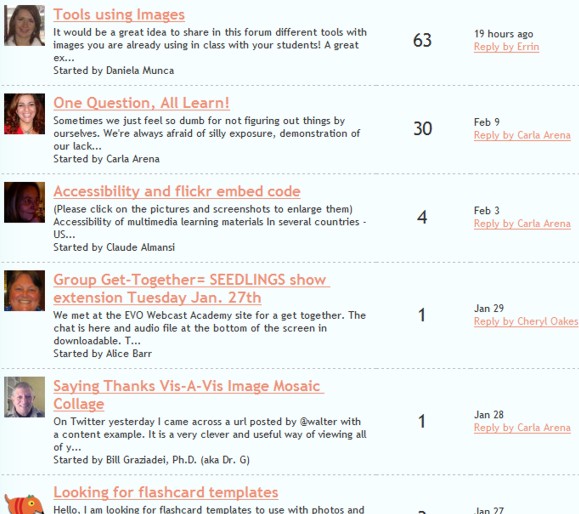
I usually zoom in on the discussion forum for ideas and links.

forumimages4

The best way to discover what else is available is to have a look for yourself. Images really are a wonderful way to engage learners and use creative teaching methods. There’s more to it than meets the eye!

Social media is not all fun and games

The Age online has published an article entitled Social media rush as Victorian bushfires rage. It describes what has been evident during the recent and ongoing bushfires in Victoria to those using social media.

As the worst bushfires in Australia’s history raged across Victoria, Twitter, Flickr and Facebook lit up with condolences and horrific first-hand accounts, while many used innovative online mapping tools to assess the risk of the fires reaching their own homes.

Unaffected by the bushfires but geographically close to areas such as King Lake, and knowing people who live there, I found that social media sites were more current and informative than most other news sources, apart from the ABC radio broadcasts. Social media became the new journalism, providing current and detailed information, but also communication to the people.

Mainstream news outlets, battling to provide comprehensive coverage of the tragedy, have incorporated accounts published on the social networking sites extensively in their reports.

Using online social media to spread vital information and personal stories is becoming increasingly commonplace in times of crisis, but this may be the first time the social networking sites have been used extensively during an Australian disaster.

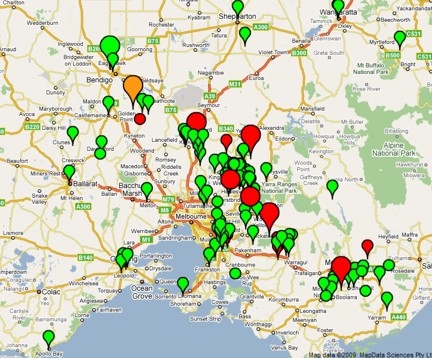
Google provided a map updated in real-time with information about the number, type and size of fires in a particular location.

firesmap

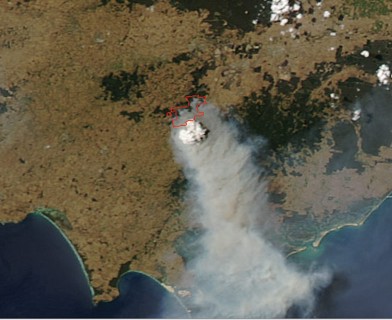
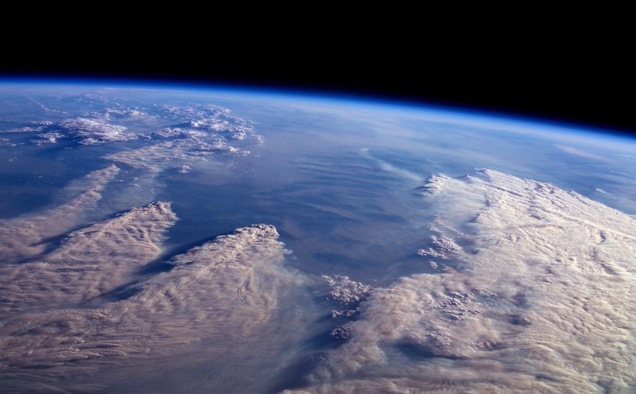
NASA provided satellite images of the fires:

satellitefires

Personally, I found Twitter’s ‘bushfires’ – tagged tweets a mix of informative and disturbing, bringing up real-time information in the most personal way, mixing facts with personal appeals for lost family. The steady Twitter stream of contributions from people all over provided communication in a way that no other media could match.

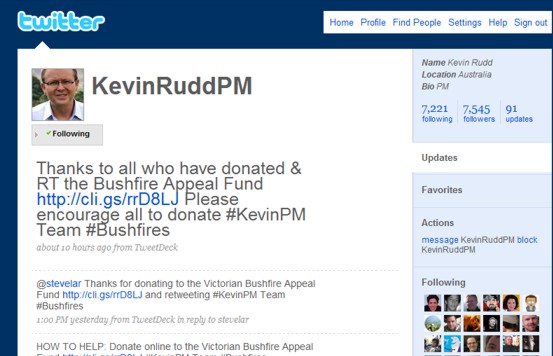
Interesting to observe that Prime Minister Kevin Rudd also communicate via Twitter.

kevinrudd

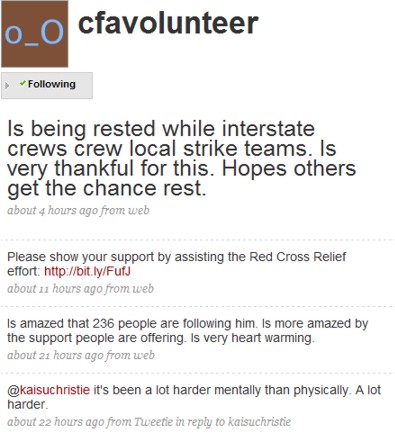
For me, the most striking aspect of this form of social media is the human element. The article mentions the twitter account of a CFA volunteer, cfafirefighter . Follow this and you follow the man, his movements, his thoughts and his feelings.

cfatwitter

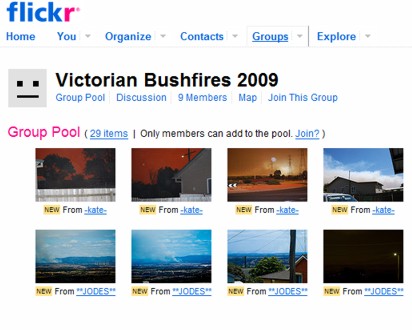
Flickr also demonstrates a platform for communication, a place for people to share images of the fires, for example, the group Victorian bushfires 2009

flickrfires

There is a very large number of photos here, and this is only one of the groups. Compare this to the few images chosen for the front page of the newspaper articles.

uploaded to Flickr by Monkeybizness February 9 2009

uploaded to Flickr by Hickey/Scott February 8 2009

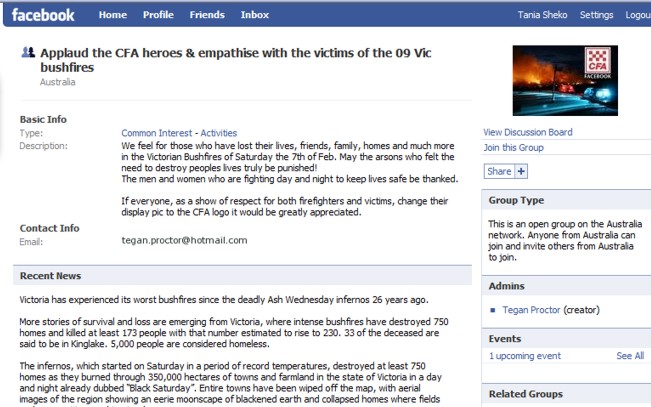
Facebook groups have sprung up too. Although it may seem to be a futile exercise joining such a group since it doesn’t necessarily lead to action, the opportunity for solidarity online may just be the impetus for worthwhile deeds.

facebookfires


The Facebook group provides links to important numbers and websites.

IMPORTANT NUMBERS AND WEBSITES:

Wildlife Rescue – http://www.wildlifevictoria.org.au/cms/index.php

Gippsland Emergency Relief
Fund – http://relieffund.org.au/

CFA bushfire hotline – 1800 240 667, http://www.cfa.vic.gov.au

State Emergency Service – 132 500

State Inquiries Centre – 1800 727 077

Other information includes different ways to donate money, for example:

http://www.salvationarmy.org.au/SALV/NEWSRELESE/PC_62630.html
Myer will match dollar-for-dollar total customer contributions to the Appeal up to $500,000. The goal – to raise $1 million for the recovery effort.

The discussion board is testimony to many a community’s empathy, willingness to help and grief:

Tarita Conza wrote
at 8:35pm
R.I.P Raye Wynette (Lane) Carter 13/05/1940 – 07/02/2009
CFA Volunter, Great grandmother of Kyla Lawrence, loving Nan of Aaron Lawrence & special friend of Tarita Conza. Tragically taken too soon! trying to save your cherished goats. You will be sadly missed but greatly remembered, Love always and forever.
So, you thought that social media was just fun and games?
Thanks to Sue Tapp for the link on Twitter to the online article.
Sue has just informed me of the ABC bushfires emergency blog.

I’m not good at maths but I could be

googleearthlessons


As I’ve said already, I’m not good at maths but I think I could be. I get the feeling that my learning style wasn’t catered for in the maths classroom. Something like Real World Math might have done the trick.

What a great way to take maths out of the textbook and into the real wide world. Google Earth’s satellite views of the earth and the interactive 3D environment allow users to add placemarks, annotations, photos and models, as well as measure distances and draw paths.

Within this site you will find lesson ideas, examples, and downloads for mathematics that embrace active learning, constructivism, and project-based learning while remaining true to the standards.  The initial focus will be for grades 5 and up, but teachers of younger students may be able to find some uses or inspiration from the site.  Higher level thinking skills, such as analysis, synthesis, and creativity are encouraged as well as technology skills and social learning.  The scope of this site is mathematics, but many lessons lend themselves to interdisciplinary activities also. 

 Higher level thinking skills, creativity, technology, social learning, and potential for interdisciplinary activities! Just what we need for our students today.

The site has separate areas: the Lessons page; the Community page; the Update page; and the Resource page.

The Lessons are grouped into 4 categories: Concept Lessons, Project-Based Learning, Exploratory, and Measurement.

The Community page is a strong point enabling collaboration and communication amongst users. In my opinion, that’s the drawcard of technology in education.

The other two pages are self-explanatory.

Thomas J. Petra, the author of the site, says this:

Math teachers are always searching for meaningful, practical math lessons that engage their students.  I hope this site is useful to you and that your students learn real world math.computingwithscientificnotation

 An example of a lesson is ‘Computing with scientific notation’; here’s an extract of the instructions:


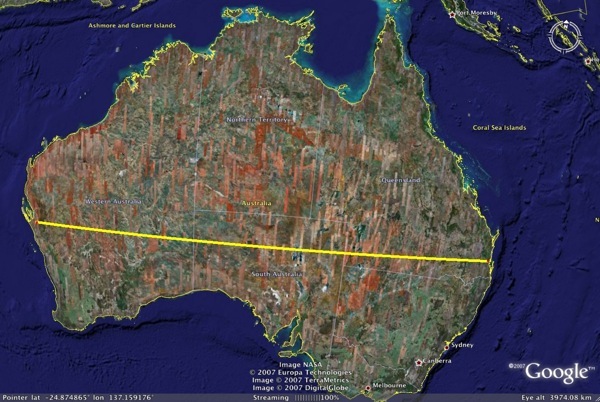
How long would it take to walk across Australia?  This lesson enables students to jump, walk, and crawl around the world without breaking a sweat.  The featured concept of this lesson is computing with scientific notation, but it also involves the distance formula, and measurement. 

In the left-hand navigation, you’ll see concepts used and grade level, eg.

Concepts used: Scientific Notation, Measurement, Rates, Algebra, Distance formula, Problem Solving

Grade level: Grades 7-9

When I clicked on the Community page I discovered it had been moved out onto a blog due to technical difficulties. The RealWorldMath Community blog provides a place for commenting, suggestions, feedback and lesson submissions.

I’m impressed with Real World Math and think it’s a rich educational resource for mathematics. If this was on the agenda in the Maths classroom, I might even give Maths another go.


Go underwater with Google Earth 5.0

Google Earth 5.0 has 2 new features. The first allows you to go back in time. You can go back in time to compare historical imagery of buildings, and you can compare historical photos of environmental features. observing changes to the landscape of our planet. The former will be of interest to history teachers, and the latter  to science teachers who will be able to use Google Earth to show students how climate change is affecting the Earth’s surface. What better way of learning than seeing for yourself.

This new application opens up exciting possibilities. When you click on the clock icon in the Google Earth 5.0 toolbar, the historical imagery time slider will appear and allow you to change your view to older imagery.

The Google Earth site includes a video which gives one of the examples of historic imagery, showing the  transformation of sports arenas in Philadelphia.

[youtube=http://www.youtube.com/watch?v=acKMplVeY6A&eurl=http://google-latlong.blogspot.com/&feature=player_embedded]


The Google Earth blog explains its exploration underwater:

But starting today we have a much more detailed bathymetric map (the ocean floor), so you can actually drop below the surface and explore the nooks and crannies of the seafloor in 3D. While you’re there you can explore thousands of data points including videos and images of ocean life, details on the best surf spots, logs of real ocean expeditions, and much more.

Shahi – A visual dictionary

Have you noticed that the world is becoming increasingly visual? Well, that’s OK with me because I actually understand things better when text is accompanied with images. I’m sure I’m not the only one. In the learning realm, images – either still or moving – aid and enhance textual presentation: photos, maps, film, video clip, images on websites, visual search engines – and now a visual dictionary: Shahi.

Shahi is a visual dictionary that combines Wiktionary content with Flickr images, and more!

What I like about Shahi is the different perspectives you get from the same word. Let’s take the example ‘racism’. Here is one of the results; I like the humour and originality:

The word ‘dangerous’ yielded these results amongst others:

and this:

Definitely not what I expected!

Thought I’d try a verb – collaborate:

Never know what you’ll find.

As a teacher librarian I’m thinking of collecting images to go with fiction genres. Here’s fantasy:

What about crime?

A metaphorical meaning: photography is not a crime

Classroom possibilities beg to be discovered! Comparison of different interpretations of the same picture, guessing games, inspiration for students’ own images to accompany words, springboard for creative writing, collaborative slide presentations on a theme or message, and so on.

Thanks to Amanda for sharing this.

By the way, this reminds me of a post from a while ago,  A picture’s worth a thousand words.

Sharing commonstuff

Two things worth mentioning today, not new things but things that made me think about the happy movement towards sharing and collaboration.

Larry Lessig’s TED talk isn’t new but I had another look at it and it’s a very clever presentation in favour of rethinking laws that prevent creative remixing of existing material on the web. It would probably sway even those who are resistant to changing copyright laws. Lessig’s instinctive talent for minimalist presentation accompanying logical argument which takes a surprising perspective, reveals  the absudity of copyright laws as we know them. What is he saying? Young people are using digital technologies to say things differently, and these tools of creativity are becoming tools of speech because this is how young people speak.  Larry’s point is that the law hasn’t reacted positively to these new developments, that the law is strangling creativity. He speaks out on copyright issues with a vision for reconciling creative freedom with marketplace competiton.

The talk is quite long but worth sticking with.

[youtube=http://au.youtube.com/watch?v=7Q25-S7jzgs]

The second thing: looking through Flickr, I noticed information about The Commons which was promoted as

Your opportunity to contribute to describing the world’s public photo collections.

The key goals of The Commons on Flickr are to firstly show you hidden treasures in the world’s public photography archives, and secondly to show how your input and knowledge can help make these collections even richer.

You’re invited to help describe the photographs you discover in The Commons on Flickr, either by adding tags or leaving comments.

Here’s an example of what you will see on The Commons.

Children riding a horse to school, Glass House Mountains
from State Library of Queensland, Australia

The organisations involved include The Library of Congress, Powerhouse Museum, Smithsonian Institution, National Media Museum, State Library of New South Wales, Australian War Memorial, New York Library, State Library of Queensland, and many other institutions from Australia and overseas.

The program has two main objectives:

  1. To increase access to publicly-held photography collections, and
  2. To provide a way for the general public to contribute information and knowledge. (Then watch what happens when they do!)

Some people are sceptical and scared of the new democratic collection of collaborative knowledge and creativity. Personally, I’m excited by it. You only have to look at projects such as this to see the magnitude of data compiled by people all over the place. Frightened people have insisted on ‘peer-reviewed’ information only. But wait – isn’t this peer-reviewed too? The collective controls the accuracy of incoming data? We have to think elastically – information is shape-shifting, and if we have new technology and creative ways to collect it and remix it, then we’ll also find new ways of ensuring its credibility. It’s like the librarians’ favourite – information literacy. Well, let’s not get stuck  following the letter of the law without understanding its essence. If information literacy is the ability to manage information, then we need to keep up with the new ways information is presenting itself. And as educators we need to prepare students for the new types of literacy. Let’s embrace the new explosion of creativity demonstrated by young people now. As Larry Lessig says, it’s not stealing, it’s a new take on what’s there. It’s like a composer taking a well-known theme and reworking it, taking it into different directions.

I believe this about learning…

‘map of Romania’ photo by ggrosseck on flickr


…students do not come in one-size-fits-all packages and should be treated as individuals who deserve to be stretched

…no matter what their level of learning, a student’s work is enhanced when their parents are involved in the learning process

…the experiences of students are important aspects of learning and should be incorporated in the classroom as possible

…students live up to the expectations given them by their parents, school and their community; if a student is expected to succeed he or she will

…every student has the capacity to reshape the world; they must be guided to making their impression a positive one

…students should learn by investigating the world and issues that surround them in fun and creative ways

…learning should be an  interesting and useful process

…what happens to students beyond the classroom is as important as what is contained in it

…every student deserves an opportunity to succeed

…the highest goal of education is to teach students to reason and think for themselves

...students should be taught and engaged in such a way that they fall in love with learning


Tonia Johnson posted her beliefs for learning on her wiki for Adams City High School. They gave me the opportunity to reflect on what initially may seem obvious and unoriginal, but at second glance are actually deep and essential aspects of learning. I started to think about how much of the teaching and learning at our school corresponds to these beliefs; how much my own practices support these beliefs.

Is there one introductory belief that forms a basis for further good teaching practices, or are they intertwined and shoot off each other?

I would really like some feedback from you about which of these beliefs you consider most important and why, and if you can add to this list.

Essential to good teaching practice, in my experience, is taking the time to reflect and critically evaluate what you are doing as an educator. Now that the new school year is starting, I can see how easy it will be to fall into the busy and relentless schedule of weeks and terms without taking time out to breathe or blink. I think we need to make a time to reflect, just as we deliberately schedule appointments to the dentist. Yes, it is sometimes an appointment we don’t feel like keeping.

Blogging (for those of you who continue to argue with me against it) is always a discipline that provides a regular time for reflection and evaluation. Amidst defensive cries of ‘haven’t got the time, too busy’, I stubbornly insist that time must be made. It’s worth it.


1000 books you must read

malcolm-mcdowell-as-alex-001

Malcolm McDowell in A clockwork orange directed by Stanely Kubrick. Photo from The Guardian.


The Guardian has created the definitive list of must-reads: 1000 novels everyone must read.

Selected by the Guardian’s Review team and a panel of expert judges, this list includes only novels – no memoirs, no short stories, no long poems – from any decade and in any language. Originally published in thematic supplements – love, crime, comedy, family and self, state of the nation, science fiction and fantasy, war and travel – they appear here for the first time in a single list.

What I like most about this massive fiction recommendation are the genre synopses which make me want to start reading right here and now and not stop until I’m finished. To give you an example, here’s what you’ll read about science fiction and fantasy:

It is sometimes assumed that science fiction, fantasy and horror must mean spaceships, elves and vampires – and indeed, you’ll find Iain M Banks, Tolkien and Bram Stoker on our list of mind-expanding reads. Yet these three genres have a tradition as venerable as the novel itself. Fiction works through metamorphosis: in every era authors explore the concerns of their times by mapping them on to invented worlds, whether they be political dystopias, fabulous kingdoms or supernatural dimensions. JG Ballard, the writer who brought SF into the mainstream, has remarked that “Everything is becoming science fiction. From the margins of an almost invisible literature has sprung the intact reality of the 20th century.” Ballard’s visions of “inner space”, Orwell, Huxley and Atwood’s totalitarian nightmares, Kafka’s uneasy bureaucracies, Gibson’s cutting-edge cool – all are examples of a literature at the forefront of the collective imagination. Every truly original writer must, by definition, create a new world. Here is a whole galaxy of worlds to explore.

What follows is a truly impressive list of synopses under genre headings. Here’s an example:

Isaac Asimov: Foundation (1951)

One of the first attempts to write a comprehensive “future history”, the trilogy – which also includes Foundation and Empire (1952) and Second Foundation (1953) – is Asimov’s version of Gibbon’s Decline and Fall of the Roman Empire, set on a galactic scale. Hari Seldon invents the science of psychohistory with which to combat the fall into barbarianism of the Human Empire, and sets up the Foundation to foster art, science and technology. Wish-fulfilment of the highest order, the novels are a landmark in the history of science fiction.

You’ll also find Susanna Clarke’s article on Imagined worlds, including these authors – Lewis, Tolkien, Pullman, Pratchet and Le Guin. Her introduction is enough to draw me in:

The children’s author Anthony Horowitz recently pointed out that all books are doors – when we open them we expect to be somewhere else. All books are doors; and some of them are wardrobes.

Michael Moorcock reviews the best dystopias:

George Orwell: Nineteen Eighty-four (1949)
Ray Bradbury: Fahrenheit 451 (1953)

Frederik Pohl & CM Kornbluth: The Space Merchants (1953)
Angus Wilson: The Old Men at the Zoo (1961)
Thomas M Disch: Camp Concentration (1968)
Margaret Atwood: The Handmaid’s Tale (1985)
Joanna Russ: The Female Man (1975)

Top 10 novels that predicted the future is an interesting read. Don’t hesitate, go to this website and run off and read!